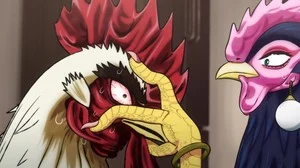
Rooster Fighter episode 2 leans into character dynamics and a strange blend of comedy and grotesque action, but it also exposes how the series’ pacing can stall when Keiji, the show’s magnetic lead, is off-screen. This chapter expands the cast with the overly-adoring Piyoko and teases a cooler, more composed addition, Elizabeth, while doubling down on the series’ central conceit: demons born from human insecurity. Below I break down the episode’s highs and lows, the standout moments, and what the new characters mean for the show moving forward.
Table of Contents
Episode Recap: Trials by Sea and Coop
Opening Sequence — Keiji at Sea

The episode begins with a visually absurd, almost surreal shot: Keiji perched in a wooden bucket on the ocean, keeping watch over a trio of ama (traditional female freedivers). The gag — a rooster floating while feasting on sea urchin — is immediate and memorable, but the sequence also raises questions the show declines to answer here. Keiji’s apparent inability to swim is hinted at, yet the writers choose to gloss over that detail rather than exploit it for more narrative or comedic mileage. The result is an opening that’s funny in concept but short on payoff.
Introducing Piyoko — Charm or Annoyance?
Most of the episode centers on Piyoko, a chick with an obsessive admiration for her owner and a painfully high-pitched voice that divides immediate reactions. Piyoko sees heroism and honor in a shady yakuza henchman who traffics chicks, and her devotion culminates in a goofy “tattoo” scene where Keiji scribbles “DUTY” on her feathers. The idea of an innocent, bootlicking recruit adds variety to the chicken ensemble, but execution here feels stretched. Piyoko’s mannerisms and incessant squeak undercut many scenes, making longer stretches featuring her feel more draining than endearing for some viewers.
Action and Pacing: Two Demon Battles, Uneven Payoff
Fight Choreography and Visual Design
It’s surprising that an episode containing two demon fights can feel sluggish. Both confrontations show flashes of creativity: grotesque transformations, erratic monster design inspired by human insecurities, and Keiji’s brutal, no-frills dispatching of threats. However, the pacing around those fights — long build-ups filled with Piyoko-centric scenes — diffuses the tension. The fights themselves remain satisfying when they arrive, but they don’t consistently carry the episode.
Emotional Stakes and the Demon Concept
One of the episode’s better contributions to the series’ mythology is a clarification on how demons form. As previously suggested, demons are born from seeds of insecurity; here, a downtrodden yakuza henchman’s resentment and humiliation concretize into a monster. That revelation lends a psychological layer to the monster-of-the-week structure, making enemies less one-note and offering potential for redemption or regression — especially when the show shows demons can revert, an ability new to Keiji’s experience. These moments hint at a richer thematic current beneath the show’s absurd premise.
Character Dynamics: Keiji vs. the Squad
Keiji — The Rooster as Central Magnet
Keiji’s presence is the series’ gravitational center. When he’s on-screen, the tone snaps into focus and the absurd world feels anchored. His stoic brutality and razor-sharp persona contrast perfectly with secondary characters’ quirks. The problem arises when the narrative sidelines him for extended stretches; his absence makes other characters’ antics feel more prominent, which can expose weaker tonal beats.
Piyoko — A Polarizing Newcomer
Piyoko is deliberately written to be clingy and loud, the kind of comic relief that either endears or irritates. For viewers who delight in exaggerated sidekicks, she provides consistent laughs and a new lens into how other hens view Keiji. For others, her high pitch and puppy-like devotion are a strain. Interestingly, the episode lets Keiji warm up to her only slightly by the finale, taking the audience on a short arc that somewhat justifies her inclusion — even if it doesn’t fully redeem the length of screentime she receives here.
Elizabeth — A Soothing Counterpoint
Right at the end we’re introduced to Elizabeth, whose calm and cool demeanor serves as an immediate foil to Piyoko. Elizabeth’s presence promises a balancing force in the ensemble: poised, perhaps a little mysterious, and definitely more composed than the new chick. Her introduction works as a palate cleanser and suggests future episodes may temper the show’s high-pitched comic energy with a more grounded personality.
Sound Design, Humor, and Tone
Sound plays a crucial role in episode 2 — from the squawks and squeaks that define Piyoko to the thudding impacts of Keiji’s attacks. For some viewers, the sound design amplifies charm and character; for others, it becomes grating. Humor is similarly split between clever visual gags (the sea bucket gag, the Sharpie “DUTY” gag) and more repetitive, slapstick beats tied to Piyoko. The show’s tonal balance of gruesome action and silly poultry antics remains its strongest and weakest point: distinct, daring, but occasionally uneven.
Does Episode 2 Move the Series Forward?
Yes and no. On worldbuilding and theme, it deepens the demon concept and hints at redemption/reversion mechanics that could add real consequences to fights. On character variety, it expands the roster in ways that might pay off later once personalities settle. On pacing and humor, however, the episode falters when it substitutes Keiji’s focused presence for prolonged, one-note gags. If future episodes can better blend the lead’s gravitas with the supporting cast’s energy, the show will be stronger for it.
Where to Watch
Rooster Fighter is airing on Toonami and streaming on Disney+/Hulu. For viewers outside broadcast windows, the official streaming option is available via the Hulu/Disney+ platform here. For Toonami scheduling and updates, check their official site here.
Final thoughts
Episode 2 of Rooster Fighter is a mixed bag: it rewards viewers with more lore about the demons and teases intriguing new characters, but it also exposes how dependent the show is on Keiji’s presence for tonal cohesion. Piyoko’s addition will be divisive — she offers comic contrast and potential character beats, yet her extended focus in this episode makes the pace drag. If the series can refine its balance between brutal action and eccentric comedy, future installments could be much stronger. For now, this episode remains watchable and occasionally inspired, but uneven in execution.