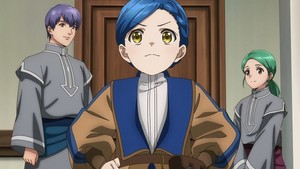
Witch Hat Atelier’s opening episodes cast a spell that’s part fairy tale, part moral fable. From the moment young Coco accidentally petrifies her mother, the series poses urgent questions about who gets access to power and why rules exist to keep it gated. Episodes 1–3 introduce us to a carefully constructed world where magic is as much a social hierarchy as it is a supernatural force, and where curiosity collides with institutional control in ways that feel both timeless and timely.
Table of Contents
Worldbuilding and the Magic System
Witch Hat Atelier builds its central conflict around a deceptively simple premise: magic is restricted to those born into witch bloodlines. Over time, that restriction has ossified into law and social custom—an explanation dressed up as necessity. The series quickly complicates that narrative by showing that magic itself is a set of techniques anyone can learn if given the tools and knowledge. That revelation is the narrative engine here: power isn’t inherently scarce, but access to knowledge is.
The show sketches a layered society. Witches create “contraptions” that let non-magical people use simple enchanted devices, but the deeper arc concerns knowledge hoarding. Magic is not only regulated, it’s performed with etiquette and specific limitations, enforced by factions like the brimmed-cap and brimless-cap witches. The brimmed witches are labeled dangerous for flouting magical norms, while brimless witches represent sanctioned authority. Those distinctions already hint at ideological battles to come.
Episodes 1–3: Key Plot Beats
Episode 1: The Festival and the Accident
The first episode sets the emotional stakes: Coco, full of wonder for magic, unintentionally petrifies her mother after receiving a magical pen and spellbook from a brimmed-cap witch. Rather than simply punishing Coco, the narrative uses the accident to reveal systemic failures—secrecy and exclusion that create disaster as much as recklessness.
Episode 2–3: Apprenticeship and Trials
Coco’s fate changes when Qifrey, a brimless witch living apart from the central witch city, takes her as an apprentice. His motives are murky—he shows genuine concern but is also clearly curious about the girl’s connection to the brimmed caps. The complex dynamic between Qifrey and the wider community raises questions about surveillance, recruitment, and the uses of compassion when paired with ulterior motives.
Characters to Watch
Coco
Coco’s combination of boundless curiosity and resourcefulness anchors the story. Her affectionate connection to her mother and the domestic magic she practices (inspired by everyday skills) make her instantly sympathetic. The way she solves problems—using items and techniques she learned at home—highlights the series’ theme that magic is part of daily life, not only elite ritual.
Qifrey
Qifrey is equal parts mentor and enigma. He’s a brimless witch who lives at a remove from the lavish city of his peers, and his concern for Coco often feels like it’s tangled with a deeper interest in the brimmed-cap witches. His kindness is real, but his secrecy and the questions of why he lives apart and why he needs Coco’s link to the brimmed caps create an uneasy tension around his character.
Agott and the Apprentices
Among Qifrey’s apprentices, Agott stands out as the embodiment of institutional prejudice. Her hostility toward Coco—an “Outsider”—escalates into a dangerous test of the girl’s abilities in the floating mountains. Whether Agott intended to cause real harm or only to humiliate, her actions reveal how bias can morph into genuinely harmful decisions, especially among the young who inherit social codes without questioning them.
Animation, Art Direction, and Sound
The visual style adapts Kamome Shirahama’s picture-book art into lush animation. Small touches—pop-up book sequences during intros and outros, textured backgrounds, and detailed spellwork—make the world feel tactile. The Japanese voice cast garners praise for nuanced performances; the English dub adopts regional accents to signal world diversity, a choice that some viewers may find distracting, though it doesn’t undercut the story’s core strength.
Thematic Resonance: Power, Exclusion, and Learning
At its center, Witch Hat Atelier is about who is allowed to learn and why. By making magic a guarded craft, the series explores the moral costs of gatekeeping knowledge. Coco’s accidental petrification of her mother is both a personal tragedy and a metaphor for how secrecy and misinformation can calcify communities. The show asks whether protections meant to keep people safe can instead preserve inequality.
Another recurring idea is the ethics of mentorship: when should a mentor protect, and when should they probe? Qifrey embodies that conflict. His willingness to take Coco on as an apprentice is tender, yet it also serves his curiosity about the brimmed caps. The show leaves us to judge whether such surveillance can be benign, or whether it always contains exploitative potential.
Why These Early Episodes Matter
Episodes 1–3 perform a delicate balancing act: they introduce characters and world rules while leaving enough mystery to sustain momentum. The conflict between institutional magic and individual discovery promises a narrative that will interrogate power structures through personal stakes. Coco’s ingenuity and the moral ambiguity of the adults around her ensure the show remains gripping beyond spectacle.
Witch Hat Atelier is currently streaming on Crunchyroll.
Final thoughts
Witch Hat Atelier’s first three episodes are a beautiful blend of visual whimsy and ethical inquiry. They invite viewers into a world where wonder and danger coexist, and where the real conflict arises from who controls knowledge. Coco’s journey—part apprenticeship, part survival test—feels both intimate and consequential. For anyone drawn to character-driven fantasy that asks smart questions about power and belonging, these opening episodes are a compelling start.