Nippon Sangoku: The Three Nations of the Crimson Sun continues to lean into its blend of speculative history and political satire in episode 6, delivering a tense, cinematic clash that highlights both the tragic human cost of war and the grotesque comedy of incompetent leadership. This entry sharpens the series’ central conceit: a bird’s-eye documentary-style perspective that invites us to watch not only strategic maneuvering, but the personal toll those choices exact on ordinary soldiers and civilians.
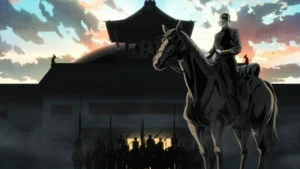
Table of Contents
Episode 6 Recap: When Bad Orders Meet Good Soldiers
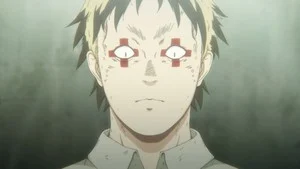
Episode 6 centers on the disastrous decision by Tongotsu Taira—a petulant, juvenile figure whose constant nasal drip is almost caricature—who is entrusted with leading a major operation. Taira’s hubris and lack of strategic sense push the Yamato forces into a trap, despite the clear, seasoned objections of Right Lieutenant General Goh Sugoh. Sugoh’s attempt to argue common-sense logistics and caution is dismissed, and he is branded a traitor when he resists the reckless march into Kanezawa. The consequences are immediate and brutal: Yamato soldiers, loyal but ill-led, must hold the line as Seii’s forces advance toward Kuzuryu Castle.
Characters & Performances
Tongotsu Taira — The Nepotistic Antagonist
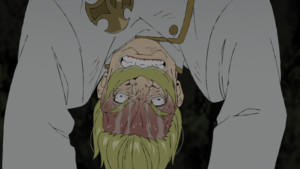
Taira is written as more than just a bad commander; he’s an indictment of a system that elevates entitlement over competence. The animation leans into his grotesque qualities to underline a satirical point: history is littered with leaders whose worst instincts cost lives. Taira’s presence on screen elicits visceral disgust, and the show uses that reaction to comment on the wider social and political failures that allow such figures to thrive.
Goh Sugoh — The Voice of Experience
By contrast, Sugoh represents the professional soldier who understands the cost of bad strategy. His attempt to avert catastrophe—and subsequent arrest—highlights how institutions can be perverted by political decision-making. Sugoh’s indignation is not melodramatic but quietly human, giving the episode emotional weight whenever the camera pulls back to show the consequences of his silenced counsel.
Themes: Satire, Tragedy, and the Human Cost of Political Theater
Nippon Sangoku excels at juxtaposing farce and tragedy. On one hand, we can laugh (uneasily) at the absurdity of a snot-nosed youth commanding armies; on the other, the show refuses to let us forget the real human consequences when orders go wrong. This duality is the series’ strength: it allows for pointed political satire while never losing sight of the frontline perspective. Rather than rooting unambiguously for one faction, the narrative asks us to sympathize with everyday people caught between rival elites and manipulative strategists.
Docufiction Approach
The episode’s documentary-like distance is deliberate. It offers a macro view of the conflict—maps, maneuvers, and grand designs—while occasionally zooming in to give faces and names to the suffering. This structure mirrors modern historical storytelling that emphasizes personal narratives within sweeping geopolitical events. The approach amplifies the tragedy because we can see both the mechanics and the human fallout simultaneously.
Visuals & Soundtrack: Cinematic Scale
Visually, episode 6 crescendos into full-on war cinema. The clash outside Kuzuryu Castle is staged with a careful eye for composition, movement, and scale. The animators do an excellent job conveying the chaos of pitched battle without losing clarity—an increasingly rare feat in large-scale anime warfare scenes.
Kevin Penkin’s score deserves special mention. As the armies collide, the music swells in a way that turns the sequence into visceral, emotional cinema. The soundtrack punctuates the episode’s dramatic beats and elevates moments that might otherwise feel like mere spectacle into scenes of tragic grandeur. For viewers who enjoy anime where music and image work seamlessly to evoke mood, this episode is exemplary. For more on Kevin Penkin’s work, you can visit his site here.
Narrative Payoffs and Political Commentary
The narrative payoff here is twofold. First, the military consequences of Taira’s incompetence are immediate and costly—exactly the kind of ripple effect the show has been teasing across prior episodes. Second, the political theater—Taira’s father’s darker ambitions, Seii’s manipulations, and the interplay between private machinations and public tragedy—forms a layered commentary on how power gets exercised and abused.
The show doesn’t offer easy answers. It treats war as an amalgam of terrible decisions, personal bravery, and bureaucratic cruelty. You can root for the underdog citizens and question the decisions of those in charge at the same time, which is what makes the storytelling feel honest rather than propagandistic.
Why This Episode Resonates
Episode 6 resonates because it combines visceral battlefield drama with political satire. It forces viewers to confront the reality that wars are often decided by petty personal desires and institutional failures rather than noble causes. The empathy the show builds for individual soldiers is what ultimately makes the episode land: seeing their faces in the smoke and hearing Penkin’s score turns strategic blunders into personal tragedies.
Where to Watch
Nippon Sangoku: The Three Nations of the Crimson Sun is available for streaming. If you want to catch the series legally, it’s currently on Amazon Prime. Watch on Amazon Prime.
Final thoughts
Episode 6 of Nippon Sangoku is one of the series’ most effective installments so far: it blends sharp political satire with expertly staged battlefield drama and moving human detail. Tongotsu Taira’s grotesque hubris and Goh Sugoh’s suppressed competence form a compelling moral contrast, while Kevin Penkin’s music and the episode’s cinematic direction propel the action into memorable, tragic territory. This installment underscores the show’s larger project—exploring how systems and personalities collide to produce calamity—while keeping the human cost front and center. For viewers invested in anime that interrogates power, history, and suffering with both wit and heart, this episode is essential viewing.