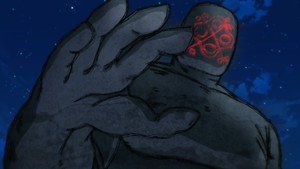
Episode 6 of Daemons of the Shadow Realm deepens the series’ emotional core while reminding viewers that its quieter moments can hide brutal histories. This installment peels back a few layers of Asa’s past and highlights the contrasting coping mechanisms of our two leads, Asa and Yuru, all while expanding on how different factions in this world treat the mysterious Daemons. The episode balances mood, mystery, and action to create both tension and empathy — and it raises the stakes for what’s coming next.

Table of Contents
Episode Highlights: What Stood Out
At first glance, Episode 6 reads like a character-driven detour, but it’s anything but filler. The narrative returns repeatedly to the tension between light and darkness — literal and metaphorical — as it reveals more about Asa’s trauma, Yuru’s trained stoicism, and how others treat creatures like Right and Left. The episode uses a mix of flashbacks, intimate close-ups, and stark violence to show rather than tell, which makes each revealed detail feel earned.
Asa: A Complex Mix of Vulnerability and Deadliness
Asa has mostly read as a sympathetic protagonist: relatable, determined, and driven by the hope of reuniting with her lost brother. Episode 6, however, forces us to reconcile that sympathy with the revelation that she is capable of extreme violence. Raised among people who hunted and feared her, Asa’s instinct for survival is not abstract — it’s lethal. The episode emphasizes that her humanity is defined not by a lack of brutality but by the values she chooses to keep despite it.
Crucially, we get to see what she fears most: not the monstrous Daemon Right, but an abyssal darkness she experienced while locked away. The cage imagery and her dread of “lightlessness” add another layer to her motivations — survival for Asa is tied to preserving the small bits of light and connection she’s managed to claw back. That fear shapes the choices she makes and explains why she values even imperfect bonds.
Yuru’s Emotional Armor: Strength and Fragility
Yuru’s approach contrasts with Asa’s. Where Asa confronts trauma head-on — even if only internally — Yuru practices emotional compartmentalization. His bow practice sequence is a quiet detail that speaks volumes: the repetitive, physical training functions as emotional deflection. That discipline makes him a formidable hunter, but the episode hints that his refusal to process grief and uncertainty could snap under prolonged pressure.
This portrayal of Yuru is effective because it avoids melodrama; the show lets his actions do the talking. His single-mindedness is useful in the field, but the personal cost becomes increasingly evident when paired with Asa’s haunted past. The interplay sets up compelling character dynamics that could force both to evolve in different ways.
Human-Daemon Relations: Priests, Partners, and Property
Episode 6 also broadens the series’ sociocultural canvas by showing how different groups view Daemons. Yuru reveres Right and Left like local deities, while others — like Hana and the Kagemori contingent — treat them as partners or companions. By contrast, the assassins depicted in this episode see Daemons as disposable tools or pets. This spectrum of attitudes highlights the ethical and power dynamics at play in the world, and it fuels conflicts that go beyond individual battles.
Gabby’s reaction to the assassins’ cruelty is particularly instructive; her near-violent response towards a helpless prisoner suggests layers in her backstory and sets the stage for future revelations about why she empathizes so strongly. These differing attitudes will likely play a major role in shaping alliances and animosities moving forward.
Direction, Visuals, and Sound: Mood Over Flash
Visually, Episode 6 leans into contrasts — bright, claustrophobic cages versus open, sunlit spaces — to underline the episode’s themes of captivity and freedom. Close-ups on characters’ eyes and subtle sound design amplify the psychological tension without resorting to heavy exposition. Action sequences remain purposeful and brutal, while quieter scenes allow the actors’ expressions and the soundtrack to carry emotional weight. The result is an episode that feels cinematic and intimate at once.
Voice Work and Character Moments
The voice performances sell the paradox of characters who can be both tender and terrifying. Asa’s dialogue — terse, guarded, but occasionally vulnerable — reinforces her fractured identity. Yuru’s restrained tone matches his disciplined demeanor and makes his rare expressive moments hit harder. Together, their interplay is one of the show’s strongest assets.
What This Episode Means for the Series
By digging into Asa’s fears and positioning Yuru’s avoidance alongside her trauma, Episode 6 raises the stakes for the pair’s emotional arcs. The show is signaling that personal revelations will be as important as external threats. We’re likely headed toward an episode (or episodes) that will force both characters to confront truths they’ve long avoided — potentially reshaping their methods, allegiances, and how they see one another.
For viewers invested in lore, the differing human perspectives on Daemons hint at larger worldbuilding to come: social hierarchies, religious reverence, and exploitive practices that will complicate straightforward battles between good and evil. Expect the series to use character-driven moments like this one to illuminate the broader moral landscape of the world.
Where to Watch
Daemons of the Shadow Realm is currently streaming on Crunchyroll.
Final Thoughts
Episode 6 is a richly textured chapter that balances brutal action with quiet character work. It deepens our understanding of Asa and Yuru while expanding the series’ moral complexity through how different groups relate to Daemons. With strong direction, evocative visuals, and layered performances, this episode pushes the narrative forward by revealing more questions than answers — and that’s exactly what makes it compelling. If the show continues to fuse emotional stakes with thoughtful worldbuilding, the road ahead looks both promising and perilous for these characters.