Welcome to Demon School, Iruma-kun Season 4 Episode 9 delivers a largely retrospective hour that nevertheless pushes the plot forward: Kiriwo’s ominous return is used as a springboard to remind viewers of past conflicts, deepen character motivations, and set up darker stakes for Iruma and the Misfit Class. While nearly half the episode functions as a clip-style reminder, the fresh moments — especially the repercussions of Poro’s choices and Azz-Azz’s growing unease — give the episode enough momentum to feel consequential rather than filler.

Table of Contents
Recap: Kiriwo’s Return and the Episode’s Structure
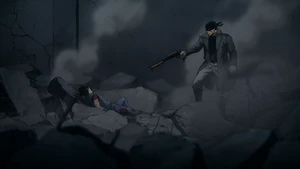
Episode 9 isn’t a traditional clip show, but it borrows that format to recap crucial moments from the Battler Arc and the Walter Park Arc. The point is clear: Kiriwo — initially introduced as a brutish upperclassman and rival in the school battler club — is far more than a one-note antagonist. The episode reminds viewers that he is a primal demon, a being so consumed by his own depravity that he has shed any pretense of civility. That background is important because Kiriwo was imprisoned after the Battler Arc, only to be freed during the Walter Park subplot. Now he’s back at Babylis, searching for something — or someone — and his presence threatens to unravel the fragile safety Iruma and his friends have built.
Poro’s Betrayal: Idolization vs. Integrity
When fandom becomes fanaticism
One of the episode’s most chilling beats involves Poro. On paper, he’s hardly a devoted ally of the Misfit Class, but even so his willingness to abandon caution for the chance to see Derkila again reveals something deeper: Poro’s loyalty is not to people, but to an ideal. Despite recognizing Toto as a dangerous criminal, Poro instantly trades integrity for the possibility of encountering his idol. That switch — from reluctant moral clarity to blind devotion — is disturbing because it shows how easily personal mythology can override rational judgment.
Consequences for the Misfit Class
Poro’s defection may not be a complete surprise, but it nevertheless raises the stakes. He’s a capable combatant and his insider knowledge makes him dangerous. If he’s now aligned, even temporarily, with Kiriwo’s allies, Iruma and company will face a more complex threat: not only external forces seeking power, but former classmates driven by obsession. The episode uses this to foreshadow the kinds of tensions that will complicate future confrontations — fights that won’t be solved by strength alone.
Asmodeus and Azz-Azz: Perception, Pride, and Friction
There are two excellent character beats here that elevate the episode beyond mere recap: Asmodeus’s perceptiveness and Azz-Azz’s dawning suspicion.
Asmodeus: Not just a knight
Usually cast as the composed, slightly aloof foil to Clara’s manic antics, Asmodeus gets a moment to shine as an intelligent observer. He recognizes the telltale signs of a demon consumed by the “evil cycle” — notably Kiriwo’s eyes — and connects the dots faster than most. This reinforces what the show hinted at earlier: Asmodeus wasn’t just Iruma’s backup; before Iruma arrived, he was the top first-year student. His quick analysis and willingness to act remind viewers that he’s a strategist and a protector, not merely comic support.
Azz-Azz’s conflicted loyalty
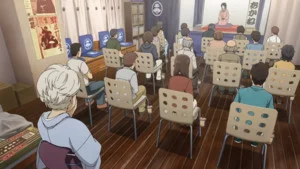
Azz-Azz’s scenes with his senpai in the clubroom are revealing. The longer he spends in conversation, the more he senses something fundamentally wrong about Kiriwo — enough that it unsettles him. That unease is important because it opens the door to interpersonal friction between Azz-Azz and Iruma. Iruma chose not to reveal everything about Kiriwo earlier, and even if his reasons were compassionate or pragmatic, secrecy can create doubt. Will Azz-Azz interpret Iruma’s silence as lack of trust? The episode hints that this question will reverberate among the Misfit Class.
Character Development and Worldbuilding Highlights
Beyond the main conflicts, Episode 9 sprinkles smaller but satisfying details that deepen the world and the supporting cast. Opera’s catlike behavior — a tail twitching while demanding affection — is a small, character-driven moment that humanizes an otherwise enigmatic figure. Likewise, we get subtle hints that not every Six Fingers member is monolithic; one of them pauses and glances back towards Babylis, suggesting potential doubt or sympathy that could complicate enemy alliances later.
Power shifts and preparation
On the defensive side, Alikred showing signs of powering up is encouraging for the Misfit Class. If Iruma, his friends, and allies like Alikred are going to withstand the renewed threat from Kiriwo and his network, they’ll need both growth and unity. The episode sets this up without prematurely resolving anything, keeping tension simmering for future episodes.
What This Means for the Season Going Forward
Episode 9 performs the twin task of reminding and foreshadowing. It reiterates why Kiriwo matters, clarifies which characters are trustworthy (and which are not), and plants seeds for future conflict: internal mistrust within the Misfits, Poro’s dangerous idol-worship, and the looming menace of a primal demon at large. The show’s pacing here is deliberate; instead of rushing into another straight fight, it builds emotional and psychological stakes that should make upcoming battles feel meaningful.
If you’re streaming the series, this is a good moment to catch up on earlier arcs or rewatch key encounters — the episode relies on past context to deliver its emotional weight. Welcome to Demon School, Iruma-kun Season 4 is available on Crunchyroll (rel=”nofollow” target=”_blank”>Watch on Crunchyroll
Final thoughts
Episode 9 navigates the tricky territory between recap and progression successfully. While portions of the episode revisit familiar beats, the new revelations and character moments — especially Poro’s betrayal and Asmodeus’s quiet competence — give the hour a strong sense of purpose. The real victory here is tonal: the show shifts from lighthearted school hijinks to a darker, more precarious phase where loyalties and identities are tested. If Season 4 continues down this path, the Misfit Class’s growth will feel earned rather than convenient.