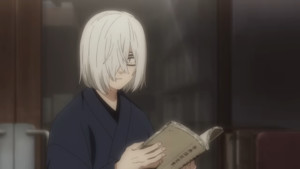
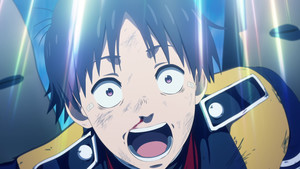
The premiere of Nippon Sangoku: The Three Nations of the Crimson Sun arrives like a jolt of electricity—a visually arresting, wildly original take on a familiar historical epic. Studio Kafka’s adaptation of Ikka Matsuki’s distinct art style transforms this quasi-post-apocalyptic reimagining of a Romance of the Three Kingdoms–inspired unification tale into something that feels cinematic, unpredictable, and utterly alive. After three episodes, it’s clear this series is not content to be just another seasonal offering; it’s staking a serious claim on anyone who values bold direction, inventive storytelling, and animation that doesn’t apologize for being different.
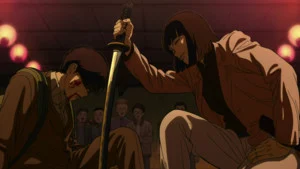
Table of Contents
Visual Style and Cinematic Storytelling
Nippon Sangoku immediately stands out because it refuses to play it safe. The character designs lean into exaggerated, often unsettling facial features and bold silhouettes that contrast sharply with the lush, atmospheric backgrounds. Rather than dilute its aesthetics to appeal to the mainstream, the series embraces them—every frame feels intentionally composed, like a still from an art-house film that also moves. Storyboarding and direction showcase a willingness to experiment: camera angles, pacing, and visual jokes are used to enhance character moments rather than just fill time.
Why the animation feels cinematic
Too many shows settle for serviceable animation; Nippon Sangoku treats each episode like a short film. Movement is purposeful, cuts are meaningful, and even stationary dialogue scenes carry dramatic weight thanks to careful lighting and composition. The result is an experience that often reads more like live-action cinematography translated into animation than a conventional TV anime.
Characters and the Whiplash Tone
One of the most divisive elements of the series is its tonal shifts. Nippon Sangoku oscillates between tragic melodrama, slapstick absurdity, and grim political intrigue. For some viewers, those changes will feel jarring—but for others they’re part of the show’s charm. The series deliberately juxtaposes moments of high-stakes emotion with scenes that undercut expectations, producing a chaotic energy that feeds into the overall world-building.
Standout character dynamics
The chemistry between Aoteru and Yoshitsune Asama is a major reason the show clicks. Aoteru’s calm, scholarly presence—he literally uses agricultural policy as a tactical tool—plays perfectly against Yoshitsune’s bombastic flair and appetite for theatrical violence. Their pairing elevates even the most mundane beats; two characters introducing themselves can feel like a major cinematic scene when handled with this level of craft.
Episode Highlights: Episodes 1–3
Episode 1: A cinematic knockout
The first episode wastes no time establishing the series’ audacious identity. It blends tragic backstory with jaw-dropping visuals, making a compelling case that Nippon Sangoku is more than a mere adaptation—it’s a reimagining steeped in style. If this episode had been a standalone short, it would still have been noteworthy for the sheer visual courage on display.
Episode 2: Minimal setup, maximum impact
Episode two proves the creative team’s confidence. It’s largely composed of two characters talking and taking a test—an inherently static setup—but the direction turns it into an electrifying sequence. Small touches like the juxtaposition of Aoteru’s reasoned tactics versus Yoshitsune’s dramatic violence create an emotional payoff that feels earned. The Toryumon Exam scene, where strategy meets spectacle, exemplifies how Nippon Sangoku converts abstract concepts into compelling drama.
Episode 3: Politics, pacing, and a small dip
The third episode shifts forward two years and dwells heavily on political maneuvering, focusing more on scheming than on the protagonists. This makes it feel like a step down in momentum compared with the first two chapters, though it still outpaces many contemporaries in terms of visual ambition and writing. The extended focus on Lord Taira’s machinations teases new players—most notably a fierce woman with a distinctive facial tattoo—hinting at more complex conflicts ahead.
Thematic Threads and Source Inspiration
At its core, Nippon Sangoku is a study in contrasts: civilization versus chaos, bureaucratic cunning versus theatrical force, and the personal tragedies that fuel national conflicts. While it draws inspiration from classical unification narratives, the post-apocalyptic framing refreshes familiar tropes and asks how societies rebuild under pressure. Fans of epic historical dramas will find familiar beats refracted through a modern, experimental lens.
How it reinvents a classic model
Rather than a straightforward adaptation of a historical text, the series adapts the spirit of grand historical chronicles—alliances, betrayals, and the grind of political life—while overlaying a visually idiosyncratic veneer that keeps viewers on their toes.
Why You Should Watch Nippon Sangoku
- For viewers who appreciate bold visual experimentation and cinematic direction.
- For anyone tired of formulaic adaptations that prioritize fidelity over creativity.
- For fans of character-driven dynamics where strategy and personality clash in entertaining ways.
Where to Stream
Nippon Sangoku: The Three Nations of the Crimson Sun is currently available to stream on Amazon Prime. Watch on Amazon Prime (nofollow). For historical context and background on the narrative inspirations, see an overview of the Romance of the Three Kingdoms tradition: Romance of the Three Kingdoms (Wikipedia) (nofollow).
Final thoughts
Nippon Sangoku is a rare series willing to risk alienating the lowest common denominator in order to produce something distinct and memorable. Its first three episodes are a masterclass in how animation can be used to tell stories cinematically—sometimes funny, sometimes brutal, and consistently compelling. If you love anime that pushes boundaries in both style and substance, this is one of the season’s must-watch titles. The show’s occasional tonal whiplash will not be for everyone, but its visual daring and confident storytelling make it a standout that demands attention.