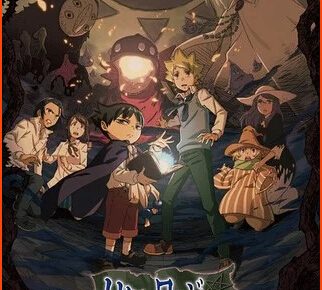
The Case Book of Arne arrives as a quirky blend of gothic mystery, episodic whodunits, and off-kilter comedy — all wrapped around an unlikely detective duo: Arne, a brooding vampire investigator, and Lynn Reinweiß, a spirited young woman whose obsession with the supernatural pulls her headfirst into strange cases. The anime adapts material from an RPG-maker original and makes bold structural decisions early on, including an opening episode that intentionally misleads the viewer about who the true protagonist will be. That creative gamble yields mixed results, but it also sets the tone for a series that constantly plays with expectations.
Table of Contents
Synopsis: a girl, a vampire, and a town full of mysteries
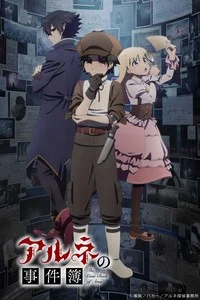
Lynn Reinweiß and vampire detective Arne navigate a parade of strange crimes and supernatural oddities.
One year after her mother’s death, blue-blooded Lynn Reinweiß tries to live normally despite a father slipping into madness. When a series of uncanny murders and incidents surface around her hometown, Lynn discovers Arne — a vampire private eye — and convinces him to let her assist on cases. From mermaids and invisible families to jewel thieves and mythic monsters, the show primarily follows Lynn as she chases answers and occasionally gets swept up in the vampire world she idolizes.
Structure and storytelling: a risky first act
The anime opens with an anime-original first episode that deliberately misdirects: it centers on a character named Louis and sets up a personal revenge plot that feels like a classic main-character arc — only to abruptly kill him off. That “Psycho”-style rug pull is audacious and creates early suspense, but it also signals the series will be unconventional in its narrative focus. The remainder of the season breaks into short arcs and episodic mysteries, half devoted to Lynn’s longer personal thread and the rest to standalone whodunits.
When episodic plots work — and when they don’t
Some episodes succeed by using inventive premises (an invisible family, for example) that introduce unusual problems and interesting moral questions. Others lean on tired tropes and are resolved through out-of-nowhere shonen-style fights that feel tonally inconsistent with the mystery elements. The series often opts for surface-level puzzle-solving rather than knitting smaller mysteries into a larger, resonant narrative.
Characters: potential vs. stereotype
Characterization is the anime’s weakest link. Arne is intentionally stoic and brooding, but his single-note demeanor limits emotional range. Lynn swings between a cute, moe-style protagonist and an overexcited vampire fangirl, with the show using her extremes mostly for comic relief rather than deepening her arc. Supporting characters — from a mirror-dwelling trickster to a zombie assistant — are colorful but underdeveloped, often reduced to archetypes that serve plot mechanics.
The one who could have been more
Louis, the faux-protagonist from episode one, is arguably the most interesting figure precisely because he was given a clear personal motive and visible growth potential. Killing him off early robs the show of a layered lead and forces the remaining cast to carry mysteries without the same emotional stakes.
Tone and comic relief: a mismatched recipe
The series toggles between gloomy supernatural atmosphere and broad cartoonish comedy — often within minutes of each other. Gags like rainbow vomit or exaggerated slapstick show up in darker scenes, undermining tension rather than balancing it. For some viewers this tonal whiplash will be charming; for others, it detracts from the sense of danger the mysteries should cultivate.
Visuals and music: technical strengths
Animation and art are serviceable rather than spectacular; fight sequences are handled competently and avoid sluggish pacing, but the overall visual design rarely surprises. Musically, the show is a highlight: its opening and ending themes are catchy and carnival-esque, and the score—composed with a cinematic flair—adds texture to scenes even when the narrative fails to fully utilize it.
Pacing and resolution: open threads and abrupt finales
Several episodes end on cliffhangers or introduce mysteries that never fully payoff. The final arc leaning into a Dracula-style confrontation feels like a last-minute attempt to ramp stakes with a familiar villain, and in some moments the series leans on genre echoes (think classic vampire-lore standoffs) rather than organically earned climax. The result is a season that entertains in parts but rarely coalesces into a satisfying whole.
Is The Case Book of Arne worth watching?
Yes — if you tune in for atmospheric oddities, episodic mysteries, and playful, sometimes cringe-inducing comedy. Fans of gothic aesthetics and supernatural detective fiction will find enough to enjoy, particularly in moments where the show leans into its strengths: quirky premises, a strong musical palette, and creative creature concepts. If you expect a tightly woven mystery series with consistently deep character work, this adaptation will likely frustrate.
Further reading
For viewers looking for more context on streaming availability or episode guides, check official streaming listings such as Crunchyroll (rel=”nofollow”) or major database entries on IMDb (rel=”nofollow”).
Final thoughts
The Case Book of Arne is an uneven but occasionally delightful experiment: audacious structural choices and a delightful musical score sit beside thin character work and tonal inconsistencies. It’s a show that often feels like a cabinet of curiosities — entertaining in fragments, occasionally brilliant in bits, but rarely unified. If you approach it with the right expectations — curious for strange cases, willing to laugh at deliberate silliness, and tolerant of loose plotting — Arne can be an enjoyable, offbeat ride through gothic mystery-lite.