Episode 1167 of One Piece delivers a confident, character-forward installment that re-centers the series after a slower stretch. With evocative environments, meaningful lore drops, and a visually striking fight that turns a goofy concept into something genuinely thrilling, this episode reminds viewers why One Piece balances spectacle and heart so effectively.
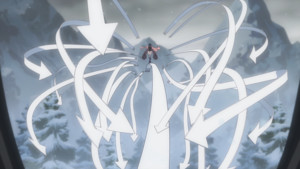
Table of Contents
Episode highlights: pacing, mood, and mystery
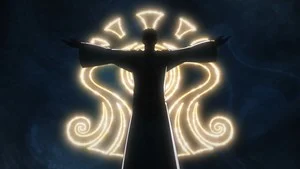
Episode 1167 starts by leaning into exposition, but the kind that enriches rather than stalls. Road’s journey with Luffy, Nami, and Zoro functions as both character travelogue and worldbuilding vehicle: we get compact lore about the giants, cameos for historical figures like King Harald and Harjudin, and a sense of Elbaph’s tragic grandeur. The sequence is paced to feel exploratory rather than expository—details bleed into atmosphere, making the world itself feel like a character.
The Road sequence: atmosphere and worldbuilding
The visuals here deserve particular praise. The castle-ruin setting—strewn with bleached skulls, rusting armaments, and creeping roots—creates a melancholic backdrop that makes the lore moments land with weight. Small visual touches (Road cradling children in his hands, spiral staircases swallowed by vines) communicate ages of history and loss without needing heavy dialogue. For fans invested in Elbaph’s culture and past conflicts, these micro-details deepen the stakes; for casual viewers, they simply enhance the mood.
Loki, Gunko, and Shamrock: a standout action set-piece
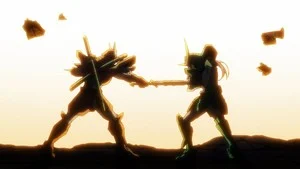
Where the episode truly kicks into high gear is the back half: the interrogation and ensuing clash involving Loki, Saint Gunko, and Shamrock. On paper it’s a simple premise—Loki resists torture while two holy knights press him—but the execution is anything but mundane. Saint Gunko’s ability (visually anchored by arrows that telegraph her attacks) could have been played for laughs only. Instead, the animators and directors spin it into a kinetic showcase of timing, misdirection, and sheer visual creativity.
Rapid cuts, clever staging, and an emphasis on the emotional core—Loki’s endurance and resolve—turn a seemingly silly power into a distinctive combat style. The sequence alternates between brutality and almost absurd theatricality, yet never loses its impact: you believe in Gunko’s ferocity and Loki’s stubborn heart. These contrasts are quintessential One Piece, where whimsy and danger coexist to make combat feel uniquely alive.
Characters and performances
This episode deepens a few relationships without heavy-handed exposition. Road acts as both guide and silent witness to Elbaph’s haunted past, while the Straw Hats’ interactions remain warm and pragmatic—Luffy curious, Nami observant, Zoro steady. Loki’s silent resilience during his interrogation is the emotional spine of the episode; you’re drawn into his perspective even when the narrative provides minimal backstory.
The villains (Gunko and Shamrock) are drawn with just enough personality to be memorable. Gunko’s over-the-top strike style reads as both humorous and deadly, and the animators sell every beat to great effect. This episode reminds us how design and animation choices can elevate a one-scene antagonist into a scene-stealing presence.
Animation, direction, and sound design
Toei’s team leans into visual variety here: wide establishing shots show the imposing scale of Elbaph’s ruins, while rapid, closely edited sequences convey the ferocity and unpredictability of the interrogation. The direction uses space well—the castle’s verticality, the spiral stairs, and ruined battlements all provide a cinematic stage for both quiet moments and bursts of action.
Sound design complements the visuals without calling attention to itself. SFX choices during the Gunko sequence emphasize impact and momentum, and any accompanying score swells at key emotional beats rather than overpowering them. Voice performances are restrained when they need to be and over-the-top where appropriate, maintaining the tonal balance One Piece often nails so well.
Themes and long-term significance
Beyond spectacle, episode 1167 touches on themes common to this arc: legacy, cultural memory, and the cost of history. The ruined castle and its artifacts suggest a civilization broken by conflict, while the interrogation of Loki hints at ongoing systems of power and punishment among giants and their supposed protectors. These small worldbuilding breadcrumbs will likely feed into larger revelations about Elbaph, the giants’ role in the wider world, and how the Straw Hats’ arrival intersects with long-buried histories.
For viewers tracking the broader narrative, the episode serves as a reminder: One Piece’s best moments often come from layering personal stakes atop expansive lore. This installment manages that balance well, offering both immediate drama and hints of future implications.
Where this episode fits in the arc
After a few episodes where momentum felt diffuse, 1167 is a course correction. It isn’t a plot-altering chapter by itself, but it stabilizes the arc’s tone and reinforces why the series works when it hits the right mix of worldbuilding, character moments, and imaginative combat. If you’re pacing through the arc, consider this a reliable marker that the series is back firing on most cylinders.
Where to watch
One Piece is available for streaming; for viewers looking to catch up or rewatch this episode, check official platforms such as Crunchyroll (rel=”nofollow” target=”_blank” href=”https://www.crunchyroll.com/series/GRMG8ZQZR/one-piece”>Crunchyroll).
Final thoughts
Episode 1167 is a reminder of One Piece’s strengths: atmosphere-rich settings, character-focused worldbuilding, and the ability to turn offbeat powers into memorable combat sequences. It’s not a revelation-packed entry, but it’s the kind of steady, well-executed episode that primes an arc for bigger moments. Between the evocative Elbaph visuals and the Loki vs. Gunko clash, this installment does a lot with a little—and does it beautifully.