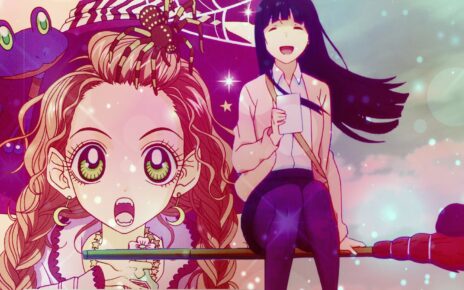
Star Detective Precure’s mid-season arc smartly blends classic mystery mechanics with warm, character-driven stakes. Episodes 13–25 deepen the show’s themes of partnership, memory, and identity while giving younger viewers (and the adults who watch with them) a genuine puzzle to solve. The big reveal — the return of Cure Éclair and the truth about Cure Arcana Shadow’s past — lands because the series commits to both fair-play mystery clues and heartfelt emotional payoff.

Star Detective Precure mixes classic mystery beats with magical-girl heart.
Table of Contents
Fair-play mystery: letting the audience play detective
One of this cour’s strongest choices is its embrace of “fair play” mystery conventions. Rather than keeping crucial clues hidden, the show scatters hints that attentive viewers can piece together with the Cures. This approach recalls the Golden Age of detective fiction, where the fun comes from solving the case alongside the sleuths — and it’s a bold move for a children’s series. The reveal of Cure Éclair rewards both long-time fans and newcomers, because the clues (names, bakery work, specific interactions) are woven into episodes in multiple ways, not just dropped at the finale.
Marketing meets storytelling: the reveal as event television
Turning the search for Cure Éclair into a publicized event was a clever move — it made the reveal feel like a payoff rather than a deus ex machina. By teasing four plausible suspects and peppering episodes with red herrings, the series drove viewer engagement without sacrificing narrative coherence. Even when viewers guessed wrong, the reveal still felt earned: the clues were varied and thematically consistent (wordplay on “éclair,” visual motifs, and character beats), and the emotional stakes made the answer resonate.
Why the clues worked
The series uses multiple layers of evidence — linguistic hints, occupational clues, and meaningful character interactions — instead of relying on a single giveaway. This multilayered design gives different viewers different routes to the same conclusion, which is ideal for a show aimed at families. It also allows repeat viewings to reveal details viewers might have missed the first time.
Crossover success: Detective Conan’s guest appearance
Episode eighteen’s crossover with Detective Conan is surprisingly effective because it’s more than a gimmick. By placing Conan’s more serious, procedural approach alongside the Cures’ magical-battle reality, the episode highlights the contrast between mystery genres while respecting both. Conan’s bafflement at how battles interrupt investigations is played for laughs, but the encounter also demonstrates how different mystery traditions can complement one another. The visual adaptation of Conan’s cast into Star Detective Precure’s style is handled with care, keeping the crossover enjoyable rather than distracting.
For readers who want background on classic mystery traditions, this Britannica entry offers a solid overview. Detective fiction — Britannica
Character work: Luluka, Arcana Shadow, and the cost of isolation
The emotional core of this cour centers on Luluka (Cure Arcana Shadow) and her relationship to loss. Her withdrawal from friendships and her lone-wolf posture make sense when you learn what she’s been carrying: the disappearance and memory loss of her old partner. That grief explains her reluctance to let others in and drives her to confront the antagonists on her own terms. When the series finally reveals that she was always a Star Detective, the payoff reframes earlier behaviors without undermining her complexity.
Partners, guilt, and healing
Relationships are foregrounded throughout these episodes — Anna and Mikuru’s duo, the loneliness of Luluka, and the gradual expansion of the detective team. The series treats partnerships as both practical and emotional: partners share clues and responsibilities, but they also provide accountability and compassion. Luluka’s arc suggests that guilt can isolate, but connection helps undo the worst of that isolation. The return of Cure Éclair creates narrative space for Luluka to rebuild trust and for the team to operate as a cohesive unit.
Setting up the next act: stakes and momentum
With Cure Éclair back and Usonoir’s identity exposed, the narrative momentum is pushed toward larger confrontations. The stakes are now clearly personal as well as global: the Star Detectives need every member to face the Phantom Thieves, and Luluka needs time to reconcile with her past. The third cour promises higher emotional stakes and more intense mystery beats, and the groundwork laid in episodes 13–25 makes that escalation feel organic rather than rushed.
Fans curious about cross-series detective influences can explore further context on detective fiction’s evolution. A concise primer is available on Wikipedia for broader reading. Detective fiction — Wikipedia
Visual and tonal balance
Visually, the show balances child-friendly design with subtle nods for older viewers — color motifs, character designs, and transformation choices carry symbolic weight. Tonally, the series walks a careful line between playful magical-girl action and genuine mystery suspense, and that balance is what makes it broadly appealing. It invites parent-child co-viewing without talking down to either party.
Final thoughts
Episodes 13–25 of Star Detective Precure deliver one of the more satisfying mid-series arcs in recent magical-girl entries: a fair-play mystery that respects its audience, character work that pays emotional dividends, and smart crossovers that enhance rather than distract. The Cure Éclair mystery is both a clever puzzle and a catalyst for meaningful character growth, setting the stage for an explosive third cour. For viewers who love mysteries and for families looking for layered storytelling, this run is a strong example of how genre and heart can coexist in children’s animation.