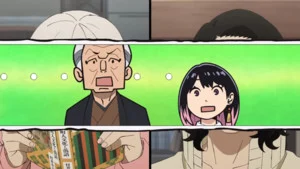
The third and fourth episodes of A Hundred Scenes of AWAJIMA deepen the series’ emotional palette and thematic reach. Where early episodes sketched character outlines and hinted at generational pain, episodes 3 and 4 unfold into two intimate vignettes that examine motherhood, legacy, desire, and the strange gravity of the theater itself. These installments avoid tidy catharsis in favor of slow, careful dissections of memory — all rendered in sensitive storyboarding and evocative color work that keep the show lingering in the mind long after the credits roll.
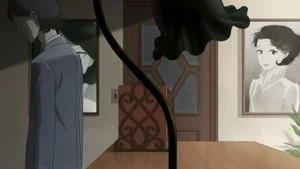
Table of Contents
Episode 3: A Tapestry of Mothers and Memory
Episode 3 is an ambitious, nonlinear exploration of the women who shaped Katsurako’s life — and, by extension, the cultural and familial forces that shaped the world of Awajima. Instead of focusing on performance or the mechanics of acting, the episode turns inward, mapping decades of small interactions, grudges, and quiet kindnesses that accumulate into a lifetime of consequence. It’s a challenging narrative to summarize: time folds, recollections collide, and the titular theater becomes less a physical location than a metaphysical repository of grief and aspiration.
The portrait of Natsuko
Central to the episode is Natsuko, whose image haunts the other characters like a portrait in a dark room. The show interrogates the difference between the myth of a person and their messy reality. For many, Natsuko is an icon — a revered actor frozen in memory — but the intimate moments revealed here complicate that reverence. Small gestures (a missed hairpin, a single embrace) become the most truthful relics, suggesting that who we are to others is often assembled from fragments rather than whole truths.
Ruriko and Katsurako: Interwoven resentments
Ruriko emerges as both the most balanced and the most tragic figure in this triangle. She manages to create a life of relative stability, yet she bears the private burden of repressed anger — anger that ultimately fails to protect her daughter from Katsurako’s vitriol. Katsurako’s final insult toward Natsuko is brutal and human, but the episode invites sympathy for all parties by showing how gendered expectations and limited choices shaped their behaviors. In this reading, Natsuko’s career is a form of emancipation that exacted a price from her family, and Ruriko’s stifling of resentment becomes the quiet catalyst of later ruptures.
Direction, Storyboard, and Visual Tone
The episode is a standout achievement in visual storytelling, with Gin-san (storyboarder/animation director) orchestrating moments of tiny but devastating detail. Rather than relying on grand monologues, the episode trusts in staging, composition, and the weight of a single held look to convey decades of feeling. The pacing is intentionally measured: scenes breathe, gestures linger, and the camera often lingers on objects or faces that hold private histories.
This is not melodrama; it’s slow-burn psychological observation rendered with a tactile sadness. The animation excels at transmitting the heaviness of family memory — how it compresses joy, resentment, and longing into objects and photographs that seem to contain whole lives.
Episode 4: Quiet Longings and External Perspectives
In contrast to episode 3’s inward gaze, episode 4 broadens the perspective while keeping its emotional stakes intimate. Under the direction and storyboarding of Atsuko Ishizuka, the episode leans into color and atmosphere; the first half’s palette is particularly effective at evoking yearning. Scripted by Yuniko Ayana, the central story between Kayo and Saori is sketched with the authorial sensitivity Ayana is known for — restrained, tender, and clearly rooted in lived feeling.
Saeko and the ripple of Awajima
One of the episode’s strongest threads is the brief, revealing aside featuring Wakana’s mother, Saeko. Her quiet resignation to an unglamorous life is disrupted by exposure to Awajima’s work, which awakens desires and long-buried curiosities — including a recognition of bisexual attraction. This short scene reframes Awajima as something beyond an insular training school: it is a cultural touchstone that reaches into ordinary lives and can catalyze self-discovery, for better or worse.
Male admirers and gender expectations
The final sequence gives us an affectionate view of Awajima’s small cohort of male admirers, particularly Takuto and Sayaka. Their friendship and shared affection for ostensibly “feminine” things are handled with warmth, and the episode uses their interaction to critique how society polices gendered interests. There’s a poignant honesty in showing how boys can be shamed or embarrassed for enjoying theater, handkerchiefs, or delicate art — and how those acts of shame can obscure deeper questions of identity.
Themes: Family, Gender, and the Theater’s Gravity
Across both episodes, several interlocking themes surface: the weight of familial roles, the myth-making power of performance, and the ways institutions like Awajima can simultaneously inspire creativity and inflict emotional harm. The series asks difficult questions about what is gained and what is lost when art acts as both refuge and factory of identity. Is the beauty Awajima produces worth the personal cost borne by its students? The show resists easy answers, preferring instead to present lives as accumulations of choices, compromises, and small rebellions.
Gender, unsurprisingly, is a central preoccupation. Episodes 3 and 4 explore how femininity, masculinity, and sexual desire are policed and performed — both onstage and off. By giving space to characters who quietly defy gender expectations, the series becomes a subtle but insistent meditation on how people find themselves in the interstices between role and self.
Where to watch
A Hundred Scenes of AWAJIMA is currently streaming on Crunchyroll, which is the official avenue to catch the latest episodes.
For readers curious about the directing voice behind episode 4, see Atsuko Ishizuka’s profile for broader context on her work and stylistic tendencies: Atsuko Ishizuka (Wikipedia).
Final thoughts
Episodes 3 and 4 of A Hundred Scenes of AWAJIMA illustrate what the series does best: fold intimate human drama into the mythic space of a theater that feels alive with memory. The third episode is a masterclass in character-driven melancholy, unraveling family histories with surgical compassion. The fourth episode balances that gravity with gentler, more outward-facing stories about desire, friendship, and the small awakenings theater can provoke. Together, they elevate the series beyond a school drama into a meditative study of how art and family shape who we become.