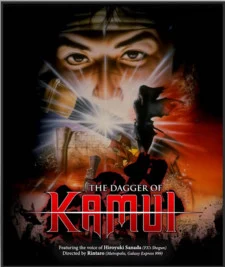
On the eve of a changing Japan, Dagger of Kamui follows Jiro, a foundling discovered in a drifting boat with only a glittering blade for company, as he is drawn into a sweeping tale of vengeance, treasure and collision between samurai-era Japan and the wider world. Equal parts chambara, historical epic and pulpy adventure, this film packs geography and emotion into a single feature—sometimes to its detriment, but often to its strange, compelling benefit.
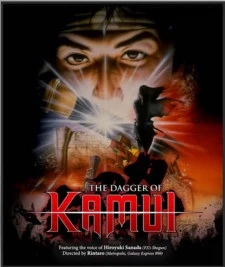
Dagger of Kamui — cover art.
Table of Contents
Plot overview: revenge, treasure and an eclectic journey
The story opens in the waning days of Japan’s isolated past, when an innkeeper finds an infant, Jiro, adrift in the north. Raised by foster parents, his life collapses when the family is murdered and Jiro is blamed. Rescued and trained by the sinister priest Tenkai in the arts of the ninja, Jiro grows into a weapon of vengeance. What starts as a personal vendetta quickly escalates into a globe-trotting hunt for Captain Kidd’s lost treasure—an object whose recovery could decide the fate of Japan’s future. From frozen northern seas to the deserts of the American West, the film barrels forward with Tenkai’s agents on Jiro’s heels and a motley cast of allies and enemies crossing his path.
Historical context and thematic depth
Meiji-era tension and the Boshin War backdrop
At its heart, the movie is as much about transition as it is about revenge: the tension between Japan’s closed past and an encroaching international order. The film uses the Boshin War and the Meiji restoration as atmospheric engines, reminding viewers that cowboys and samurai were contemporaries—different cultures negotiating the same global moment. That historical friction elevates the narrative beyond a simple revenge tale and turns it into a meditation on identity, modernization, and what a nation gives up to join the global stage.
East meets West: piracy, treasure myths and odd coincidences
The inclusion of Captain Kidd’s treasure and a detour to the American Old West creates a pulp flavor uncommon in straight historical dramas. These elements underline the film’s core theme: the collision of mythologies. The film deliberately mixes historical figures and adventure-movie tropes—avalanche, pirates, frontier encounters—to give the story an episodic, almost serialized feel. At times that mix produces thrilling tonal shifts; at other times it strains credibility, piling coincidences into a climax that some viewers may find too convenient.
Characters: Jiro, Tenkai and the moral gray
Jiro is written as a stoic archetype—a man forged by loss, driven by a simple and consuming goal. While this gives the film a clear emotional axis, it occasionally leaves Jiro feeling underdeveloped: his interior life is more suggested than explored. Tenkai, by contrast, is memorably grotesque as an archetype of power-hungry evil: gloating, cruel and methodical in his manipulations. Supporting characters—an enigmatic ninja woman, a Native American ally with ties to the Kidd lore, even cameo-like figures drawn from historical imagination—brighten the landscape and provide texture to Jiro’s lonely path.
Direction, animation and sound: a distinctive aesthetic
Under its director’s vision, the film demonstrates why hand-drawn animation of its era still resonates. Each environment—snowbound mountains, storm-lashed seas, arid deserts—is rendered with meticulous attention, and the action choreography treats swordplay and movement like cinematic set-pieces. The music further amplifies mood, often leaning into ritualistic or chant-like motifs that provide an almost hypnotic atmosphere. The sum is a film that feels crafted by an auteur who understands how visual, musical and narrative rhythms can cohere into a larger emotional experience.
Strengths and weaknesses: ambition vs. format
The film’s greatest strength is its ambition: it attempts a grand sweep that crosses continents and genres. That ambition is also its chief weakness. The density of plotlines—family secrets, ninjutsu training, treasure hunts, historical conflicts—competes with the runtime. Several sequences ask the viewer to accept dramatic twists and masked identities with minimal setup, producing moments where the film reads like a series of high-stakes coincidences rather than a naturally unfolding epic. Many viewers feel that this material would benefit from a serialized format that could give key relationships and revelations more breathing room.
Home release and extras worth seeking
For collectors and fans of animation history, the home-video releases of this film are often worth pursuing. Contemporary Blu-ray editions commonly include director interviews and discussions with animation historians that help unpack the director’s love for chambara cinema and cinematic technique. These extras give valuable context for viewers who want to understand the film’s formal ambition and its place in anime history. For further reading on the director and the historical figures that inspired elements of the story, consider checking general background articles and filmographies (external reference: Rintarō overview). Rintarō — director profile and Captain Kidd — history are useful starting points.
Why it still matters
Even with its narrative shortcuts, Dagger of Kamui stands as an engaging example of what made late-20th-century anime exciting: bold visual invention, a willingness to mix genres, and a director’s unique tonal signature. It’s the kind of title that rewards viewers interested in animation craft and history, and it remains a vivid reminder that anime can be both pop-adventure and a vehicle for historical imagination.
Final thoughts
Dagger of Kamui is flawed, impulsive and occasionally maddening—but also frequently transfixing. Fans of samurai cinema, hand-drawn animation, and ambitious cross-cultural storytelling will find much to admire, while viewers expecting tight plotting may feel impatient. If you come for the sword fights and stay for the atmosphere, the film offers an unforgettable, if imperfect, journey across changing worlds.