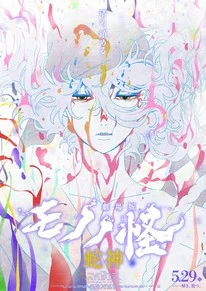
The Curse of the Serpent (Mononoke: Chapter III) delivers a haunting, visually audacious finale that rewards viewers who have followed the Medicine Seller’s strange, supernatural investigations across the Mononoke universe. Set a year after the Hinezumi incident, the Imperial Harem appears to be in celebration—new births, restored order—but a new string of inexplicable deaths drags the familiar cast back into an atmosphere of dread. This film leans into trilogy continuity, deepening mystery and theme while offering some of the most arresting animation of the series.
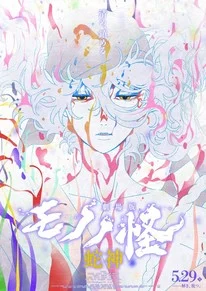
Synopsis: A year has passed since the Hinezumi incident. Fuki has given birth and the Emperor’s wife also welcomes a son—yet a wave of unnatural deaths returns the Medicine Seller to the harem to confront a new threat.
Table of Contents
Why The Curse of the Serpent Is Best Seen After the Earlier Mononoke Entries
Unlike the first two Mononoke films—which worked as mostly standalone pieces sharing a setting and recurring players—Chapter III is deliberately dependent on prior knowledge. Callbacks and unresolved threads from earlier entries become central to its emotional impact. Rather than being a weakness, that reliance strengthens the story: returning viewers immediately understand the stakes and the relationships between characters, allowing the film to spend time unraveling layered secrets rather than reintroducing everyone.
Story & Continuity: Two Mysteries in One
The Hebigami and the Harem’s Hidden Truths
At its core the film presents two intertwined mysteries: the immediate terror of the Hebigami (the serpent spirit) and the trilogy-long enigma of why this particular place attracts mononoke so frequently. By minimizing new characters and reusing familiar faces—Botan, Asa, Fuki, and the Medicine Seller—the narrative concentrates on depth over breadth. Flashbacks are used sparingly but effectively to reveal motives and history, and the film’s refusal to walk audiences through introductory exposition lets suspense build organically.
Mononoke as Victim, Villain, and Protector
Karakasa and Hinezumi established the series’ moral ambiguity: these spirits are monstrous yet also responses to trauma, acting as protectors warped by suffering. Hebigami continues that lineage but amplifies danger and potency. The serpent’s presence not only escalates physical peril, it acts as a prism through which secrets about the Emperor and the harem are disclosed. The Medicine Seller’s ritual apologies—already emotionally resonant—gain extra weight when you realize these spirits have been battling a deeper, unseen force.
Visuals & Animation: A Masterclass in Style
Visually, The Curse of the Serpent is unmistakable. The film extends Mononoke’s established aesthetic—richly textured backgrounds, bold color palettes, and a parchment-like organic feel—while pushing motion design into new territory. Hebigami’s two-dimensional, serpentine traversal across floors, walls, and ceilings produces some of the series’ most imaginative sequences. Geometric motifs (notably triangular scales) and dynamic camera movements heighten tension and emphasize the surreal quality of the supernatural encounters. For viewers who prize artistry in animation, this film ranks among the most striking examples of stylized Japanese animation.
Sound & Music: Traditional Roots, Modern Flourish
The soundtrack supports horror and suspense with a deft hand, alternating subtle atmospheric underscores with bold thematic bursts. The film’s opening and climactic music blends traditional Japanese vocal and instrumental textures with modern production touches—unexpected elements like an English-language rap cadence, strong basslines, and vocal processing—resulting in a sound that is both rooted and contemporary. The inclusion of a new track by Aina The End continues aural continuity with earlier entries while adding a fresh modern voice to the trilogy’s sonic identity.
Thematic Core: Gender, Power, and the Cost of Silence
Beyond spectacle, Chapter III continues Mononoke’s sustained interest in the treatment of women in feudal society. The harem—ostensibly a place of celebration—becomes a microcosm of silence, secrecy, and suppressed agency. The film interrogates how social structures produce both victims and monsters, and how cyclical violence can be misread as fate. By tying supernatural phenomena to institutionalized injustice, the narrative elevates its scares into sustained moral commentary.
Who Should Watch This Film?
- Fans who have watched the earlier Mononoke TV series or the two preceding films will find the most payoff here.
- Viewers who appreciate animation as visual art—those seeking bold design and cinematic camera work—will be rewarded.
- If you value complex, morally ambiguous storytelling that mixes horror with social critique, this installment is essential viewing.
For context on the broader franchise and background on the TV series, see the Mononoke overview on Wikipedia (nofollow). For more on the artist who contributes to the soundtrack, check Aina The End’s page (nofollow).
Final thoughts
The Curse of the Serpent is a fitting capstone to a trilogy that consistently blends folklore, moral inquiry, and arresting visual design. By leaning into continuity, the film delivers a denser, more consequential narrative that pays off long-building mysteries while retaining the series’ commitment to stylistic audacity. It’s a must-watch for anyone who enjoyed the earlier Mononoke entries and a powerful, standalone showcase of how animation can fuse myth, aesthetics, and social resonance into a single, unforgettable experience.