Yoroi Shin Den: Samurai Troopers continues to deepen its characters and expand its world in episode 4, leaning into sharper interpersonal friction while juggling an increasing number of plot threads. Under Shōgo Mutō’s pen, the reboot leans into playful-but-ambitious storytelling: it still reads like a kids’ show on the surface, but there are surprising moments of emotional and political complexity that keep the series interesting for older viewers as well.
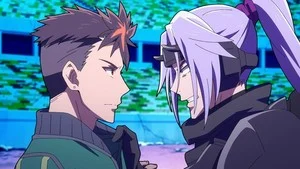
Table of Contents
Writing and Tone: Why Shōgo Mutō’s Touch Matters
One of the most immediately noticeable strengths of this episode is the writer’s tonal balance. Shōgo Mutō, known for his work on other tokusatsu and framed-hero narratives, brings a knack for blending broad, bright superhero beats with surprisingly sharp interpersonal moments. The show’s outward simplicity—giant-gear armor, demon-laden threats, energetic battles—coexists with quieter shades: secrecy, sacrifice, and characters who make morally ambiguous decisions for what they believe is the greater good.
Character Work: Edges, Friction, and Growth
Episode 4 leans into character friction as the primary engine of drama. Rather than depicting a squad of uniformly virtuous heroes, this reboot gives them flawed, sometimes selfish impulses that make their teamwork feel earned. That work is especially effective because it both humanizes the Troopers and creates meaningful stakes.
Yamato and the Small, Effective Beats
Yamato’s almost goofy devotion to Mirei—his unabashed fanboying—adds light levity while hinting at deeper dynamics in the team. Those little character beats help the series feel lived-in; Yamato isn’t just a color-coded archetype, he’s a person whose enthusiasms and vulnerabilities are distinct and memorable.
Ryusei and Shion: Misunderstandings that Reveal Character
The Ryusei–Shion relationship is handled through a classic misunderstanding, and while that device can feel trite on paper, the episode uses it to reveal real things about Ryusei’s priorities. The reveal that Ryusei has been concealing his mystical poisoning and that he’s willing to self-sacrifice—or at least deprioritize himself—for the mission, reframes him from magnanimous leader to pragmatic, sometimes cold operator. Shion’s return to the Troopers after a falling-out reads as earned character growth: he’s pushed, he fights back, and he grows stronger for it.
Gai, Kaito, Musashi: Demon Morality and Human Needs
Gai’s alien moral compass, expressed through odd demon metaphors, continues to be a highlight. It’s a tone of otherness that enriches team dynamics: friction with Gai or Kaito forces the other members to adapt and respond, which drives character development organically. Even Musashi, who initially seemed like the moral center, gains more human concerns—less about idealized heroism and more about messy, human needs. That shift makes the Troopers feel like a real group of people rather than stock hero types.
Plot & Worldbuilding: Expanding the Cast and the Stakes
Episode 4 pushes forward several worldbuilding threads that will matter if the series intends to sustain its momentum. The Demon Generals are more numerous and politically knotted compared to earlier iterations, and the mention of the Three Sacred Treasures hints at a larger mythos that’s still being teased out. The episode also reveals that the original Troopers became trapped in the Demon World five years prior—a tidy backstory hook that promises callbacks for long-time fans.
That expansion is exciting but not without cost. The show is introducing multiple factions, legacy squads, and named artifacts in quick succession, and there’s a risk of narrative clutter. At times it’s hard to know which threads are central and which are decorative, but Mutō’s handling of character beats helps keep the central relationships clear even as the lore grows denser.
Comparisons and Influences
For viewers who follow Japanese media reboots, the Demon World trap and the notion of legacy squads will feel familiar from other contemporary reboots and soft reimaginings. The show embraces its status as a reboot by leaning into referential touches—old rock songs and callbacks to franchise beats—without ever letting those references fully substitute for new storytelling.
Music, Easter Eggs, and Fanservice
The episode’s use of familiar Japanese rock is a nice tonal anchor; an energetic old-school track punctuates the action and gives the episode some nostalgic gravitas. If you’d like to hear one of the episode’s throwbacks, Bakufu-Slump’s “Runner” gets a spotlight in the episode and is available online here.
Accessibility: Who Is This For?
One of the early selling points of Yoroi Shin Den was its accessibility: it felt like a doorway for people who didn’t grow up on the original Samurai Troopers. As the series accumulates characters and references, that accessibility becomes a question—will the show remain approachable for newcomers, or will it increasingly cater to longtime fans? So far the writing does enough to ground emotional moments clearly, but viewers who prefer tight, lean plotting over sprawling myth-building may feel a bit overwhelmed if the pace of new information keeps accelerating.
Where to Watch
Yoroi Shin Den: Samurai Troopers is currently streaming on Crunchyroll for viewers in supported regions. For those following the series, the platform provides the easiest way to keep up with new episodes as they release. (Crunchyroll link used with permission)
Final Thoughts
Episode 4 of Yoroi Shin Den: Samurai Troopers is a solid installment that leans into character friction to deliver meaningful development. The Ryusei–Shion arc provides an effective emotional spine, while peripheral characters continue to gain texture. The growing web of plot elements—Demon Generals, trapped original Troopers, and mythic artifacts—suggests the series wants to be ambitious, but there’s a delicate balance to maintain between depth and clutter. For now, Mutō’s confident scripting and the cast’s rough-edged humanity keep the series engaging for both returning fans and curious newcomers.