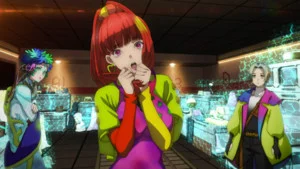
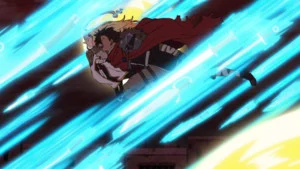
Witch Hat Atelier episode 6 deepens the show’s moral complexity while doubling down on its quiet visual delights. This instalment balances character-driven moments — especially between Qifrey, Coco, and the grumpy Watchful Eye Olruggio — with questions about who gets to control magic and why. The episode is a slow, deliberate study of motivations: Qifrey’s unorthodox compassion, Olruggio’s rigid duty, and the looming specter of the Knights Moralis. It’s an episode that asks whether the line between protection and possession can ever be clear in a world where memory and identity are malleable.
Table of Contents
Qifrey’s Teaching Style: Compassion or Calculation?
One of the strengths of episode 6 is how it foregrounds Qifrey’s mercurial nature. On the surface, he’s the genial mentor: patient with Coco’s lack of formal training and willing to adapt his pedagogy. Rather than force her into rote memorization, Qifrey translates magical instruction into the practical, tactile experiences Coco already knows — cooking and craft. That creative pivot is believable and emotionally satisfying; it respects Coco’s background and gives the audience a window into how learning can be personalized in the world of witchcraft.
But Qifrey’s kindness has a darker edge. The episode reminds us he is someone who bends rules when convenient, and that willingness to act in morally ambiguous ways makes him compelling, if not entirely trustworthy. From summoning a vividly animated dragon to using powerful spells in casual settings, Qifrey repeatedly tests boundaries. The story frames his decision to take Coco under his wing as a mercy, yet the narrative also plants seeds that he may have been pursuing something in Coco beyond mere altruism. Those hints make his character arc fascinating to watch: is he a savior, a sinner, or something in between?
Olruggio and the Watchful Eyes: Duty Meets Doubt
Episode 6 reintroduces Olruggio, the Watchful Eye assigned to Qifrey’s atelier. Watchful Eyes act as institutional safeguards — the mandated reporters of the magical education system — and Olruggio’s presence brings the state’s oversight into stark relief. He’s there to make sure Qifrey isn’t violating rules or endangering apprentices, and his discomfort with Coco’s situation speaks to the system’s inflexibility. Yet Olruggio isn’t a cartoon villain; the episode humanizes him through small, quiet gestures (like drying Coco’s hair) and his visible puzzlement at Coco’s wonderment.
That mixture of gruffness and hidden warmth complicates the viewer’s easy judgments. Olruggio appears disturbed by the idea that the Knights Moralis might resort to erasing memories — a punitive approach that suggests a history of heavy-handed enforcement. His reluctance to support complete erasure indicates some moral boundary even he won’t cross. The narrative invites the audience to interrogate institutions: are they protective guardians, or are they instruments of control that erase nuance for supposed safety?
The Knights Moralis: Authority or Oppression?
The Knights Moralis remain an ominous presence in the background. We haven’t seen them directly, but episode 6 hints at their uncompromising approach. The idea that they would mandate memory erasure as a solution paints them as a coercive force — a group whose standards and secrecy may be at odds with the everyday joy of magic. Visual cues, like the subtle brim protrusion of their caps, cleverly imply a disconnect between how they present themselves (moral guardians) and how they actually operate (guardians who might blind themselves to consequence).
Magic as Wonder vs. Magic as Tool
A central theme in this episode is the contrast between seeing magic as a gift and seeing it merely as a means to an end. Coco’s literal, childlike awe at mundane magical trappings — the glowstone pavement and softly flowing water magic — underscores how magic can inspire wonder in outsiders. Qifrey’s approach nurtures that wonder, using sensory, hands-on teaching to bridge Coco’s outsider perspective with the internal logic of witchcraft.
Agott, by contrast, is positioned as someone who treats magic instrumentally: a route to proficiency and perhaps power. The show does not demonize her ambition, but it does suggest risk when one loses sight of the wonder that animates magic. Will Agott soften if she’s exposed to the same gentle marvels that moved Coco? The episode leaves this open, teasing the possibility of growth or entrenchment.
Animation and Sound: Selling the Small Moments
Witch Hat Atelier continues to shine in its visual storytelling. The animation elevates even quiet scenes: the fluidity of Qifrey’s water spells, the warm flicker of Olruggio’s fire rings, and the dragon sequence from earlier episodes all demonstrate care and craft. These sequences are not merely spectacle; they reinforce theme. When the camera lingers on the texture of bubbling broth used as a magic lesson or the soft glow of streetlights made magical, the series is making a case for magic as beauty.
Sound design supports this aesthetic with subtlety — the clinks of kitchenware, the rush of water, and ambient noises that make the atelier feel lived-in. Together with expressive voice work, these elements create a sense of place that helps the ethical debates land emotionally rather than just analytically.
What This Means for the Story Going Forward
Episode 6 sets up future conflicts neatly: Qifrey’s borderline rule-breaking invites scrutiny, Olruggio’s conscience may be shifting, and the Knights Moralis’ looming methods suggest a clash between institutional power and individual tenderness. There’s also narrative momentum around Agott — will she become a foil who learns empathy, or will she double down on utilitarian magic? The show uses its quiet moments to seed larger stakes, making future episodes feel charged even when the immediate plot is small-scale.
Where to Watch
Witch Hat Atelier is currently streaming on Crunchyroll.
Final thoughts
Episode 6 is an effective chapter that deepens character motivations while enriching the series’ thematic core: magic as wonder and the responsibility that comes with power. Qifrey remains a charmingly ambiguous figure, Olruggio is more humane than his watchdog role suggests, and the Knights Moralis loom as an institutional threat whose methods appear dangerously uncompromising. With exquisite animation that uses small, sensory moments to make big ethical points, Witch Hat Atelier continues to be a series that rewards patience and attention. The episode leaves us invested in Coco’s growth and uneasy about the forces that might try to take that wonder away — a tension that promises moving drama ahead.