Wistoria: Wand and Sword season 2 continues its return with episode 4, an installment that reads more like the closing act of a prologue than the opening salvo of a new season. Fans hoping for steady momentum get a rollercoaster of repetition, spectacle, and production unevenness—everything wrapped around a hero moment that’s satisfying in isolation but thin on narrative weight. Below I break down the episode’s highs and lows, what works (and doesn’t), and what to watch for in the chapters ahead.
Table of Contents
Episode Overview
Episode 4—titled “And So the Story Begins”—feels paradoxically like an ending. The bulk of the runtime is devoted to repeating a single climactic thread: Will’s comeback and the lead-up to a set-piece showdown. After last week’s heavy-handed tease of Will’s transformation, this episode spends significant time hyping that exact moment again before delivering a flashy but narratively hollow confrontation. The result is an episode that lands when it matters visually, but lacks the emotional or plot-driven setup to make that landing resonate.
Pacing Problems: Repetition and Misplaced Climax
One of the clearest issues this week is pacing. The show revisits the same beats we saw previously—the slow build toward Will’s reveal, intercut reactions from supporting characters, and extended slow-motion sequences—rather than using the runtime to progress the story or deepen relationships. Repetition can work when it emphasizes stakes or clarifies mystery, but here it mostly highlights how little new ground the episode covers.
Why it Feels Like a Prologue Finale
Given the episode’s title and tone, it’s tempting to believe these scenes were originally intended as the end of a previous arc. The centerpiece showdown is staged and choreographed like a finale, yet it’s placed awkwardly early in season 2. This mismatch leaves the episode feeling like a stopgap—dramatic on the surface, but not integrated into a larger narrative push.
Character Work: Finn’s Repetition and Will’s One-Dimensional Triumph
Characterization suffers amid the episode’s structural problems. Finn, who was introduced at the end of season 1, continues to play the same role: cryptic exposition and portentous hints about Will’s origins. His presence adds mystique but little development; repeated appearances of this type quickly become static rather than intriguing.
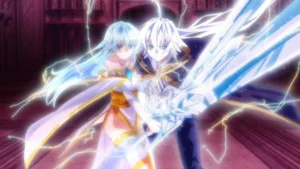
Will’s moment—finally using his powered-up form and sword in a coordinated combo with Elfaria—should be cathartic. The crowd’s reaction and the show’s celebratory framing attempt to make this a turning point for him. Unfortunately, the emotional payoff feels unearned: we’re asked to accept townsfolk suddenly cheering a previously marginalized character without seeing the gradual relationship-building that would justify such public adulation.
Animation and Production Concerns
Visually, the episode has moments of genuine flair—especially during the sword-and-ice combination attack that closes the sequence. When the production commits to large-scale action, it can deliver exciting imagery and effective staging. However, those highlights are undercut by frequent animation shortcuts throughout the episode. Backgrounds, character movement, and some mid-action frames betray a limited budget or rushed schedule.
Credit Length and Runtime Issues
Another practical gripe: the episode devotes a sizable chunk of its runtime to opening and closing credits. With roughly seven minutes of title sequences, the actual story beats feel compressed. This is especially noticeable in an episode that’s structured around a single dramatic event—when so much of the clock is spent on credits, the few remaining minutes must carry too much narrative and emotional weight.
The Climactic Moment: Cool but Isolated
When Will finally swings his sword, it’s undeniably cool. The choreography, sound design, and combined magic-sword visuals provide genuine spectacle. Elfaria’s support and the team-up flourish add variety to the action beats and lend the sequence some creative punch.
Still, spectacle alone can’t mask context problems. With limited character growth and a sense that the episode is re-staging previous beats, the climactic sequence plays more like a highlight reel than a meaningful turning point in the story.
Where Season 2 Should Go Next
- Stop repeating the same beats: Season 2 needs to shift gears and introduce fresh momentum—more new revelations about Will’s past and clearer stakes for the Academy.
- Deepen supporting cast arcs: Characters like Finn and Elfaria should evolve beyond plot devices or reactionary roles; add scenes that develop their motivations.
- Stabilize production: If animation shortcuts continue, the show’s dramatic moments will keep feeling hollow. Consistent quality is essential for sustained engagement.
For viewers who want to stream the series, Wistoria: Wand and Sword is available on Crunchyroll (link opens in a new tab).
Watch Wistoria: Wand and Sword on Crunchyroll
Final thoughts
Episode 4 of Wistoria: Wand and Sword serves up spectacle and a crowd-pleasing sword-and-magic finish, but it’s hampered by repetition, thin character work, and noticeable production shortcuts. The show still has potential—moments of strong choreography and promising lore peek through—but to regain momentum season 2 must stop rehashing finales and start building forward. If the next chapters prioritize coherent pacing, meaningful character beats, and steadier animation, Wistoria can recover the narrative punch it showed in its best moments.