Rooster Fighter’s fifth episode leans into quiet character work and unexpected tenderness, trading some of the series’ usual bombast for contemplative moments and heartfelt comedy. After four episodes of frenetic monster battles and Keiji’s unfiltered anger, this installment offers breathing room: internet fame and fowl hijinks segue into a surprisingly moving encounter with a demon who has lost his purpose. The result is an episode that balances humor and melancholy while deepening the show’s emotional stakes.
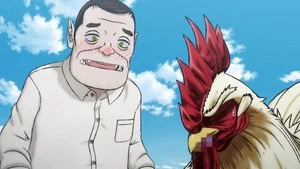
Table of Contents
From Viral Fame to Fowl Fandom: The Opening Act
The episode opens with a comedic send-up of online culture: a bystander captures the rooster trio’s demon battle and uploads it, instantly turning the group into internet sensations. That popularity brings light humor—“chicknappers” and wannabe Viewtubers—while also creating plausible new dangers. This short sequence artfully skewers otaku stereotypes with exaggerated animation and voice work, giving the episode a playful beat before moving into its more introspective center.
Morio: A Demon Without a Mission
The emotional heart of the episode arrives when Keiji wanders off in a sulk and encounters Morio, a human-sized demon who can communicate telepathically. Morio is an anomaly: he doesn’t crave violence or domination, and he doesn’t act like other demons introduced so far. Instead, he’s lethargic, resigned, and adrift—created from the grief of a human who believed his life was ending. When that human later discovers he will live after all and chooses to reclaim his life, he ejects Morio, leaving the demon purposeless and existentially hollow.
Why Morio Resonates
Morio’s arc resonates because it reframes the demon archetype into something quietly human. Without a human’s resentment or directive, Morio becomes a creature of in-between: too large and uncanny to fully belong with humans, yet not malevolent. The scene where he settles into a small twig hut and contemplates why he exists is tender rather than terrifying—a refreshing tonal shift for the series. Keiji’s reaction—gentle encouragement and the denial of “meaningless” life—helps steer the episode into sincere territory.
Parallel Stories: The Quiet Strength of Everyday People
Meanwhile, Elizabeth and Piyoko encounter a young woman caring for her sick grandfather. A sudden flash flood forces the trio into action, giving Piyoko a stepping-stone moment to understand that strength isn’t all about chops and combat prowess. The sequence works as a foil to Morio’s story: whereas Morio drifts aimlessly after being unmoored from purpose, the girl and her grandfather embody the slow, often invisible dignity of caregiving. The juxtaposition reinforces the episode’s central theme—purpose can look different for everyone.
Sentimentality Done Right
Sentimentality is a tricky tone to manage, especially in a show known for over-the-top monster action. This episode strikes the right balance; it never tips into saccharine melodrama. Instead, it offers quiet reflection on guilt, regret, and the pressure to “have a purpose.” Morio and his former human are both sympathetic in their own ways—the human for wasted time and the demon for the aftermath of relinquished resentment. The narrative suggests that meaning isn’t always dramatic or grandiose; sometimes it’s found in small acts and unexpected companionship.
Comic Relief: Drunk Keiji and the Chicken Dance
No Rooster Fighter episode would be complete without Keiji’s trademark rough edges, and the show doesn’t abandon its comedic backbone. After wandering alone, a soggy and tipsy Keiji provides some of the episode’s best laughs. From bargain-bin sea urchin mishaps to an absurdly animated chicken dance, these moments are both a palate cleanser and a reminder that the series can blend grotesque action with genuinely goofy comedy. The drunk-Keiji sequence is one of the episode’s visual highlights—animation at its most expressive and ridiculous.
Themes: Purpose, Regret, and the Slow Life
At its core, episode five explores what it means to have—or lose—a reason to live. Morio’s existence raises philosophical questions without getting preachy: when someone removes the driving emotion behind your actions, do you vanish with it? Or is there a chance to rebuild? The show leans into the idea that purpose can be rediscovered through relationships and small commitments. Keiji’s simple reassurance that life isn’t meaningless feels earned, and the parallel caregiving storyline grounds that message in human reality.
Why This Episode Matters for the Series
This installment broadens Rooster Fighter’s narrative palette. Up to this point, the series relied heavily on monster battles and Keiji’s single-minded vengeance. Introducing a demon who isn’t evil and an episode that privileges empathy over spectacle signals room for growth—both for the protagonist and the storytelling. It hints at a world where not every supernatural being is a threat and every human story doesn’t hinge on violence.
Where to Watch
Rooster Fighter continues to air on Toonami and is available for streaming. Catch the series on Hulu/Disney+ for the latest episodes and official simulcasts.
Watch Rooster Fighter on Hulu/Disney+
Final thoughts
Episode five of Rooster Fighter is the series’ most emotionally nuanced hour yet. It slows the pace to explore meaningful themes—purpose, regret, and the quiet dignity of care—while still delivering sharp comedy and memorable animation beats. Morio’s brief, melancholic arc is proof that this show can be more than relentless monster slugfests: it can be surprisingly tender, too. If the series continues to balance heart and humor this well, there’s a lot to look forward to in the episodes ahead.