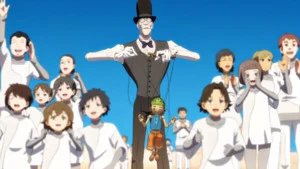
Agents of the Four Seasons: Dance of Spring closes its short run with episode 14, a finale that tries to tie up emotional threads and deliver catharsis after a season full of uneven pacing and overwrought melodrama. While the episode manages a few satisfying beats, it ultimately struggles to redeem a series that spent too much time on repetitive flashbacks and undercooked antagonists. Below I break down what worked, what didn’t, and whether the finale earns its place among the season’s stronger episodes.
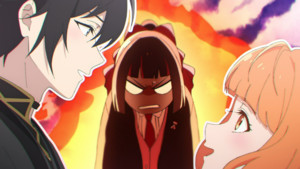
Table of Contents
Episode 14 — A Closure That Feels Both Necessary and Hollow
The finale gives the main quartet a chance to confront their past and each other, delivering the expected showdown with Misuzu and the Insurgents before concluding with a reunion between the Spring and Winter pairs. Structurally, the episode follows a conventional finale arc: conflict escalation, pivotal confrontation, and an emotional denouement. Unfortunately, because much of the season spent building a sense of depth that never fully materialized, the concluding beats often feel perfunctory rather than earned.
Character Moments: Hinagiku, Rosei, and the Weight of “Growth”
Hinagiku’s development is the focal point in this chapter. Her attempt at taking control and issuing a command to her Guardian is framed as a milestone — aided, of course, by a score that insists on its emotional gravity. It’s a step in the right direction for her character, but the payoff is modest because the series rarely gave Hinagiku consistent growth arcs to build up to this moment. The scene works on a surface level, but it lacks the narrative pressure that would have made it genuinely moving.
Rosei, who has been one of the more interestingly designed characters in the cast, finally gets a moment of meaningful action. Teaming up with Itecho to defeat Misuzu and the Insurgents gives him a rare instance of impact, and the moment feels like the character fulfilling his potential — if belatedly. That said, his reluctance to take a harsher course of action (and the show’s insistence on mercy) leaves a “what could have been” aftertaste that some viewers may find frustrating.
The Insurgents and Misuzu — A Failed Villainous Arc
Where the finale most visibly falters is in the handling of the antagonists. Misuzu, introduced earlier in the season as a central antagonist, never receives the nuance or credibility necessary to make her threat believable. Her motivations remain murky and her portrayal leans into contrivance. Because the Insurgents are the source of virtually every conflict across the season, this failure undercuts the stakes of the entire story. A finale can only do so much when the villainy it resolves has always felt like a flimsy engine for drama.
Why Antagonist Weakness Matters
Good antagonists give protagonists something meaningful to react against — they reveal character, force change, and justify sacrifices. In this season, the Insurgents rarely catalyze transformation; instead they act as episodic obstacles. That makes the eventual “victory” feel hollow. Even Rosei’s decisive intervention, while satisfying, doesn’t fully compensate for the months of squandered setup.
Flashbacks, Pacing, and Emotional Manipulation
The series leaned heavily on flashbacks to sell an emotional history between the four survivors, but the repeated backstory moments ultimately weakened their impact. Instead of deepening relationships, the flashbacks often substituted for real-time character development, giving viewers a sense of manufactured pathos. The finale tries to capitalize on those manufactured bonds with a tearful reunion and soft-focus cinematography, but the emotional beats land unevenly because the groundwork feels partly superficial.
Visuals and Soundtrack — Peaks and Plateaus
On the technical side, the animation and music perform competently when the episode needs to dramatize key moments. Cinematography and score combine to push the emotional beats, and those elements deliver short bursts of resonance. However, strong music and pretty shots can’t fully mask storytelling gaps. The soundtrack’s attempts to heighten scenes occasionally come across as insistence rather than artistry.
Comparisons and Context
Compared with other season finales of similar character-driven anime, this episode feels safer and more conservative. It resolves the central plot points without taking creative risks and opts for a neatly tied, mostly platonic ending between Hinagiku and Sakura. Fans looking for a bold twist or a morally ambiguous finish will likely be disappointed; those seeking soft closure may find the finale adequate.
Where to Watch
Agents of the Four Seasons: Dance of Spring is available to stream on Crunchyroll (link below). If you’re curious about community reaction or episode discussions, sites like MyAnimeList can provide broader viewer impressions and ratings.
Community and ratings on MyAnimeList
Final thoughts
Episode 14 brings a necessary end to a season that could have used sharper focus from the start. It contains moments of character payoff, solid visuals, and a few gratifying heroic beats — but those highlights are wrapped in broader narrative weaknesses: a thinly realized villain, overused flashbacks, and emotionally manipulative framing. Agents of the Four Seasons had intriguing elements and a compelling aesthetic, yet it seldom translated its concepts into consistently engaging storytelling. The finale is tolerable and occasionally satisfying, but it can’t fully salvage a season that repeatedly promised more than it delivered.