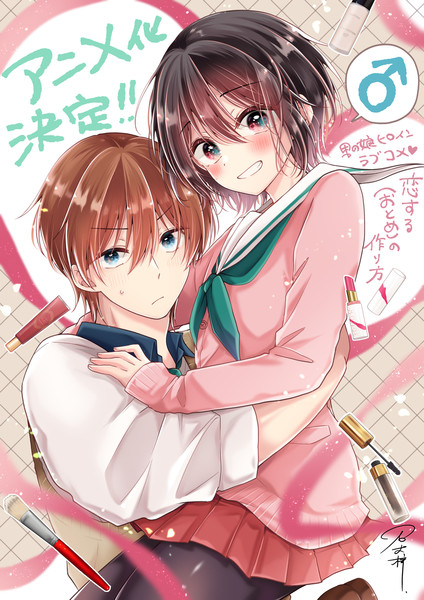
Fans of slice-of-life romance and character-driven stories have a fresh reason to be excited: Azusa Banjo’s beloved manga I Think I Turned My Childhood Friend Into a Girl (Koisuru (Otome) no Tsukurikata) has been confirmed for a television anime adaptation. Announced via the series’ official X account, the reveal arrived alongside a commemorative illustration by Banjo that captures the gentle charm and surprising emotional depth that made the manga a hit. Below we break down what the series is about, why the adaptation matters, and what fans can reasonably expect when the anime arrives.
Table of Contents
Overview: What Is I Think I Turned My Childhood Friend Into a Girl?
I Think I Turned My Childhood Friend Into a Girl follows Kenshirou Midou, a high school student who secretly adores cosmetics, and his childhood friend Hiura Mihate. When Kenshirou is finally allowed to practice makeup on Hiura, the results are transformative—Hiura’s look shifts from plain and boyish to delicate and undeniably feminine. That makeover becomes a catalyst for both characters: Kenshirou revels in the creative, liberating act of makeup, and Hiura begins embracing a new mode of self-expression that includes wearing the girls’ uniform to school.
Core themes and tone
At its heart, the series blends light-hearted romantic comedy with thoughtful explorations of gender expression, identity, and the emotional intimacy that grows from acts of care. The tone balances playful makeover moments with quieter, introspective beats that consider how clothing and cosmetics can be tools of personal discovery rather than merely surface changes.
Plot & Character Dynamics
Kenshirou Midou — the makeup enthusiast
Kenshirou is presented as someone whose passion—cosmetics—has long been private. His joy in transformation is genuine and artistic rather than shallow, and the story treats his hobby with respect. His relationship with Hiura is the emotional centerpiece: a mixture of long-standing friendship, affectionate teasing, and a slowly intensifying attraction that both surprises and confuses him.
Hiura Mihate — more than a makeover
Hiura’s transformation is where the series distinguishes itself. Rather than simply becoming a romantic prize, Hiura demonstrates agency and curiosity about this newly discovered presentation. The narrative focuses on Hiura’s comfort and exploration, showing how outward appearance can reflect inner change. The shift toward wearing a girls’ uniform and experimenting with feminine clothing becomes a key narrative device to explore identity and consent.
Manga Publication & Availability
Azusa Banjo launched the manga on Ichijinsha’s Comic Pool platform in February 2020, and the series has steadily grown in popularity thanks to its sensitive handling of personal growth and its warm, approachable art. The manga’s compiled volumes have been released in Japan, and the series is available in English through Seven Seas, making it accessible to Western readers as well. For readers interested in the original serialization, the manga runs on Ichijinsha’s Comic Pool website. Visit Comic Pool.
The Anime Announcement: What We Know
The television anime adaptation was announced on the series’ official X account, which also shared a commemorative illustration by Azusa Banjo celebrating the news. The announcement confirms the anime is moving forward but, as of the reveal, core broadcast details like premiere date, studio, staff, and cast have not yet been made public. That means fans should stay tuned to the official X account and the manga’s publishers for updates.
How fans typically react to an adaptation like this
Adaptations of character-focused slice-of-life romances often generate excitement for the possibility of seeing nuanced emotional beats animated—faces, blushes, and subtle gestures can gain new life with motion and voice acting. For this series, the makeup sequences and wardrobe changes are likely candidates for visually striking animation, while a carefully chosen cast and director could deepen the story’s emotional resonance.
What Fans Can Expect from the Anime
- Faithful character design: Fans will expect Kenshirou and Hiura to look and feel like Banjo’s original art, with particular attention to facial expressions and costume detail.
- Emphasis on emotional pacing: The manga’s slower, character-first scenes will likely translate into episodes that prioritize mood and development over plot speed.
- Respectful treatment of sensitive themes: Given the manga’s approach, viewers will hope the anime maintains sensitivity around gender expression and consent.
Why This Adaptation Matters
In recent years, anime and manga that thoughtfully explore gender and identity have gained broader attention. I Think I Turned My Childhood Friend Into a Girl stands out by framing cosmetics and clothing as means of self-expression rather than mere spectacle. An anime adaptation can bring that message to a wider audience, contributing to more diverse representations of youth exploring who they are.
Final thoughts
The television anime adaptation of I Think I Turned My Childhood Friend Into a Girl is promising news for readers who fell for Banjo’s compassionate storytelling. While details remain sparse, the core elements—a tender friendship, the joyful artistry of makeup, and an honest look at identity—offer rich material for animation. Keep an eye on the series’ official X account for future updates, and if you haven’t yet sampled the manga, consider picking up the English volumes or reading the serialization to experience the original nuance that inspired the adaptation.