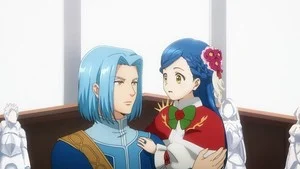
Agents of the Four Seasons: Dance of Spring aimed for high drama and emotional payoff in episodes 10–12, staging a rescue mission that should have delivered catharsis for its scarred protagonists. Instead, the season’s climax feels more like an exercise in trauma exposition than a satisfying resolution. Below I break down why the show’s thematic ambitions frequently collapse under the weight of sloppy storytelling, thinly sketched villains, and an almost fetishistic insistence on suffering as spectacle.
Table of Contents
Aristotle, Catharsis, and What the Series Promised
At the heart of any successful tragedy is catharsis: the cleansing emotional release that comes from witnessing characters endure and then transcend suffering. Agents of the Four Seasons explicitly positions its late-season arc as an attempt at that very thing. Hinagiku, Sakura, Itecho, and the rest finally converge to save Nadeshiko and confront the Insurgents who ruined their childhoods. The series repeatedly tells us that overcoming trauma and breaking cycles of violence is the endgame.
Why Catharsis Fails Here
1. Trauma as an End in Itself
Instead of using trauma to deepen character growth, the show wallows in it. Flashbacks, repeated reminders of past abuse, and melodramatic reveals pile up without ever yielding a genuinely new insight into the characters’ inner lives. The emotional beats become rote: we are shown pain, we are asked to empathize, but we aren’t led to any meaningful transformation. Catharsis requires movement — the characters must be changed by what they endure. In these episodes, they remain largely the same, only angrier and more exhausted.
2. Villains Without Depth
Misuzu and the Insurgents are presented alternately as ideological actors and cartoonish villains, and the series can’t choose which. We get token backstory elements — discrimination, abuse — that try to retroactively justify heinous actions, yet the execution feels like an amateur attempt to manufacture sympathy on cue. When the show itself admits its villains are “doing terrorism” as a childish response to pain, it undercuts any attempt to portray them as complex antagonists. Nuance dissolves into justification or condemnation without a coherent middle ground.
3. Direction and Visual Execution Undermine Key Moments
Even when the script hints at potential emotional release, the direction and animation often fail to support it. Action beats that should feel cathartic play out listlessly because of inconsistent pacing and underwhelming staging. Climactic confrontations that ought to land with impact are reduced to clumsy choreography and awkward framing, robbing the audience of the visceral reaction necessary for catharsis.
Storytelling Missteps in the Rescue Arc
The rescue mission for Nadeshiko is conceptually promising: a ragtag team of former victims confronting the source of their pain. Instead of turning trauma into empowerment, however, the show keeps retreading the same emotional ground. Characters openly tell one another they must “move on,” but the narrative rarely shows the inner work or consequences of that decision. The result is a series of declarative lines that feel performative rather than earned.
Character Beats That Don’t Pay Off
- Hinagiku is positioned as the emotional center, yet her growth is telegraphed more than demonstrated.
- Sakura and Itecho get moments of solidarity and bravado, but these are seldom followed by tangible stakes or lasting change.
- Nadeshiko’s plight catalyzes the mission but is used more as a prop for other characters’ trauma rather than as a fully realized arc for herself.
Ethics of Trauma Portrayal: Sensitivity vs. Exploitation
There’s a fine line between honestly portraying suffering and exploiting it for shock value. Agents of the Four Seasons frequently crosses that line. Scenes that should invite empathy instead read as “trauma porn” — grotesque details inserted to elicit a reaction without contributing to the narrative or thematic depth. When a series treats suffering as the primary spectacle, the possibility of catharsis evaporates because the audience is never allowed to process or integrate what they see into a larger understanding.
“Hurt People Hurt People” Doesn’t Cut It
The show leans on the familiar trope “hurt people hurt people” as if the mere invocation of cyclical violence excuses sloppy villainy. This flattening of motive reduces moral complexity to a single, tired explanation. Rather than interrogate the structural conditions that breed violence, the narrative shortcuts into melodrama, effectively saying trauma equals villainy without exploring the intervening social or psychological layers.
Moments That Do Work — Rare but Noticeable
It’s not all failure. There are fleeting instances where performances and dialogue align to create genuine feeling: a quiet exchange between teammates, a determined yet weary glance, or a small sacrifice that resonates. When direction and acting synchronize, you can glimpse the catharsis the series strives for. Unfortunately, these moments are too sporadic and too underdeveloped to salvage the overall arc.
Technical Positives
Occasional strong voice acting and well-written short scenes demonstrate the core talent behind the project. If those strengths had been leveraged into tighter plotting and more disciplined thematic work, the final episodes might have achieved something closer to what they intended.
Where the Show Could Have Done Better
- Show, don’t tell: Let characters process grief through action, not exposition.
- Deepen antagonist motivations beyond trauma clichés and ideology-for-its-own-sake.
- Tighten direction in pivotal scenes so emotional stakes register visually as well as narratively.
- Allow victims to be agents of change, rather than mere catalysts for others’ growth.
Agents of the Four Seasons: Dance of Spring is currently streaming on Crunchyroll. For more on the classical idea of catharsis referenced here, see this overview of Aristotle’s Poetics on the Stanford Encyclopedia of Philosophy (rel=”nofollow” external resource) — Aristotle: Poetics.
Final thoughts
Episodes 10–12 of Agents of the Four Seasons promise a powerful release but deliver an exhausted retread of trauma without the narrative muscle to transform suffering into meaning. The show repeatedly tells us it wants catharsis but rarely earns it, preferring spectacle over structure and shock over subtlety. There are talented elements scattered throughout — voice performances, occasional sharp writing — but they aren’t enough to offset weak villainy, inconsistent direction, and a thematic insistence that pain alone equals profundity. Ultimately, the series serves as a reminder that trauma in fiction must be treated with care and purpose; without that, all you have left is hurt for hurt’s sake.