Episode 6 of Akane-banashi pushes the series into richer thematic territory by introducing Koguma, a deceptively simple rival whose mastery of historical detail and scholarly approach to rakugo forces Akane to confront what it truly means to inhabit a story. This episode reframes the art of performance as an act that requires not only vocal skill and timing but also deep research and empathy for the period and people behind each tale.
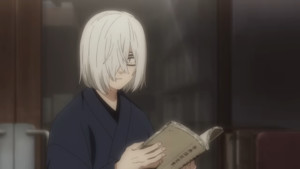
Table of Contents
Koguma: a foil that redefines Akane’s challenge
What makes Koguma such an effective new presence is that he doesn’t simply compete in the usual ways. He brings a different dimension to rakugo: contextual scholarship. Whereas Akane has excelled through charm, energy, and stage presence, Koguma arrives with an intimate familiarity with the historical textures surrounding his stories. This difference exposes an important gap in Akane’s approach — one that can’t be closed by talent alone.
More than words: the importance of verisimilitude
Koguma demonstrates that rakugo benefits greatly from authenticity. The small, often-overlooked details — what dice sounded like in the Edo period, how garments were layered, the construction of household objects — create a sensory world that anchors the audience in a specific time and place. Those touches make characters feel lived-in rather than recited, and they transform a good performance into an unforgettable one.
How Koguma teaches by example
Rather than attacking Akane’s technique directly, Koguma leverages research to build trust between storyteller and story. His stories gain authority because his performances are imbued with the lived reality of the period. The result is that audiences learn as they laugh: the performance doubles as a window into history. For Akane, this is a revelation — her stagecraft must grow to incorporate more than voice and gesture; it must gather the weight of historical truth.
What this episode demands from Akane
Episode 6 is less about a single climactic performance and more about the long game of artistic development. The narrative makes it clear that Akane cannot simply repeat old tricks and expect to succeed against someone who understands the background intimately. She is invited to become a student again, to balance intuition with study, and to deepen her relationship with rakugo as both art and cultural practice.
From “just words” to engaged scholarship
Akane’s previous strengths — charisma, timing, emotional clarity — are still essential. But Koguma’s critique that some performances can be “just words” highlights how easily a story can float free of the world it depicts. To compete at the highest level, Akane must learn to weave detail into delivery so the setting and social realities become part of the punchline and the pathos, not just background noise.
Rakugo’s living history: why the past matters on stage
Rakugo’s core lies in its role as a carrier of cultural memory. These tales are embedded with historical norms, social hierarchies, and domestic realities that shaped everyday life. Episode 6 uses this framework to show how well-researched storytelling can add layers of meaning. Audiences don’t just laugh at a gag; they connect to a world where objects, language, and gesture all point to lived experience.
For readers unfamiliar with the broader context of rakugo, the art form’s emphasis on memory and tradition is extensively discussed in cultural overviews — for further background see Britannica’s summary of rakugo. Learn more about rakugo.
Production notes: direction, animation, and sound
Episode 6 also stands out technically. The direction smartly alternates between intimate close-ups and wider, atmospheric frames to emphasize the contrast between performance and background. Animators use subtle costume and prop details to reinforce Koguma’s scholarly approach; in scenes where he explains a story’s specifics, the camera lingers on textures and small gestures that would be lost in a broader shot.
The sound design complements this by highlighting tactile noises — the clack of a handmade die, the rustle of period fabrics — which are mixed into performances so they feel organic rather than theatrical. These choices give Koguma’s tales a tangible weight that contrasts with Akane’s lighter, more immediate style.
Voice acting and chemistry
Voice performances continue to carry the series. Akane’s searing enthusiasm remains compelling, but Koguma’s calmer, more deliberate cadence provides a necessary counterbalance. Their chemistry is important: it’s not only rivalry but also an unspoken mentorship in disguise. The episode succeeds because the two approaches feel equally valid and destined to cross-pollinate.
Why episode 6 matters in the season arc
This episode is a turning point. It reframes Akane’s arc from purely personal triumphs to a broader pursuit of mastery. Koguma’s presence doesn’t aim to crush her; it serves to elevate her potential by forcing her into new kinds of work. The narrative momentum shifts from proving talent to proving dedication.
In the broader season context, Episode 6 plants seeds for future conflicts and collaborations. Akane’s journey will likely involve research, study, and perhaps a re-evaluation of what it means to be a storyteller in a world that values authenticity as much as entertainment.
Where to watch
Akane-banashi is available to stream on the official channel. For viewers wanting to catch this episode, the series streams on YouTube. Watch Akane-banashi on YouTube.
Final thoughts
Episode 6 of Akane-banashi is a quietly powerful installment that deepens the show’s exploration of rakugo by introducing a rival who highlights the importance of historical awareness and scholarly care in storytelling. It’s less about spectacle and more about the slow work of mastery, and it rewards viewers who appreciate how small details can transform a performance from charming to unforgettable. For fans invested in Akane’s growth, this episode promises a richer, more textured path forward — one where talent and study must finally meet.