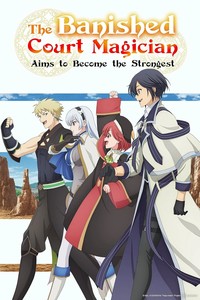
The Banished Court Magician Aims to Become the Strongest is a fantasy anime that wears familiar tropes on its sleeve but occasionally flashes the kind of charm that suggests a stronger story lies beneath. With an earnest central cast, dungeon-crawl set pieces, and a revenge-driven subplot that deepens in the latter half, this series is uneven yet watchable — especially if you enjoy heartening party dynamics and light novel hooks that hint at more to come.
Table of Contents
Synopsis
What the Series Gets Right
Strong party dynamics and warmth
One of the anime’s biggest strengths is the camaraderie within Alec’s former adventuring squad, Lasting Period. Their loyalty and mutual respect provide genuine heart throughout the series, grounding scenes that could otherwise feel rote. When the group interacts, there’s a warmth that elevates smaller moments — quiet conversations, unspoken support, and a sense of shared purpose that makes you root for them as a unit.
Clear worldbuilding hooks
Although the show scrapes the surface of its lore, key details — like the court magician Eldas’s banishment and Alec’s goal to reform the institution from within — set up intriguing long-term stakes. For viewers who enjoy digging into source material, the anime reads like a teaser for deeper worldbuilding that may be explored in the light novels.
Where the Anime Falters
RPG-style combat that feels turn-based
While the animation quality is competent, many fight scenes play out like video game boss battles rather than cinematic duels. The pacing and choreography lean on predictable attack/response beats: characters shout moves, land hits, and then await retaliation in a way that reduces tension. This “turn-based” feel undercuts the drama and makes action sequences less visceral than they could be.
Soundtrack and dubbing choices
The score often telegraphs emotion in heavy-handed ways — swelling into symphonic crescendos during action and leaning on melancholic piano cues for somber beats. These musical cues can feel overly direct, inviting the audience to feel things rather than allowing scenes to breathe. The English dub, likewise, sometimes comes across as flat, which diminishes emotional payoff for viewers who prefer dubbed tracks.
Underused themes and thin antagonists
The show hints at meaningful conflicts — class tension between Alec and royalty, the cost of reforming corrupt institutions — but doesn’t always commit. Prince Regulus, for example, reads more like a one-note antagonist: jealous, entitled, and thinly sketched. A more nuanced exploration of class conflict and Alec’s desire to change the court from within could have strengthened the narrative and transformed their rivalry into a compelling ideological clash.
The Second Half: Olivia’s Arc and a Shift in Focus
The series improves in focus during its second half, centering on a subplot involving Olivia, a young woman on a revenge mission tied to her mother’s death. This arc receives solid screentime, introducing mystery and providing character development that the main plot often lacks. Olivia’s storyline gives the show emotional depth and reveals a twist that pays off the build-up. However, the payoff is occasionally tempered by dragged-out boss encounters and battles that remain unengaging despite higher stakes.
Visuals and Production Notes
Production values are respectable: character designs are clean, environments are serviceable, and certain set pieces show a stronger hand at composition. Where the show struggles is in blending CG elements with hand-drawn animation — some enemy designs and CG sequences stand out for their roughness. The art direction supports the fantasy aesthetic, but a few jarring visual moments prevent the series from reaching a consistently polished look.
Who Should Watch?
If you enjoy ensemble-focused fantasy anime with dungeon-crawling beats and light-novel hooks, this series will likely hold your interest. Fans who prioritize character relationships and hints of broader lore will appreciate what the show offers. Conversely, if you demand standout action choreography, subtle scoring, or fully realized antagonists, this adaptation may feel underbaked.
For additional background on the franchise or fan discussions, you can check out community hubs like MyAnimeList or general anime databases for publication/order details. (No affiliation.)
Final thoughts
The Banished Court Magician Aims to Become the Strongest is an uneven but occasionally rewarding fantasy series. It’s strongest when it leans into the loyalty and humanity of Alec’s party and the quieter revelations of Olivia’s arc. Its weaknesses — notably RPG-like combat pacing, a heavy-handed soundtrack, and underdeveloped thematic confrontation — keep it from being great, but the series still manages to plant enough intriguing seeds for a potential second season or for readers to explore the source material. If you’re looking for a comforting, familiar fantasy with some emotional highs and the promise of more worldbuilding, give this one a try; just be prepared for moments that feel predictable or lightly sketched.