The Darwin Incident’s twelfth episode pushes the series deeper into its uneasy mix of sociopolitical speculation and awkward character beats. This installment settles into a new status quo while attempting to confront one of the show’s most provocative subjects: inter-species intimacy between Charlie, a humanzee hybrid, and his human friend Lucy. The result is equal parts bold premise and ham-handed execution, producing a sequence that’s more cringe than compelling. Below I break down the episode’s major moments, character work, and what the show’s choices say about its broader ambitions.
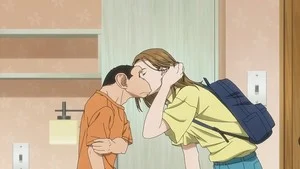
Table of Contents
Awkward Proposal: When Provocation Outpaces Emotion
Episode 12 attempts to land a deliberately provocative beat: Charlie asks Lucy if she wants to “mate.” On paper, the scene fits the series’ premise — a story built on the societal implications of hybrids naturally has to address pseudo-inter-species intimacy at some point. In practice, the moment undercuts itself. Rather than building tension or exploring layered emotional fallout, the scene lands with a flat, comedic awkwardness that reads less like intentional satire and more like tonal misfire.
Part of the problem is the lack of prior spark between Charlie and Lucy. The writing never substantially seeded a romantic or sexual current that would make such a question feel earned. Even accounting for later revelations — like Charlie’s very recent puberty — the sequence needs more connective tissue: awkwardness alone doesn’t equal depth. Instead, viewers are left with a jarring image of Charlie delivering a blunt, clinical line that should have been handled with far more nuance.
Character Work: Charlie, Lucy, and the Limits of Minimalism
Charlie’s Late Bloomer Arc
This episode establishes that Charlie only began puberty a week ago, a choice that functions as a strange “power-up.” Viewers see modest physical and cognitive changes that the show seems to treat as consequential. That setup could have been fertile ground for introspective storytelling — the confusion, embarrassment, and curiosity of adolescence complicated by being a hybrid — but the series opts for blunt transactionality instead of slow-burn development.
Lucy’s Reaction (Or Lack Thereof)
Lucy’s response to Charlie’s question and to revelations about her background feels muted in ways that undercut dramatic stakes. Earlier arcs hinted that Lucy cared deeply about the secret revealed during her kidnapping storyline; here, she treats similar subjects as less fraught. The inconsistency makes it hard to attribute her calm to emotional growth or to a writing oversight. When characters don’t register the emotional or societal gravity of their situations, the audience struggles to invest.
Phil’s Subplot: The Episode’s Most Grounded Thread
When the episode pivots to Phil, it regains composure. Phil’s subplot — including his resignation under pressure and the gradual reveal of his political sympathies — provides a clearer, more persuasive character arc than the main awkwardness. The show highlights Phil’s individualist streak: he sees Charlie’s situation as a singular human story rather than a symbol in a larger animal-rights debate. That perspective contrasts with other characters’ tendencies to generalize Charlie’s life into ideology.
This grounded approach works because it roots political discussion in human relationships rather than abstract manifesto. Phil’s arc also gives the episode moral texture: disagreements about society versus the individual don’t feel staged here; they feel like real ideological friction. For a series that frequently prioritizes cold, blunt proclamations, Phil’s scenes are a reminder that character-based political storytelling can land when it’s focused and specific.
Narrative and Tonal Dissonance: Provocation Without Payoff
A recurring issue with The Darwin Incident is its tendency to drop provocative premises into scenes without committing to meaningful follow-through. Episode 12 is a stark example: the show raises big ethical and emotional questions — hybrid identity, parentage, consent across species-like boundaries — then treats them as conversational checkboxes. The result is dissonance. Provocative content ideally forces the story to adapt; here the story barely blinks.
This half-commitment creates the impression that the series is improvising as it goes. Threads teased earlier (for example, the taunt about Lucy’s origins during her kidnapping arc) are revisited but not fully reconciled, making the storytelling feel stitched together rather than authored with a clear long-term plan. When the stakes are philosophical and uncomfortable, narrative sloppiness becomes especially conspicuous.
Direction and Performance: Missed Opportunities
Direction and voice performances do little to save the episode’s more awkward moments. The scene where Charlie asks Lucy to mate needs either dynamic staging to highlight its absurdity or tight, intimate direction to emphasize its emotional weight. What it gets instead is flat delivery and a staging that reads almost comically deadpan — which might be a deliberate choice, but it clashes with the series’ stated ambitions.
That said, when the episode focuses on quieter drama — Phil’s resignation, the show’s quieter moral questions — the direction tightens and the performances feel more anchored. Those beats are proof that the series can balance political themes with emotional clarity when it narrows its scope and trusts character nuance over shock value.
Where This Episode Fits in The Darwin Incident’s Arc
Episode 12 doubles down on the series’ central tension: can a show be both a social-issue parable and a character-driven drama? The answer here is inconclusive. The episode does help establish a new status quo (Charlie’s biological changes, shifting attitudes around him, and Phil’s political posture), but it also amplifies a pattern of handling big ideas superficially. Fans interested in the show’s worldbuilding or in watching personalities adapt to difficult realities will find useful moments. Those looking for subtle emotional work or complex conversations may grow frustrated.
Where to Watch
You can stream The Darwin Incident on Prime Video (link below). For additional background on the series, see the title’s overview on its encyclopedia page.
Watch The Darwin Incident on Prime Video
Series overview (Wikipedia)
Final thoughts
Episode 12 of The Darwin Incident is a mixed bag: it dares to confront thorny territory but often lacks the narrative patience and emotional specificity to do so convincingly. The show’s willingness to provoke is commendable, but provocation must be followed by thoughtful exploration. When the series leans into smaller, character-rooted arcs — Phil’s storyline, for instance — it’s at its strongest. When it defaults to blunt, awkward beats for shock value, it undercuts its own stakes. Still, there are worthwhile moments here for viewers invested in the premise; just be prepared for a sometimes clumsy ride.