Gnosia’s twenty-first episode brings the series to a close, attempting to convert the looping mystery of the original game into a tidy emotional finale. With unique visuals and an intriguing concept, the show kept my attention across most of its run — but the finale reveals both the strengths and the limitations of adapting a densely replayable game into a linear anime. Below I break down what worked, what didn’t, and why the romance-focused ending may leave some viewers feeling short-changed.
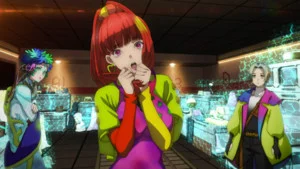
Table of Contents
Episode 21 — Finale overview
The final episode resolves the anime’s central conflict by focusing on the bond between Yuri and Setsu and by offering a deceptively simple solution to the cosmic stakes that have driven the series’ time-loop narrative. After twenty-one episodes of bouncing across alternate timelines and detective-style “Gnosia” trials, the show leans hard into sentiment: sacrifice, choice, and a last-minute workaround involving the Silver Key and Manan’s wish for eternal life. It’s a clean, almost cozy emotional resolution — but whether it’s satisfying depends largely on what you expected from Gnosia in the first place.
What worked in the finale
Style and atmosphere
Gnosia’s visual identity remains a highlight. The character designs and backgrounds are stylized in ways that keep the sci-fi setting distinct from other mystery anime. Even when the plot becomes messy, the show rarely looks boring; its aesthetic choices help sell the surreal tone of life aboard the D.Q.O. and the uncanny nature of a crew trapped in repeating loops.
Character chemistry
Some of the cast dynamics are genuinely enjoyable. The show is full of broad, archetypal characters — which can be a limitation (more on that below) — but those archetypes allow for quick, recognizable interactions that often produce compelling, emotional beats. For viewers who connected with Yuri and Setsu early on, the finale’s focus on their relationship will likely feel earned.
Where the finale falters
Romance as the sole emotional anchor
The biggest complaint about Episode 21 is how it elevates the Yuri–Setsu romance to the foundation of the series’ emotional and narrative climax. In the original interactive game, the repeating loops and player investment make such bonds feel earned through hours of play. In a nine- to ten-hour anime, however, that depth is harder to achieve. The show attempts to compress what would be extensive player-driven development into limited, episodic beats — and as a result the romance can feel rushed and under-supported.
Gnosia trials lost their relevance
Ironically, the murder-mystery component that gives the series its name becomes peripheral by the finale. After numerous Gnosia trials and shifting timelines, the show’s ending makes it clear the larger metaphysical stakes weren’t tightly integrated with the episodic detective work. The Gnosia mechanics feel like a backdrop rather than the engine of the plot, which undercuts the payoff for viewers who expected the sci-fi and mystery elements to culminate in a more substantial revelation.
Adaptation issues: game design vs. linear storytelling
Adapting a branching, replayable game into a linear anime brings inherent tradeoffs. The game’s design encourages repeated interactions, slowly revealing character depth across multiple loops; that slow burn is part of the emotional currency players pay to reach a meaningful conclusion. The anime compresses this into a single timeline, which sacrifices the ludonarrative bond between player and cast. What reads as powerful in the game — the sense that repeated choices and failures lead to growth — becomes less persuasive in a passive medium where viewers only witness each event once.
Ludonarrative disconnect
In short: what works as interactive empathy in the game doesn’t always translate to passive empathy on screen. The show’s decision to hinge the finale on the romance and a moral compromise (handing the Silver Key and redirecting Manan into Kurushka’s body) feels narratively convenient rather than inevitable. Viewers who wanted tighter integration between the Gnosia mechanic and the ultimate stakes will likely find this resolution unsatisfying.
Characters: charming archetypes, limited growth
Gnosia’s cast mostly reads as broad, memorable archetypes — and that’s intentional. You have the gruff, enigmatic types, the comic relief, and a few quietly capable figures. This helps the anime move quickly, but it also prevents many characters from undergoing meaningful change. Because the universe relies on loops and resets, genuine character progression is restricted by the premise; the cast often remains charming but static, which weakens the emotional weight of their fates in the finale.
Standout relationships and missed opportunities
There are moments where the show hints at deeper backstories and intriguing worldbuilding, but these asides are rarely developed into satisfying arcs. The Yuri–Setsu relationship is presented as the exception, yet even it struggles to feel fully grounded because the surrounding mystery and character histories don’t consistently support such a sweeping payoff.
Visuals and sound: consistent strengths
Even when the script wobbles, Gnosia’s direction, art, and soundtrack maintain a steady confidence. The anime’s mood-setting is effective: sound design and background score underscore the melancholy of loops and the intimacy of key character scenes. These technical elements often rescue weaker narrative beats, keeping the finale watchable even when the resolution feels emotionally limited.
Where to watch and further reading
Gnosia is available for streaming; if you want to experience the adaptation firsthand you can find it on Crunchyroll (external link, nofollow). For readers interested in the game that inspired the anime, the original Gnosia game is also available on PC and consoles — browsing the Steam store page provides more context about the game’s mechanics and replayable structure (external link, nofollow).
Final thoughts
Gnosia wraps with a tender, if imperfect, finale. The show’s visual flair and certain character moments make it worth watching, but the adaptation struggles to translate the game’s replay-driven emotional architecture into a single coherent TV narrative. If you came for tight sci-fi mystery integration, the ending may feel like a missed opportunity. If you’re invested in Yuri and Setsu and enjoy the show’s atmosphere, the finale will probably satisfy on a sentimental level. Ultimately, Gnosia is an interesting experiment in adaptation: it succeeds in mood and style, but falls short of turning its unique premise into a fully convincing dramatic payoff.