Oshi no Ko Season 3’s episode 9 (“Greed and Passion”) is a transitional entry that threads industry exposé with the series’ quieter supernatural beats. With graduation season as a backdrop and the cast rearranging around Aqua’s latest maneuvers, the episode largely functions as connective tissue—setting up a high-stakes film project, teasing a crucial casting showdown, and delivering a sparse but tantalizing glimpse of the show’s occult throughline. The result is an episode that builds anticipation effectively, even if it occasionally feels like puzzle pieces shoved together ahead of next week’s payoff.
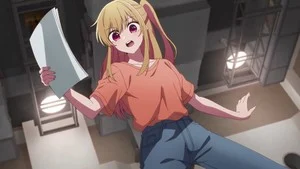
Table of Contents
Episode Overview: Plot and Pacing
The episode opens on an unexpected pair of minor players—Director Gotanda and Producer Kaburagi—dressed in ill-fitting formalwear while shopping around a risky cinematic idea: a film based on the real-life tragedy of an idol murdered by someone in the industry. That conceit immediately foregrounds one of Oshi no Ko’s recurring preoccupations—how entertainment transforms real pain into spectacle. While the show’s commentary occasionally reads as self-reflexive (a production with global visibility critiquing showbiz systems it’s also a part of), the scene effectively sets the stakes for the casting choices to come.
Meanwhile, the episode follows Aqua’s plan as it advances: Akane is out of Aqua’s romantic orbit, Kana is still hilariously accident-prone, and Ruby shrugs off Aqua’s attempts to reconnect. Memcho and Kana’s comedic beats are brief, swamped by the tension hovering around Aqua. The solitary appearance of Crow Girl at a cemetery—mere seconds of a larger mystery—serves as a provocative tease rather than a revelation, leaving viewers to wait impatiently for the next installment.
Animation and Production Values
Visually, Oshi no Ko continues to impress. Season 3 maintains a high level of detail in character expressions, especially in scenes where impersonations and subtle emotional shifts matter. These touches are vital: much of the show’s narrative weight rests on looks, glances, and performances within performances. Even when the episode feels like set-up more than payoff, the production quality keeps the viewer invested.
Budget versus Believability
It’s tempting to equate production sheen with blockbuster budgets, but as animation history reminds us, striking sakuga can emerge from lean resources when used imaginatively. Regardless, the polished animation here isn’t just a luxury—it amplifies the series’ metafictional commentary: a story about how appearances are constructed needs to be convincing in its own presentation.
Supernatural Elements vs. Industry Drama
Oshi no Ko’s unique energy comes from balancing reincarnation fantasy with a scathing backstage drama. This episode undersells the supernatural in favor of the latter. Crow Girl’s brief, brooding cameo is tantalizing precisely because the show rarely leans on the occult; when it does, it often pivots the plot dramatically. At a point where Aqua is emotionally volatile and in need of revelation, the series chooses restraint—giving viewers a glimpse rather than a map.
That restraint is frustrating and deliberate: the fantasy is the engine under the hood, but the visible machinery is the entertainment industry’s machinery. The interplay is rewarding when both sides are present in equal measure; when one is minimized, episodes can feel like placeholders for a larger reveal.
Character Dynamics and Motivations
Aqua: Calculated and Fractured
Aqua’s psychological state is central in this episode. His intensity—those cold, “black star” stares—signals a man who is far from mentally stable, at least in a healthy sense. Whether you read his actions as calculated or morally compromised, he’s in the perfect headspace to be receptive to the darker counsel of the supernatural. That tension makes his interactions with other characters unnervingly compelling: he’s both puppetmaster and pawn.
Ruby, Kana, and the Teens’ Fallout
Ruby’s refusal to engage with Aqua feels authentic and earned. Teenage anger and betrayal are messy and rarely rational; the show leans into that discomfort instead of sanitizing Ruby’s response for the audience. Kana’s clumsy attempts to insert herself into the group remain comic but also poignant—she’s a teenager fumbling for belonging while bigger forces shift around her. Memcho’s levity only underscores how tense the central trio’s dynamic is becoming.
Unanswered Questions: The Power of the Unsaid
One of the episode’s most intriguing threads is the mystery of Ai’s video letters. Are these a long-established plot device or a new MacGuffin introduced to accelerate the narrative? Why did Ai create individualized messages for each child, and what differences exist among them? Aqua’s unilateral decision not to share Ruby’s video continues to paint him as possessive and imperfect—someone who believes themselves to be the arbiter of what others should know. The lack of immediate answers intensifies the emotional stakes, but it also means the episode leans heavily on anticipation rather than resolution.
Casting Conflict: Who Should Play Ai?
The episode frames an engaging internal debate about who should portray Ai in the in-universe film. Akane’s uncanny ability to channel Ai (sometimes to the point of cartoonish starburst eyes) makes her a compelling candidate. Kaburagi and Gotanda’s differing motivations—sentimentality versus investor appeasement—add corporate friction to the artistic question. The girls’ planned three-person showdown teases theatrical drama and promises emotional cleavage when the scene finally cuts away as Ruby prepares to demonstrate her impression. It’s textbook cliffhanger structure: enough promise to sustain interest, but intentionally withholding the climax.
Where to Watch
Oshi no Ko Season 3 is available for streaming on platforms such as Crunchyroll and HIDIVE.
Final Thoughts
Episode 9 functions as an effective bridge—beautifully animated, emotionally tense, and packed with cliffhangers—even if it leans more on setup than on catharsis. The episode excels at cultivating unease: Aqua’s cold intensity, Ruby’s justified resentment, and the fleeting supernatural hint of Crow Girl keep the narrative edge sharp. What the installment lacks in immediate answers, it makes up for in appetite whetting; if you’re invested in the series’ blend of metafictional industry critique and dark reincarnation fantasy, this episode will leave you eager for the next installment to deliver the revelations it teases.