Trigun Stargaze’s penultimate episode doubles down on emotion and atmosphere, but at the cost of narrative clarity. Episode 11 delivers heavy reveals about Knives’ motivations, a heartbreaking fallout for supporting characters, and a handful of plot choices that will leave longtime fans divided. This review unpacks the episode’s themes of abandonment, character dynamics, pacing issues, and what the episode’s beats mean for the approaching finale.
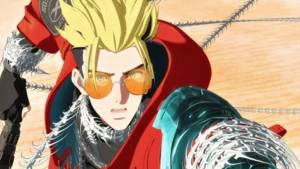
Table of Contents
Plot and Pacing: Vibes Over Coherence in Trigun Stargaze Episode 11
Episode 11 feels guided more by emotional momentum than by tightly wound plotting. The episode opens with another sudden save-and-capture flip involving Knives and Vash that again raises questions about dramatic intent: are these reversals purposeful misdirection or careless deus ex machina? Over the season Vash has been unusually passive, repeatedly captured, and used largely as an object to be acted upon rather than as the agent driving events. While the show leans into mood and character beats, this choice undercuts the forward propulsion the plot needs at this late stage.
Deus ex Machina or Thematic Choice?
There are several contrived set-pieces—Milly and Meryl’s improbable ark infiltration via motorbike and sandworm being a standout—that play as comic relief but also highlight inconsistent stakes. The series increasingly relies on sudden contrivances to move characters from A to B, making it difficult to feel the full weight of certain revelations.
Abandonment as the Core Emotional Theme
The most resonant material in this episode centers on abandonment. The revelation that Rem (a mother figure) consented to the dissection of Tesla, an Independent Plant, reframes Knives’ rage and nihilism. His judgment against humanity and the resulting catastrophe—what the episode calls the “Big Fall”—is now firmly rooted in betrayal. Crucially, Knives withheld this truth from Vash for 150 years, supposedly to shield him. That omission and Knives’ subsequent treatment of any followers as expendable establish abandonment as the pivot of his moral architecture.
How the Tesla/Rem Reveal Recontextualizes Characters
Learning that Tesla’s body was vivisected by SEEDS and that Rem allowed it creates a tragic lineage of culpability. Knives’ choice to conceal Rem’s role from Vash frames both brothers’ relationship as incestuous in its exclusivity—he loves Vash, but that love is possessive and destructive. This helps explain behavior that otherwise seems erratic, but it also arrives late enough in the season that its impact is muted by limited setup.
Character Dynamics: Knives, Vash, Legato, and Elendira
Episode 11 reshuffles antagonist roles. Knives’ sudden execution of Legato (decapitation) and his wholesale abandonment of loyal lieutenants underline how single-minded and ruthless his crusade is. This Knives does not resemble the recruitment-heavy villain of earlier Trigun media; here he keeps Vash close and isolates him—an inversion of the more outwardly violent manipulation seen before.
Legato’s Death and Vash’s Lost Arc
Taking Legato’s death out of Vash’s hands is a controversial narrative move. Part of Vash’s growth in past iterations came through confronting loss and culpability; removing that moment weakens a classic dramatic milestone. Fans expecting a cathartic reckoning for Vash will find themselves shortchanged, as the transfer of responsibility robs him of a key development beat.
Elendira: From Idolization to Heartbreak
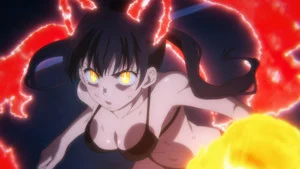
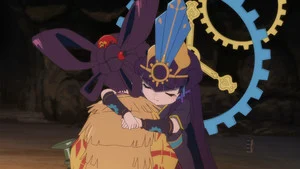
Elendira’s emotional breakdown—realizing her leader does not value her—lands hard. The sequence where Meryl approaches and comforts her despite being nearly injured by Elendira is one of the episode’s most humane moments. It reinforces Trigun’s long-running interest in mercy and forgiveness and shows that love and empathy can exist even in the midst of fanaticism and cruelty.
Visuals and Design: Bold Choices, Mixed Results
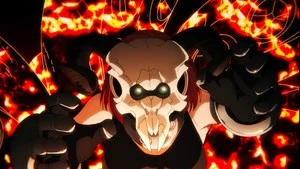
Visually the episode swings between evocative and awkward. Action beats land thanks to kinetic direction, but Knives’ new transformed form looks stylistically incongruent, evoking retro video game boss designs more than an unearthly antagonist. That aesthetic choice may be intentional, but for many viewers it reads as dated or jarring rather than menacing. Meanwhile, the lighter, almost slapstick moments—Milly and Meryl vs. sandworm—offer tonal contrast that sometimes undermines the episode’s darker revelations.
Animation and Soundscape
The score and voice performances carry a lot of the episode’s emotional heft. When the script hesitates, timing and delivery step in to keep scenes from falling flat. That said, the stakes feel less assured because too many important beats are resolved quickly or off-screen.
What This Means for the Finale
With Knives’ grand plan collapsing—his attempt to grant sentience en masse to remaining Plants failing—the narrative stakes pivot narrowly toward his relationship with Vash and the buried memories of Tesla. The episode suggests that the climax will be intimate rather than epic, focused on the brothers and the remnants of Tesla’s legacy. But because many revelations arrive so late, the finale will need to do heavy lifting to make the emotional payoff earned rather than rushed.
Stargaze vs. Earlier Trigun Works
Compared to previous Trigun properties, Stargaze often feels undercooked. Stampede and the original series balanced character stakes and worldbuilding more evenly; Stargaze sometimes favors atmosphere at the cost of narrative cohesion. That doesn’t mean the series lacks ambition—its exploration of trauma, abandonment, and mercy is meaningful—but the execution can feel incomplete.
For readers wanting to stream or reference the series: Trigun Stargaze is available on Crunchyroll (external link, rel=”nofollow”) and you can find general franchise background on the Trigun Wikipedia page (external link, rel=”nofollow”).
Final thoughts
Episode 11 of Trigun Stargaze is emotionally rich in places and narratively frustrating in others. The episode’s powerful scenes—Elendira’s breakdown, Meryl’s compassion, and the Tesla/Rem reveal—offer genuine emotional payoffs. Yet the series’ reliance on late revelations and sudden plot manipulations blunts their impact. If the finale can turn this momentum into a focused, earned conclusion centered on the brothers’ fractured bond, Stargaze may still vindicate its tonal risks. If not, it will go down as a visually interesting but narratively uneven entry in the Trigun canon.