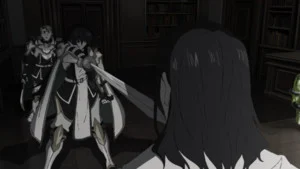
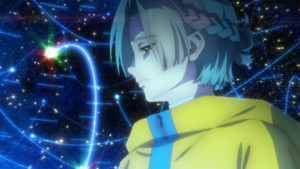
Halfway through Trigun Stargaze and episode 6 slams the accelerator: Knives is awake, satellites go dark, and the anime finally leans fully into its apocalyptic ambitions. This installment stages two brutal, emotionally charged confrontations that push the season’s pacing and stakes forward — and it does so while reshaping familiar character beats from earlier adaptations. If you’re coming from the 1998 Trigun or the manga Trigun Maximum, expect a different tone: Stargaze favors sci‑fi spectacle and kinetic action over the deliberate Western mood of the original series.
Table of Contents
Episode Summary: Chaos on Multiple Fronts
Episode 6 bifurcates its focus between two major matchups. On one front, Nicholas D. Wolfwood squares off with Gray the Ninelives, a hulking biological threat that refuses to go down easily. On the other, Vash the Stampede faces Legato Bluesummers and the unpredictable Elendira the Crimsonnail, culminating in a tense showdown that tests Vash’s limits and pushes him toward the edge of his most dangerous weapon — the Angel Arm.
Major Battles and Character Matchups
Wolfwood vs Gray the Ninelives
Wolfwood’s fight showcases both spectacle and characterization. He still fights with the same theatrical flare — swinging his crucifix‑shaped Punisher into stylish poses that read great visually but raise the question: is he prioritizing looks over efficiency? That critique is part of the point. Wolfwood’s bravado masks a deeper, conflicted sincerity; he charges forward, almost compulsively, to protect his friends.
Gray proves stubbornly durable, and the episode punctures any illusion of easy victory. Even when Wolfwood appears to have the upper hand, the creature’s sheer resilience and the threat it represents remain looming. The sequence balances dark humor and desperation: we get moments of Wolfwood’s tsundere gruffness alongside tense, adrenaline‑heavy action — and a visual reminder that brute force alone won’t win the day.
Vash vs Legato (with Elendira in the Wings)
The Vash‑Legato confrontation moves the emotional center of the episode. Legato’s redesign — softer, modern, and oddly teen idol‑esque — doesn’t make him any less dangerous, but it reshapes the tone of their rivalry. He’s more sleek and stylized here, which softens the edge of his menace compared to the manga’s more overtly sinister presentation. That doesn’t stop him from breaking Vash down: telekinetic attacks and psychological provocation leave Vash vulnerable, and for a tense beat the Angel Arm seems close to triggering.
Elendira’s entrance is a wild card. Her brutal, almost comically violent tendency to drive enormous nails into anyone who misbehaves breaks the tension and forces a chaotic end to the duel — at least for the moment. It’s an inventive way to derail a potentially tragic outcome while keeping the stakes painfully high.
Comparisons: 1998 Trigun, Trigun Stampede, and the Manga
Stargaze continues to diverge from the 1998 anime’s approach. Where the original tended to read as a sci‑fi Western with a philosophical core — the pacifist Vash vs. the nihilistic Knives — Stargaze has opted for more overt sci‑fi spectacle. Trigun Stampede and now Stargaze emphasize kinetic action, CGI assist, and visual daring. That shift means certain scenes that in earlier adaptations played as moral parables now read as high‑octane set pieces.
Readers of Trigun Maximum will recognize the broader throughline: Knives’ apocalyptic intent is finally coming into focus, and the series is making fewer compromises about adapting those darker beats. The consequence is an escalation in scope and emotional gravity; fans should brace for a climax that’s far more confrontational than the 1998 series delivered.
Visuals, Sound and Direction
Visually, episode 6 leans into dynamic camera work and exaggerated action choreography. Gunplay and telekinetic combat are edited for maximum impact, often sacrificing realism for spectacle — and that’s largely to the show’s benefit. The stylized direction matches the more modern, glossy character designs, especially in the case of Legato’s almost idolized appearance.
Sound design and score do heavy lifting here: the audio cues punctuate moments of dread and triumph, and the lack of quiet reflection in many scenes emphasizes momentum over meditation. The result is an episode that never slows down — sometimes to the detriment of smaller emotional beats, but overall effective in generating tension.
What This Means for the Season’s Arc
With Knives awake and satellite communications collapsing, the narrative field has substantially widened. Vash being captured raises immediate concerns about the safety of the planet and the moral battles that will follow. Wolfwood’s relentless pursuit of Vash — despite his outward gruffness — underscores the personal stakes. Even if Wolfwood refuses to voice it, he’s chasing a friend he refuses to properly acknowledge as one.
These converging threads position Stargaze to escalate into a more apocalyptic conflict. The series has already signaled that it will do more than retread the past; instead, it’s stretching Trigun’s mythos into grander, more destructive terrain. Expect satellite blackouts, increased manipulation from Knives, and more morally fraught confrontations as the season moves toward its midpoint and beyond.
Key Takeaways
- Episode 6 prioritizes fast pacing and spectacle, advancing Knives’ threat while deepening personal conflicts.
- Wolfwood remains a standout for character-driven action, even if his style sometimes glamorizes inefficiency.
- Legato’s redesign trades some of his original horror for a modern, unsettling charm — he’s still dangerous, just in a different register.
- The show’s visual and audio direction lean into cinematic, sci‑fi energy rather than the Western‑tinged introspection of the 1998 series.
Trigun Stargaze is currently streaming on Crunchyroll.
Final thoughts
Episode 6 is a hinge point: it jettisons any lingering restraint in favor of momentum, spectacle, and raised stakes. Some fans may miss the quieter moral exploration of earlier adaptations, but Stargaze’s bold reorientation opens up new dramatic possibilities. The episode delivers memorable confrontations, strong visual direction, and a clear signal that the show is prepared to push toward a darker, more catastrophic climax. If the next episodes keep this level of intensity while allowing a few quieter moments for character reflection, Stargaze could become one of the most satisfying reimaginings of Nightow’s work.