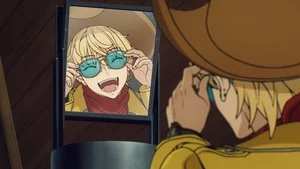
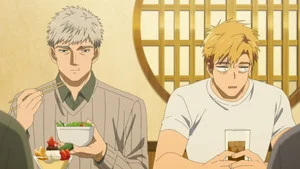
As the curtain falls on Tamon’s B-Side, the final episode delivers a warm, quietly satisfying close to a season that balanced comedy, character growth, and unexpectedly tender moments. Episode 13 avoids a bombastic finale and instead opts for emotional payoff: Utage confronting her feelings, Tamon’s stumbling-but-earnest attempts at devotion, and a spotlight on the quieter details that made this series so charming—like Utage’s crafting hobby. Below, we break down the episode’s key beats, themes, and what we hope to see if the show returns for a second season.
Table of Contents
Episode recap: small moments, big feelings
Episode 13 opens with a domestic tilt—Utage quits her housekeeping job, prompting Tamon to follow her to her home in an act that, while earnest, flirts with possessiveness. The encounter with Utage’s twin siblings injects comedy (and social commentary) into the situation: their shocked reactions—“Is this guy a stalker?”—keep Tamon’s behavior from being romanticized without consequence. The series consistently calls out Tamon’s flaws and growth, and this episode keeps that streak alive.
Discovery and character depth
One of the episode’s nicest beats is Tamon finding Utage’s handmade recipe book. The detail confirms that Utage’s crafting and DIY tendencies aren’t just a gag—they’re part of who she is. Over the season, these small touches built a fuller portrait of Utage beyond “fan who cleans,” and the recipe book felt like a reward for viewers paying attention. If a second season arrives, scenes exploring Utage’s creative life could expand the show’s emotional palette in satisfying ways.
The sickbed trope and emotional honesty
When Tamon falls ill—feverish and delirious—the classic “nursing” shojo trope unfolds. Utage caring for him gives the series a soft, vulnerable moment that foregrounds emotional honesty. There’s an important distinction the episode leans into: Utage is physically attracted to Tamon’s on-stage charisma (Hottiehara), but emotionally connected to his quieter true self (Gloomyhara). That layering makes her eventual self-admission feel earned rather than sudden.
Friendship, support, and missed screen time
The arrival of several F/ACE members during the sickbed scene adds group warmth and a sense of chosen family, though some characters—most notably Rintarou—get surprisingly little screentime across the series. His absence in the finale raises questions: is he straightforwardly who he appears to be, or does he also have hidden depths? More balanced character focus in future episodes would satisfy viewers curious about the broader cast’s B-sides.
Confession, self-love, and the finale’s tone
The show resists a conventional kiss-or-confession climax, instead privileging Utage’s internal confession: admitting to herself that she loves Tamon’s true self. That inward-facing resolution echoes a recurring theme—this series is as much about self-acceptance as it is about romance. The ending’s emphasis on self-love and personal growth gives the finale emotional weight and leaves the romantic arc feeling optimistic without forcing closure.
Why the finale works
- It keeps character integrity intact—Tamon’s devotion remains adorably flawed rather than idealized.
- Utage’s arc centers on internal acceptance, which deepens her characterization beyond a typical love interest role.
- Comedic beats and quieter moments are balanced, making the finale both funny and heartfelt.
What a second season could explore
There’s plenty of fertile ground if Tamon’s B-Side is renewed. Questions left open by this finale include:
- Will Utage and Tamon start a relationship, and could they keep it private from the public eye—and from industry pressures?
- How would the dynamic shift if other F/ACE members or Utage’s friends learn the truth? The show has already teased jealous or protective reactions that could make for interesting drama or comedy.
- Expanded focus on supporting characters like Rintarou would be welcome—does he have a hidden B-side, too?
- More scenes showing Utage’s crafts and personal passions would deepen the series’ slice-of-life appeal and open merchandise-friendly moments (handmade Utage merch, anyone?).
Production hopes: dub, merch, and more
Fans hoping for wider accessibility will be eager for an English dub; merchandising opportunities—especially for Utage-themed craft kits—also feel like a natural extension of the series’ aesthetic. Creators could embrace the fan-craft spirit and release DIY-friendly official goods, tying the show’s identity into tangible fan activities.
Where to watch
Tamon’s B-Side is currently streaming on Crunchyroll. For additional series details and community discussions, see the entry on MyAnimeList (link provided as reference): MyAnimeList – Tamon’s B-Side.
Final thoughts
Episode 13 wraps Tamon’s B-Side with a tender, understated finale that emphasizes growth, honesty, and self-acceptance. It’s a satisfying stopgap rather than an endpoint—there’s clear narrative and thematic room for more. The series shines by turning small domestic moments into emotionally resonant beats and by treating characters’ flaws with both humor and consequence. Whether or not we get a second season, Tamon’s B-Side leaves a warm afterglow: a reminder that love stories can be both romantic and about learning to love yourself first.