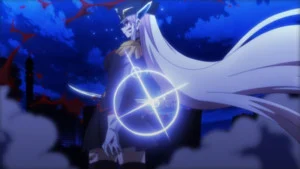
Snowball Earth arrives as a crunchy, nostalgic-feeling mecha-anime with a clear popcorn-movie agenda: fast setup, kaiju fights, bittersweet loneliness, and a frozen post-apocalyptic world. The first three episodes introduce us to Tetsuo and his metal companion Yukio, establish a bleak Arctic-like Earth, and deliver the kind of straightforward sci-fi action that’s fun even when it refuses to try too hard. But while the foundation is solid, technical choices—especially the heavy-handed CG—hold the show back from reaching its full dramatic potential.

Table of Contents
Premise and Plot Overview
At its core, Snowball Earth tells a compact and familiar tale: Tetsuo, a loner who bonds with a sentient robot named Yukio after a kaiju encounter, grows into a hero fighting monsters in space. An accident strands the pair on a frozen, devastated Earth, flipping the setup into a survival story. The narrative skips the initial kaiju battle entirely and fast-forwards ten years—an editing choice that trades an opening spectacle for quicker character placement and momentum. The result is efficient world-building, but it sacrifices some emotional payoff early on.
Characters and Relationships
Tetsuo — The Reluctant Hero
Tetsuo is written as the classic brooding protagonist: competent in combat but socially isolated. The series leans into this to create empathy, and a montage sequence after his return to Earth—where he anticipates adulation only to be met with desolation—provides a strong emotional beat. It’s a simple, effective moment that captures his loneliness without needing excessive exposition.
Yukio — More Than a Machine?
Yukio’s dynamic with Tetsuo drives much of the series’ heart. The AI’s intelligence and evolving bond with Tetsuo provide both practical support in battle and emotional grounding. Their relationship reads like a blend of classic robot-kid tropes (The Iron Giant vibes are intentional and welcome) and contemporary mecha companionships, where machines act as mirrors for human growth.
Supporting Cast
The survivors Tetsuo meets on the frozen Earth are serviceable and exist mostly to populate the setting. They hint at future conflict and camaraderie but, in the first three episodes, don’t leave a lasting impression. This is an area where the show could deepen interest: with more complex side characters, the survival tension would feel less solitary and the protagonist’s emotional arc could gain texture.
Animation, Visuals, and the CG Debate
Visually, Snowball Earth is a study in contrast. The backgrounds, color palette, and some 2D animated shots show strong artistic intent. The world design—a mix of icy wastelands and industrial remnants—works well to convey austerity and cold silence. However, the heavy reliance on 3D CGI undercuts those strengths.
The CG often reads like video-game cutscenes: stiff character motion, awkward facial expressions, and jarring integration with hand-drawn elements. While not to the degree of some infamously maligned adaptations, the effect is pervasive enough to pull viewers out of crucial battle moments. A particularly telling moment comes in episode three when a purely 2D-animated run looks far more alive than most CG sequences; this contrast makes the limitations of the CGI all the more apparent.
Fight Choreography vs. Execution
Choreography and staging are competent—mecha-versus-kaiju fights have a visceral rhythm and occasional flashes of kinetic energy. But the sterile visual finish often saps those sequences of their impact. When camera movement, lighting, and weight feel off because of animation style mismatches, tension evaporates. Still, the show isn’t devoid of promise; moments where 2D and practical cinematic choices take center stage hint at what a less CG-reliant production might have achieved.
Pacing and Episode Structure
The decision to skip the opening kaiju battle and time-skip a decade forward is a bold storytelling shortcut. It allows immediate engagement with the aftermath and places Tetsuo in his element quickly. Episodes two and three slow the pace to establish the setting and introduce new survivors, balancing action with quieter character beats. The show favors momentum over contemplative world-building, which keeps things moving but sometimes at the cost of character depth.
What Works
- Efficient plotting—no wasted setup, quick escalation.
- Strong emotional beats that land (notably the “expectation vs. reality” scene after Tetsuo returns to Earth).
- Solid mecha design and some well-staged action.
What Needs Work
- CG integration and character animation quality.
- Supporting cast development—right now many feel like placeholders.
- Occasional visual awkwardness (mouth shapes, frozen expressions) that breaks immersion.
Why Snowball Earth Works as Popcorn Sci‑Fi
Despite its flaws, Snowball Earth excels as lightweight science-fiction entertainment. It mixes kaiju spectacle, mecha nostalgia, and survival drama into a digestible package. Viewers looking for a visually arresting, emotionally complex epic may leave unsatisfied, but those after brisk pacing, solid worldbuilding hooks, and an earnest robot-boy relationship will find it pleasant and engaging.
Where to Watch
Snowball Earth is currently streaming on Crunchyroll. For more details, check the official streaming page: Crunchyroll — Snowball Earth.
Final thoughts
Snowball Earth isn’t reinventing the wheel—but it doesn’t need to. The show offers a compact sci-fi premise, a heartfelt human-robot relationship, and set pieces that can be genuinely fun. Unfortunately, the frequent and awkward use of CG prevents its action from reaching its full emotional and visual potential, and the supporting cast could use more depth. If you enjoy mecha nostalgia and salvage-yard apocalypse settings, it’s worth a watch—just be prepared to forgive some technical rough edges for the sake of a straightforward, popcorn-friendly ride.
The views and opinions expressed in this article are solely those of the author and do not necessarily represent the views of any third party.