Episode 4 of Rooster Fighter doubles down on everything that makes the series both ridiculous and oddly endearing. This installment balances slapstick and action, leans into its most bizarre gags, and finally gives the main trio a moment to function as a unit — even if half of that teamwork is interrupted by one character’s uncontrollable impulses. Below I break down the episode’s highlights, examine its themes, and evaluate how well it advances the series so far.
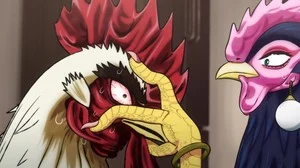
Table of Contents
Episode recap: chaos, kittens, and the Lord of the Rut
The episode opens with a classic bait-and-switch: Piyoko has been carried away by a cat, and the heroes race to rescue her expecting a violent confrontation. Instead they stumble into a litter of hungry, absurdly cute kittens. The tone shifts quickly between wholesome and uncomfortable when Elizabeth solves the food problem in the show’s most eyebrow-raising gag — laying an egg. The scene is played for gross-out comedy without dwelling on details, and it sets the stage for the episode’s dominant running joke: Keiji’s overwhelming, ridiculous horniness.
Keiji’s crisis: meet the Lord of the Rut
One of the biggest reasons fans were hyped for this episode was the introduction of Keiji’s alter ego: the so-called Lord of the Rut. As presented here, it’s an exaggerated, mythic manifestation of the animal urge that takes over Keiji a couple times a year and reduces him to highly comedic single-mindedness. The sequence when the Lord of the Rut arrives — complete with a ceremonious palanquin — is one of the episode’s best visual gags. It’s gross, it’s silly, and it leans into physical comedy in a way the show hasn’t fully committed to until now.
Comedy through discomfort
The humor walks a thin line between clever and awkward. Keiji’s torment is the joke’s engine, but the show avoids explicitness and instead sells the gag through his behavior: flailing, quivering, and a constant stream of unhelpful longing. The result is unexpectedly funny even if you have to forgive the premise to enjoy it.
The Demon of the Week: possession and greed
This episode’s antagonist centers around possession — villagers driven to dig endless holes and a father transformed into a monstrous version of himself. The trapped children and the revelation that the monster is the townsperson’s own father bring a potentially moving emotional core to the hour. Here the series connects the idea of possession with personal obsession: the monster’s greed mirrors Keiji’s uncontrollable urges, creating a thematic echo that unites the comedic and dramatic elements.
Execution and limitations
While the premise has weight, the episode doesn’t fully mine it for emotion. The backstory is compressed and the episode spends limited screen time developing the affected characters, so the father-son beats don’t land as hard as they should. The show’s trademark absurdity undermines some moments of pathos, leaving the possession plot feeling more like informative worldbuilding than a truly tragic character arc.
Teamwork and character dynamics
One of the episode’s real strengths is showing the chickens working together. Elizabeth’s intelligence and tactical contributions complement Keiji’s brute force and Piyoko’s softer presence, offering a glimpse of how their skills can combine in battle. That interplay is satisfying because until now the series has mostly relied on Keiji’s single-note intensity. Seeing other characters shape the fights — and influence outcomes — makes the action feel less monotonous and more varied.
Human reactions vs. growing normalcy
Humans in this world continue to react with confusion and disbelief at chickens who fight demons and use modern devices. Those reactions read as short, sharp sparks rather than sustained commentary; once people encounter giant threats, disbelief is quickly eclipsed by survival. The show leans into this speed-of-acceptance as a running joke, and it’s oddly effective.
Where the episode falls short
Despite the laughs and the fun fight choreography, Episode 4 struggles with emotional resonance. The weekly monster segments in Rooster Fighter are compact by necessity, which means the series often sacrifices depth for pace. When a story asks the audience to feel for a transformed relative or grieve a lost identity, the short runtime and episodic structure limit the payoff. The show’s absurdist tone also blunts darker emotional notes, so scenes that should be heartbreaking come across as bittersweet at best.
That said, some viewers will appreciate that the series keeps its momentum fast and doesn’t wallow. If your primary interest is inventive action and weird comedy beats, this episode delivers.
Streaming information
Rooster Fighter is currently airing on Toonami and available to stream in many regions on Disney+/Hulu. For viewers in supported territories, the official streaming platform is the best place to catch new episodes and official subtitles: Watch Rooster Fighter on Hulu/Disney+.
Final thoughts
Episode 4 of Rooster Fighter is a highlight for viewers who enjoy the series’ blend of irreverent humor and action. The Lord of the Rut gag is memorably outrageous, the chickens finally show teamwork, and the episode proves the show can toe the line between silly and sincere. However, emotional threads introduced by the Demon of the Week feel rushed, and the series’ tonal extremes sometimes make it difficult for heartfelt moments to land. If you’re on board with Rooster Fighter’s particular brand of absurdity, this episode is one of the season’s best — gross-out jokes, adorable kittens, and all.