Episode 3 of Hell’s Paradise Season 2 feels like the real ignition point for the season — the moment the story moves beyond isolated confrontations and starts laying out the island’s rules, ambitions, and emotional stakes. This installment supplies long-awaited exposition about the island’s mechanics and its inhabitants, introduces a third-party military presence with ambiguous intentions, and delivers one of the season’s most affecting moments between Mei and her caretaker. The episode is heavy with ideas, imagery, and tonal shifts, and it succeeds more often than not at turning those elements into momentum.
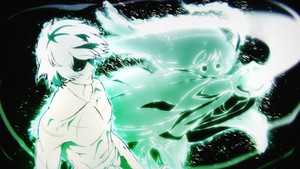
Table of Contents
Episode 3: The Season’s Narrative Pivot
Where the first two episodes set tone and teased mysteries, episode 3 chooses exposition and connection. It clarifies what the island is and what the Tensen are trying to achieve, while also expanding the cast of interested parties by sending new soldiers with their own agendas to the island. The result is that the story now has a clearer goal: a race for an elixir-like power that can bend life and death, and multiple groups whose objectives will collide in unpredictable ways.
Deep Dive: Island Lore, the Tensen, and the Tao
This episode leans hard into worldbuilding, and the payoff is a dark, syncretic mythology. The island operates as a grotesque fusion of philosophies, ritualized practice, and biological experimentation. The Tensen emerge as a hybrid creation — rooted in human energy but entwined with the plant-like lifeforms cultivated from the island’s stolen lifeforces. The show uses this setup to explore an old alchemical rumor: unlimited power at the price of human life. In doing so, it builds a system where energy, soul, and physical consequences are tightly linked.
The Tao Explained
Tao in this context becomes a measurable, manipulable force — a personal essence that can be trained, corrupted, or harmonized. The episode hints at a compatibility system (akin to an elemental chart) dictating how different Tao energies interact, which adds a strategic underpinning to relationships and battles. Crucially, the series underlines that Tampering with a living being’s Tao leads to bodily fallout; stolen or warped energy has real, often horrific, physical consequences.
Creatures, Deities, and the Uncanny
The monsters remain one of the show’s strongest assets: uncanny hybrids that mix human silhouettes with animalistic, plant-like, and religious iconography. They embody the series’ recurring motif — taking purity or natural forms and perverting them into something disturbing. Tensen creations, in particular, blur gender, sexuality, and divinity, giving the island an otherworldly, ritualized horror.
Character Focus: Mei, Hoko, and Emotional Resonance
What elevates the episode beyond pure myth-exposition is its emotional core. The farewell between Mei and her caretaker (Hoko) lands harder than expected. Even though the episode reveals their backstory in the moment of sacrifice — which could have been more powerful if built earlier — the scene still succeeds because of how it reframes Mei’s humanity. We’re reminded that the beings on this island were once people, and that what these scientists and practitioners have done is both horrific and intimate.
Why the Goodbye Works (Mostly)
The scene is emotionally effective because it reframes the stakes on a personal level: Mei isn’t just a monster to be hunted; she’s an embodiment of trauma, exploitation, and the possibility of healing. The episode dramatizes that healing through intimacy and self-sacrifice, which gives the finale a resonant, bittersweet cadence. That said, the moment could have carried more weight had the series planted more context about Hoko and Mei earlier in the season.
Thematic Threads: Intimacy, Exploitation, and Power
One of the more surprising elements this episode pursues is the relationship between physical intimacy and spiritual development. Sex isn’t played for titillation alone; here it functions as a method of nurturing, training, or exchanging Tao. That juxtaposition — training as tenderness contrasted against the abusive seduction used to weaponize Tao — creates moral discomfort that the show leans into. Scenes where characters use intimacy to access or understand energy are handled in ways that feel deliberate, even when they veer into dark territory.
Thematically, the island is an exploration of corrupted sanctity. Religious iconography, philosophical concepts, and scientific curiosity are all mashed together, producing an ecosystem where reverence becomes manipulation. The core idea remains potent: the pursuit of immortality or ultimate power often dehumanizes those used to achieve it.
Voice Acting, Direction, and Atmosphere
While the episode’s heavy exposition risks bogging the pace, strong vocal performances and direction help buoy the material. The cast appears primed with intense material to chew on throughout the season — characters expressing cold calculation, haunted introspection, or deranged zeal all contribute to a cast that feels capable of sustaining the larger thematic ambitions.
Visually and tonally, the episode continues to deliver the unsettling mix of grotesquery and beauty that has become the series’ hallmark. The island remains an omnipresent character, its design constantly communicating the moral and metaphysical perversions at play.
Where This Leaves Season 2
Episode 3 sets up at least four or five moving parts: the original cast, the Tensen and their experiments, the newly arrived soldiers with a third-party agenda, and the island’s own mysterious ecology. The show’s next challenge will be to balance these currents without losing the emotional anchor provided by characters like Mei and Gabimaru. If the series maintains its appetite for unsettling worldbuilding while giving audiences more moments that humanize its creatures, season two could deepen both its horror and its heart.
For viewers who want to catch up or stream the season, Hell’s Paradise Season 2 is available on Crunchyroll. Watch on Crunchyroll
Final thoughts
Episode 3 is a strong turning point: it trades mystery for structure, worldbuilding for motive, and cold lore for a surprisingly affecting emotional beat. The episode is dense and occasionally overloaded with exposition, but it mostly earns its choices by deepening the series’ mythology and raising the emotional stakes. With new factions in play and the island’s moral rot laid bare, Hell’s Paradise Season 2 feels set up for a tense, philosophically charged run. Whether it can maintain clarity while juggling its many ideas will determine if this season becomes merely intriguing or truly memorable.
Also, if you enjoy commentary from indie creators, the reviewer Bolts The Mechanic streams on Twitch and sometimes discusses anime and retro media. Follow Bolts The Mechanic on Twitch