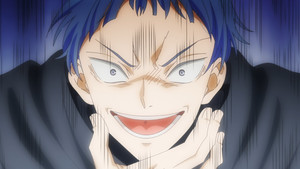
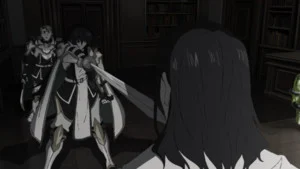
Hell Teacher: Jigoku Sensei Nube’s episode 19 takes the familiar classroom-of-the-supernatural formula and pits teacher Nube against a divine yokai: the majestic, judgmental Kirin. This installment swaps out the usual spotlight-stealing Miki antics for a more somber, morality-driven tale centered on Katsuya — a kid more comfortable acting like a delinquent than learning his lesson. The episode delivers solid visuals and a rare challenge to Nube’s abilities, but ultimately leans on predictable beats and a simple moral that keeps it from reaching the series’ best work.
Table of Contents
Episode 19 — Quick Overview
Episode 19 follows Katsuya as his curiosity and carelessness lead him to trespass on sacred ground and inadvertently offend the Kirin, a powerful, horse-like divine beast that judges transgressors. While the initial conflict promises tension — and briefly delivers when Nube’s demon hand is brutally sliced — the story resolves in a straightforward way that prioritizes sentiment over complexity.
Plot Summary
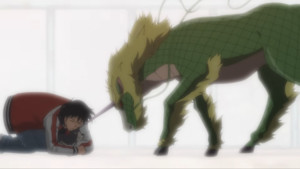
Katsuya, a rough-around-the-edges classmate of Makoto, enters a protected conservation area to rescue a trapped puppy. In the process he accidentally causes the death of several koi — sacred to the Kirin inhabiting the site — by dislodging an embankment. This sparks the Kirin’s wrath. The situation escalates when Katsuya loses the fish charm his sister gave him inside the Kirin’s domain: in many myths, objects linked to people can shift a deity’s ire to the charm’s maker, not just the possessor. Nube intervenes, but the Kirin’s power proves formidable, leading to a visceral moment where Nube’s demon hand is maimed.
Characters and Performances
Katsuya — Reckless but Human
Katsuya is written as an impulsive kid whose intentions aren’t entirely malevolent; his attempt to save a puppy is genuine, but poor judgment and entitlement — fishing from sacred ponds, ignoring signs — drive the conflict. The episode does a good job of making him relatable while not excusing his mistake, which keeps audience sympathy intact without undercutting the danger.
Nube — A Teacher Tested
This episode’s most interesting beat is Nube confronting an entity that clearly outclasses typical yokai foes. Nube’s vulnerability here adds weight: seeing his demon hand damaged is an effective reminder that the supernatural hierarchy in this world is complex and not always slanted toward the demonic. It raises stakes for future confrontations and highlights the series’ power dynamics between gods and demons.
Miki — Comic Relief and Lore Drop
Miki remains the highlight of many scenes: her gleeful, encyclopedic recitations of yokai lore both lighten tense moments and provide exposition. Whenever she’s on-screen, the episode benefits from an injection of levity and personality.
Themes and Yokai Lore
Episode 19 emphasizes a recurring Jigoku Sensei Nube theme: respect for boundaries, both physical and spiritual. The Kirin serves as an archetype of divine retribution — majestic, aloof, and quick to judge. The story uses this yokai’s duality (serene guardian versus enraged judge) to examine consequences: even well-intentioned actions can have damaging results when committed on sacred ground. While the moral is straightforward — don’t trespass or take what’s not yours — the show’s choice to use a Kirin/Qilin-inspired creature is a welcome deviation from more common yokai, allowing the writers to explore divinity beyond the usual ghost-and-monster beats.
For readers who want background on the mythic Kirin/Qilin, general context can be found at Britannica’s Qilin entry (rel=”nofollow” target=”_blank”) — a useful primer on how East Asian divine beasts are traditionally portrayed and judged.
Visuals, Direction, and Tone
Visually, the episode shines when portraying the Kirin’s presence. The creature’s dual forms — a serene guardian at rest and a crackling, static-charged force of judgment when angered — are rendered with enough detail to make its wrath feel believable. The animation team stages the Kirin’s appearances with strong framing and an emphasis on atmosphere: the conservation area’s isolation, the quiet before the storm, and the sudden, cinematic violence when embankments crumble or demon flesh is cut. These moments give the episode its best tension.
However, pacing choices undercut potential dread. The narrative telegraphs the emotional resolution early — Katsuya’s compassion for the puppy is established in the opening and signals the likely save for the final act. Predictability doesn’t ruin the episode, but it reduces suspense and robs the story of a chance to deepen the Kirin’s motivations beyond the “don’t trespass” morality lesson.
Why This Episode Matters in the Series
Episode 19 matters because it explicitly shows that not all supernatural forces are comparable. Nube’s defeat, however temporary, is an important reminder that his demon hand isn’t an automatic trump card against every threat. This opens creative possibilities for future arcs: encounters with entities of higher (or simply different) moral authority could force Nube to find non-combative solutions, deepen his connections with students, or confront the limits of his role as protector.
Additionally, featuring a less-common yokai like the Kirin keeps the series fresh. While the moral is simple, the choice to use a divine beast and explore its perspective — even briefly — is a worthwhile experiment for a show that otherwise leans on repeatable formulas.
Streaming Note
If you want to watch the series, Hell Teacher: Jigoku Sensei Nube is currently available on YouTube via the official channel (rel=”nofollow” target=”_blank’) for selected regions.
Final thoughts
Episode 19 of Hell Teacher: Jigoku Sensei Nube delivers solid atmosphere and an intriguing challenge for Nube, but it’s hampered by predictability and a moral that feels a bit too on-the-nose. The Kirin’s design and the sequence where Nube is bested are memorable high points, and Miki’s scenes continue to be a reliable source of charm. Overall, this installment is an enjoyable, if not standout, entry that reinforces the series’ strengths while reminding viewers there’s room for more daring storytelling when divine yokai take the stage.