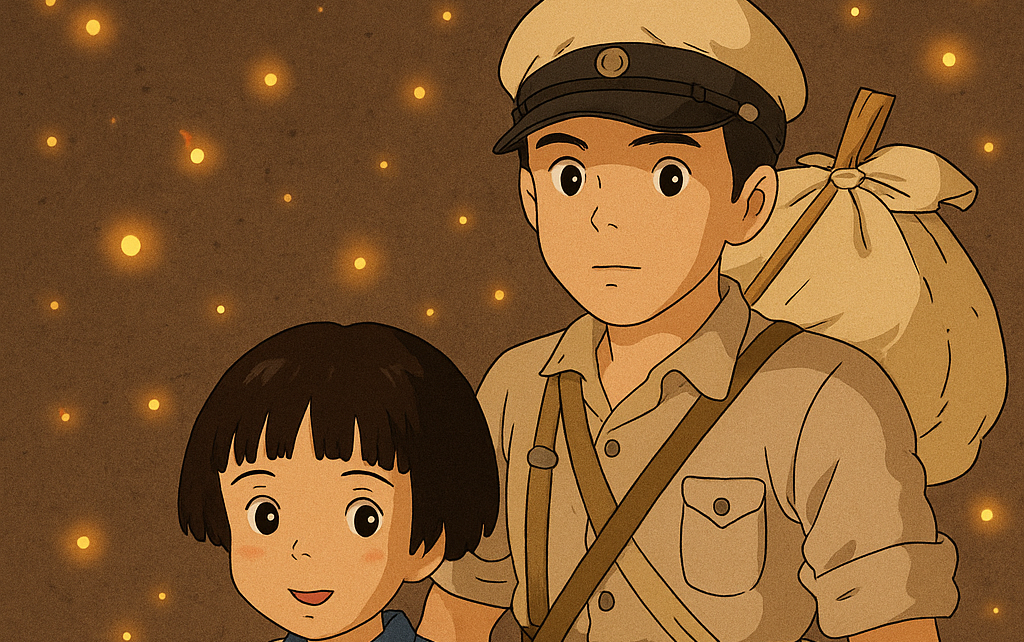
Grave of the Fireflies is a 1988 Japanese animated war film. It is directed by Isao Takahata and produced by Studio Ghibli. It is based on the 1967 short story by Akiyuki Nosaka. The film tells the story of Seita and Setsuko, siblings and war orphans, who struggle to survive during the Pacific War.
The film stars Tsutomu Tatsumi, Ayano Shiraishi, Yoshiko Shinohara, and Akemi Yamaguchi. It was released on April 16, 1988, and received critical acclaim for its emotional impact. It earned a moderate box office revenue, bringing in ¥1.7 billion.
In this article, we’ll dive deep into the heart-wrenching world of Grave of the Fireflies and exploring its powerful story, emotional depth, and the unforgettable legacy it left in the world of anime. Get ready to uncover the truths behind one of Studio Ghibli’s most haunting masterpieces.
Table of Contents
Grave of the Fireflies – Overview
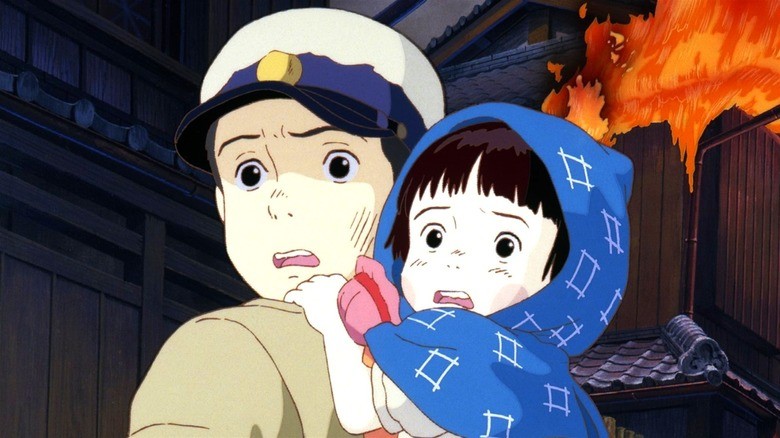
The film follows Seita and Setsuko, siblings left orphaned by war, as they fight to survive amidst the harsh realities of the Pacific War. In March 1945, American bombers destroy most of Kobe during the Pacific War. Seita and his sister Setsuko survive, but their mother dies. Seita hides her death from Setsuko.
He moves in with a distant aunt. They share supplies with their aunt, except for a tin of Sakuma drops. The aunt convinces Seita to sell his mother’s silk kimonos for rice. This devastates Setsuko. As rations shrink, Seita withdraws money from his mother’s bank account. He uses it to buy supplies.
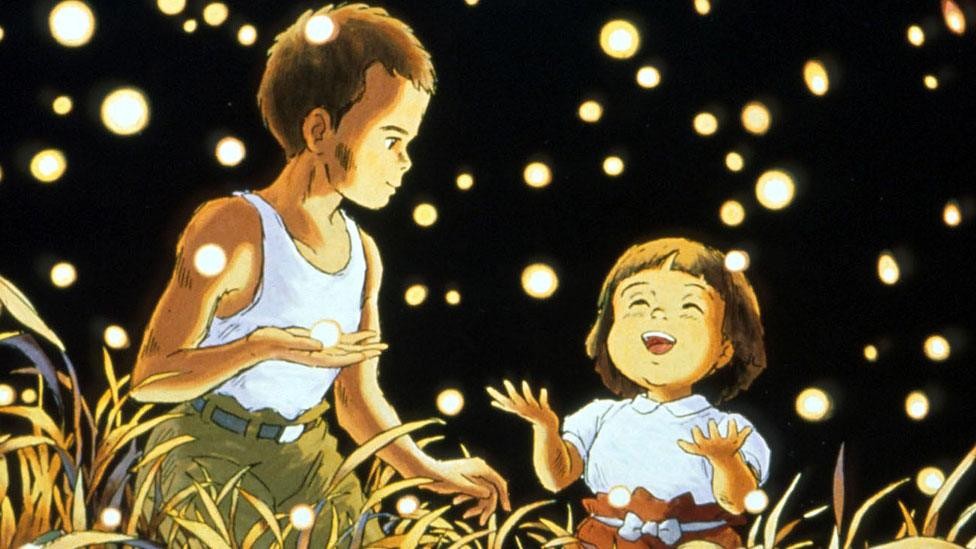
After an air raid, the siblings move into an abandoned bomb shelter. They capture fireflies to brighten their space. The fireflies die, and Setsuko buries them. This moment reveals the death of their aunt.
Seita steals crops and breaks into homes during air raids. A police officer catches him but sympathizes with his situation. Setsuko falls ill and dies while Seita is preparing food. He cremates Setsuko’s body and her doll in a straw casket. He carries her ashes in a candy tin.
Seita dies of starvation a few weeks later at a Sannomiya train station. Setsuko’s ashes scatter. Her spirit joins Seita’s and a cloud of fireflies. The two board a ghostly train. They silently look back at the events that led to Seita’s death as passive observers.
Is Grave of The Fireflies a True Story?
Grave of the Fireflies is a fictional story by Japanese author Akiyuki Nosaka. It was inspired by his experiences growing up in Japan during and after WWII. Despite initial interest in making, it into a live-action film, Nosaka initially hesitated. His hesitation faded after he saw Takahata’s animated version.
The story serves as a way for Nosaka to apologize for his sister’s malnutrition following the bombing of Kobe. Unlike Studio Ghibli’s other fantastical stories, Grave of the Fireflies is grounded and realistic. It focuses on the impact of air strikes, food shortages, and government rationing on average citizens in a Japanese village like Kobe.
How Did Seita and Setsuko Die?
In Grave of the Fireflies, Seita and other boys die from starvation and malnutrition at a train station. Setsuko’s condition worsens, and Seita goes to buy food for her. He feeds her watermelon, but it’s too late. Setsuko is delirious, eating marbles and hallucinating rocks as rice. The story highlights the harsh realities of malnutrition and starvation.
Why Didn’t Seita and Setsuko Go Back to Their Aunt’s House?
Seita and Setsuko’s aunt initially accommodates them but becomes impatient with Seita’s lack of involvement in the town or war effort. Despite their aunt’s praise and extra portions, Seita focuses on taking care of Setsuko. When they leave their aunt’s house, they can return.
However, Seita keeps Setsuko at the bomb shelter until she dies of malnutrition. He was resourceful but was still a child. Seita initially tried to protect Setsuko from the news of their mother’s death. Later, he waited for their father’s return. However, by the time he discovered the war was over and their father was likely dead, it was too late for him to return to their aunt.
Grave of the Fireflie – Production
Grave of the Fireflies is a short story by Akiyuki Nosaka. It was initially rejected for a live-action film adaptation due to its barren, scorched earth backdrop and the difficulty of convincing contemporary children to play the characters. However, when an animated version was offered, Nosaka was surprised by the accuracy of the rice paddies and townscape depicted in the film.
Isao Takahata, the creator of the film, was compelled to bring the story to life after seeing Seita, a unique wartime ninth grader. He wanted to dispel the “inferiority complex” that young people develop during wartime eras. Takahata aimed to portray Seita and Setsuko as having meaningful lives and enjoying their days. However, he faced difficulties animating the scenery due to Japanese animation’s strict restrictions on realistic depictions.
Takahata worked with well-known animators Yoshifumi Kondō and Yoshiyuki Momose to create fluid, realistic animations of the characters. He drew from his personal experience to create a realistic depiction of the air raid on Okayama. He also criticized TV shows and movies that recreated images of incendiary bombs. The film features Niteko-ike pond, where Nosaka conducted his daily routines during the Pacific War.
The location and background in the film are based on a style created by 18th-century Japanese artist Hiroshige. This style was later followed by Hergé, who created Tintin. Film critic Roger Ebert examines the contrast between the background’s style and the cartoonish animation of the characters. He argues that this deliberate animation style embodies the true purpose of animation: to recreate the raw emotion of human life by simplifying reality to emphasize ideas.
Grave of the Fireflies is considered one of the greatest war films ever made. The film includes criticism of the emphasis on nationalism in Japan. This is evident in a scene where Seita’s desire to join his father reflects a “national fantasy of war.”
Themes and Analysis
Grave of the Fireflies is a film that explores the personal tragedies and repercussions of war on society. It focuses particularly on Japan during World War II. The film, directed by Takahata, centres on a brother and sister living a failed life due to isolation from society. It aims to invoke sympathy among people in their teens and twenties.
The director, who had similar experiences during the war, argues that the film is not meant to be an anti-war film. Instead, it seeks to portray the siblings’ suffering as a result of social isolation.
Takahata criticized Japan’s tendency toward conformity and its inclination to rally against other nations. He expressed despair and anxiety whenever the youth are told to fall in line. This, he believed, was a sign that the country, at its core, has not changed.
Despite the public’s emotional reaction, Takahata emphasized that the purpose of the film was not to be a tragedy or simply to make people cry. He regretted depicting Seita as a boy from that era. He wanted him to feel more like a contemporary boy who had somehow time-travelled to that period.
The fireflies in the film are portrayed as symbols of various themes. These include the spirits of lost children, the fires that burned towns, Japanese soldiers, the machinery of war, and the regeneration of life through nature. The movie uses fireflies to visually represent both deadly and beautiful imagery. Examples include fire-bombs and kamikaze attacks.
Critics argue that the film avoids emphasizing Japanese victimhood in order to avoid denying responsibility for the war’s atrocities. Seita’s character represents an effort to heal historical trauma and challenge the notion of victimization.
FAQs
1. Is Grave of the Fireflies based on a true story?
Yes. The movie is based on Akiyuki Nosaka’s personal experiences during WWII. The characters of Seita and Setsuko are fictionalized versions of himself and his younger sister, who died from malnutrition during the war.
2. Why is Grave of the Fireflies considering an anti-war film?
Although it doesn’t directly criticize governments or militaries, the film illustrates the horrific consequences of war on innocent civilians, especially children. Its emotionally devastating story implicitly conveys a powerful anti-war message.
3. Why did Studio Ghibli produce such a sad film?
Director Isao Takahata aimed to explore the emotional depth and psychological impact of war. He wanted to create a film that would make people reflect on the cost of conflict from a personal and humanistic perspective.
4. What age rating is appropriate for this movie?
Due to its heavy themes, emotional intensity, and depictions of death and suffering, Grave of the Fireflies is best suited for mature audiences—typically PG-13 or older, depending on regional guidelines.
5. What does the firefly symbolism mean?
Fireflies represent the fleeting nature of life. In Japanese culture, fireflies can also symbolize the souls of the dead. Their brief, glowing existence mirrors the lives of Setsuko and Seita.
6. Why were Seita and Setsuko left to fend for themselves?
Their mother died in an air raid, and their father, a naval officer, was missing in action. With no reliable adult guardian, and a cold, unsympathetic aunt, the siblings were forced to survive on their own.
7. Is there an English dub of the film?
Yes. Grave of the Fireflies has been dubbed into English multiple times. Different versions have been released over the years, including by Central Park Media and later Sentai Filmworks.
8. Where can I watch Grave of the Fireflies?
Availability varies by country. It’s often available for rent or purchase on platforms like Amazon Prime Video, Google Play, or Apple TV. Some regions may also have it on Blu-ray/DVD or through local streaming services.
9. How does it compare to other Studio Ghibli films?
Unlike many Ghibli titles that are whimsical or fantastical (Spirited Away, Totoro), Grave of the Fireflies is rooted in stark realism and historical tragedy. It stands apart for its tone and subject matter.
10. What is the significance of the ending scene?
The ending scene shows the spirits of Seita and Setsuko overlooking modern Kobe, suggesting a posthumous reflection and perhaps peace in death. It’s both haunting and beautiful—underscoring the film’s emotional depth.
Final Thoughts
Grave of the Fireflies is a 1988 Japanese animated war film directed by Isao Takahata and produced by Studio Ghibli. Based on the 1967 short story by Akiyuki Nosaka, the film follows Seita and Setsuko, siblings and war orphans, as they struggle to survive during the Pacific War.
The film stars Tsutomu Tatsumi, Ayano Shiraishi, Yoshiko Shinohara, and Akemi Yamaguchi. Seita hides his mother’s death from Setsuko, and they share supplies with a distant aunt. After an air raid, they capture fireflies to brighten their space, revealing their aunt’s death. Seita steals crops and breaks into homes, and Setsuko dies while preparing food. Setsuko’s ashes scatter, and they board a ghostly train, silently looking back at the events leading to Seita’s death.