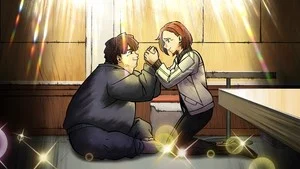
Go For It, Nakamura-kun!!’s twelfth episode delivers one of the series’ most uncomfortable and surprisingly mature moments — a cold, honest confrontation with unrequited feelings that refuses to let the protagonist’s yearning be the whole story. Rather than bending the plot to keep the main couple together, the episode gives space to other characters’ lives and choices, forcing Nakamura (and the audience) to confront a possibility that many romantic comedies shy away from: that the person you care for can choose someone else, and life moves on.
Table of Contents
Episode 12 Overview: A Slow-Burn Romance Gets a Stark Twist
From the outset, Go For It, Nakamura-kun!! has positioned itself as a slow-burn, yearning rom-com that follows an awkward protagonist learning to express himself. Episode 12 takes that premise and flips its emotional weight by inserting a very adult complication: Hirose may be moving on with someone else. Rather than treating this as a plot device for jealousy or misunderstanding, the episode treats it as a real event that Nakamura must emotionally reckon with — and it lands hard.
Why This Episode Feels Like a “Cold Slap”
What sets this installment apart is its willingness to make the show’s expected trajectory uncertain. Most series in this genre use external relationships as temporary obstacles or contrived misunderstandings to prolong tension. Here, the narrative actually allows Hirose to have his own romantic life, independent of Nakamura’s feelings. That choice deflates the fantasy that the protagonist is the center of everyone else’s world, and that deflation is what makes the episode feel like a shock — but in a necessary, emotionally truthful way.
The Emotional Arc: Grief, Anger, and Acceptance
Nakamura’s reaction is layered: despair, longing, anger, and a grieving process for a relationship that never fully existed as more than one-sided hope. The acting — particularly in the dubbed performance — amplifies this. The voice work captures Nakamura’s internal turmoil without tipping into melodrama; instead, it hits the raw, quiet pain of someone who realizes that friendship may be all they can realistically hope for.
Character Dynamics: Hirose, Nakamura, and the Sister Angle
One of the episode’s strengths is its reminder that supporting characters have their own narratives. Hirose isn’t merely the object of Nakamura’s affection; he’s a young man with friends, choices, and agency. By showing Hirose in social contexts outside of Nakamura’s perspective, the episode resists the trap of making him a passive prize to be won.
That said, some secondary dynamics feel underexplored — notably Nakamura’s sister. Her reactions border on cold and unsympathetic, which can read two ways: either as a deliberate tough-love approach meant to prod Nakamura forward, or as a missed opportunity for a more empathetic sibling beat. The ambiguity here weakens a potential emotional scaffold the episode could have used to help Nakamura process his feelings more believably.
Performance Highlight: Nakamura’s Voice Acting
The dub performance of Nakamura deserves special mention for conveying the character’s internal collapse with nuance. The voice actor portrays the slow accrual of heartbreak — the stunned silence, the vocal cracks, the desperate pleas that don’t land — giving the audience a visceral empathy for someone who’s been hoping for a different ending.
Genre Expectations vs. Narrative Courage
Romantic comedies are often guilty of preserving the comfort of a “happy end” even when that comfort is narratively dishonest. Episode 12’s narrative courage comes from challenging that expectation. It suggests that growth can involve loss and that coming-of-age can mean accepting realities that don’t align with one’s desires. If the series truly commits to this tone for its finale, it could offer a rare, emotionally mature resolution: Nakamura learning to move on, rather than being rescued by circumstantial convenience.
Potential Endings: What Might the Finale Do?
There are a few plausible directions the finale could take:
– The show leans into realism and lets Nakamura accept that the relationship he wanted isn’t happening, ending on bittersweet growth.
– A contrived breakup frees Hirose and allows an optimistic resolution, preserving the rom-com tradition.
– The ending remains ambiguous, prioritizing character development over a clear romantic resolution.
Given how daring Episode 12 was, a satisfying conclusion would be one that grants Nakamura emotional agency — not simply pairing him off as a tidy reward but showing tangible steps toward self-discovery.
Production Notes: Pacing, Direction, and Tone
The episode’s direction is careful and subdued, relying on pacing and silences rather than melodramatic confrontation. This restraint helps the emotional beats land; when Nakamura finally breaks down, it’s earned rather than manufactured. The series’ slow-burn rhythm continues to be an asset, allowing small moments — a look, a pause, an overheard conversation — to accrue meaning over time.
If there’s a minor critique, it’s that some emotional scaffolding around secondary characters could be stronger, which would provide Nakamura with more realistic outlets for his grief. Otherwise, the series continues to do what it does best: exploring adolescent longing with patience and specificity.
Where to Watch
Go For It, Nakamura-kun!! is available to stream on Crunchyroll. For more commentary and live reactions, some indie creators discuss the series on Twitch. Crunchyroll (nofollow) • Bolts The Mechanic on Twitch (nofollow)
Final Thoughts
Episode 12 of Go For It, Nakamura-kun!! is an emotionally brave installment that challenges expectations for school-romance anime. By acknowledging that Hirose can have a life outside Nakamura’s longing, and by forcing Nakamura to confront that truth, the series achieves a rare authenticity. Whether the finale opts for closure, setback, or open-ended growth, this episode gives the show a meaningful emotional pivot: an opportunity to end not with a tidy romantic payoff, but with real character development. For viewers invested in honest portrayals of adolescent yearning, this episode is both gutting and necessary.