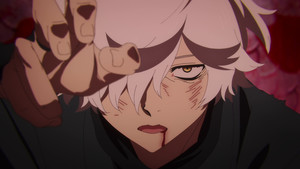
Episode 6 of Fate/strange Fake is one of those installments that divides viewers: on paper it looks like a low-budget entry filled with static shots and limited movement, but in practice it becomes an audacious, stylized chapter that leans into surrealism and atmosphere. This episode chooses impression over kinetic clarity, using distinct art directions and visual metaphors to spotlight the emotional core of its main players—Ayaka and Richard—while advancing tense alliances and ominous plot threads that raise the stakes for Snowfield.

Table of Contents
Visual Experimentation: Budget Constraints Turned Into Style
This episode embraces a patchwork of visual treatments, moving between several distinct styles: the standard Fate/strange Fake palette, a mythic “Richard legend” aesthetic, a horror-inflected sequence for the Mr. A tale, and dreamlike imagery for Richard’s inner visions. Where other series might hide limited animation, Fate/strange Fake reframes it as a stylistic choice—static frames become tableaux with carefully selected angles, distorted proportions convey motion or psychological strain, and explosions and destructive aftermaths are rendered as blinding, almost abstract events.
Why the aesthetic works
Because many frames are composed with intent, the episode often reads like a short film rather than a conventional action scene. The lack of fluid movement nudges viewers to read subtext and symbolism: a skewed perspective can mean a moral imbalance, while abrupt cuts and pictorial compositions heighten the surreal horror of the episode’s ghost story elements. For fans of more experimental animation—think Madoka Magica or the Monogatari series—this episode’s visual shorthand will feel familiar and compelling.
Character Study: Ayaka and Richard at the Heart
At its core, episode 6 is a character-driven narrative that explores guilt, identity, and the search for redemption. Ayaka and Richard are drawn together by complementary wounds: one haunted by inaction, the other haunted by self-centered choices. The episode uses visual motifs and dream-sharing to underline how their inner lives intersect.
Ayaka: guilt, fear, and the elevator ghost
Ayaka’s storyline centers around shame and self-loathing. The episode leans into an urban-legend motif—she’s strongly implied to be the inspiration for the “Mr. A” tale, a chilling folkloric story about a child ignored and later murdered—which manifests as a haunting presence every time she enters an elevator. Her fear isn’t mere superstition; it’s a moral paralysis. She’s terrified that if she once allowed a child to suffer through her inaction, she could do the same to anyone else. That makes her reluctant to take responsibility or become the anchor anyone depends on.
Richard: legend, obsession, and the search for absolution
Richard is portrayed as a man shaped by passion and personal myth-making. Obsessed with Arthurian ideals, he pursued treasure and adventure for his own ends. He fought as a hero in wars and even battled supernatural foes, yet he recognizes the selfishness of his decisions—his absence as a king, his prioritizing of obsession over duty. In Ayaka he sees an opportunity for atonement: if he can protect and guide one innocent person through the Grail War, perhaps he can finally balance the ledger of his life.
Plot Progression: Alliances and Threats
Plotwise, the episode cleverly reframes alliances: Servants and Masters aren’t teaming up just to grab the Grail, they’re allying to remove existential threats. Richard, Enkidu, and False Assassin—later joined by Sigma—coalesce not for personal gain but to neutralize “monstrous” contingencies.
- Richard and False Assassin view Jester as a priority: he’s a vampire, and a vampiric Grail winner could doom humanity.
- Enkidu’s concern is systemic: False Rider spreads a contagious corruption and Alcides has been tainted by “Grail mud.” If those pollutions combine, the Grail could become a planet-level hazard.
The episode concludes with a chilling development: Jester has identified False Rider’s master, suggesting he may be able to coerce a dangerous alliance and unleash False Rider more broadly. Compounding this, Flat senses something approaching—a hint that foreknowledge might not be enough to prevent catastrophe.
Easter Eggs, Continuity, and Notable Details
Episode 6 is dense with callbacks and continuity beats that reward longtime Fate readers:
- Dream-sharing links Ayaka and Richard in a way reminiscent of Altria and Shirou in Fate/stay night; Saint Germain appears within Richard’s dream sequences, and Ayaka witnesses that dream centuries later.
- The flashback reference to the “great first king” visually evokes the legendary Lord Logres version of King Arthur rather than the familiar Altria iteration—fitting for Richard, who idolizes the legend more than the flawed historical figure.
- The Mr. A and Little Red Riding Hood motifs trace back to narratives told in Fate/hollow ataraxia, making the episode feel tethered to the broader Fate mythos.
- Waver’s comments complicate Ayaka’s identity: although she doesn’t present as a typical mage, Waver reveals she was briefly part of his elite class—suggesting gaps between appearance and reality.
- The Clocktower politics play a role: Hishiri Adashino and the Department of Policies have forbidden Waver from leaving to assist Flat, citing the lethal precedent when a Clocktower Lord previously entered a Holy Grail War.
Where to Watch
Fate/strange Fake is available to stream on Crunchyroll (nofollow): Crunchyroll – Fate/strange Fake. For supplemental lore and community discussion, the Fate Wiki offers detailed entries on many characters and events related to the series.
Why Episode 6 Matters
Beyond advancing the plot, this episode reframes what Fate/strange Fake can be: a series willing to sacrifice smooth animation for evocative imagery and thematic resonance. It uses limited motion to push viewers into contemplation, leaning on atmosphere and symbolism to reveal character motivations and ethical dilemmas. The alliances forged here feel pragmatic and ominous, and the reveal about Jester’s discovery gives the arc a menacing momentum.
Final thoughts
Episode 6 of Fate/strange Fake is a bold, uneven entry that turns production constraints into an aesthetic. It’s an emotionally rich chapter that centers on guilt, redemption, and the uneasy pragmatism that arises in wartime. While some viewers may miss fluid fight choreography, those willing to engage with its surreal visuals and character-focused storytelling will find a quietly powerful episode that deepens the stakes for Snowfield. With Jester’s machinations and the growing alliances on the table, the next episodes promise to be pivotal.