Naoki Urasawa and Takashi Nagasaki’s Billy Bat is a propulsive, genre-bending mystery that blends postwar history, conspiracy, and metafiction — and English-language readers are finally getting a consistent release schedule to devour. With Kana (Abrams ComicArts) bringing the series to English audiences, now is a perfect time to revisit what makes this manga one of Urasawa’s most intriguing works and why it deserves a spot on every mystery and seinen shelf.
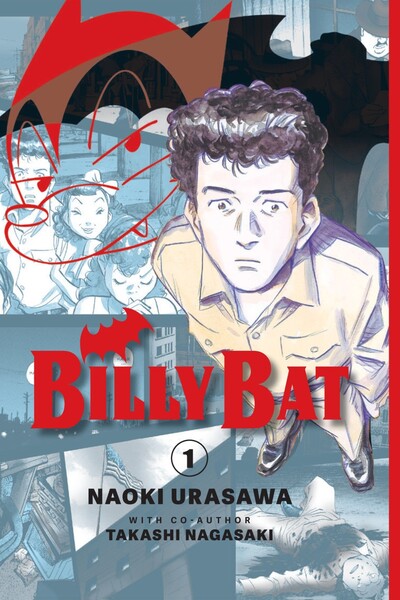
Table of Contents
Release information: English edition and schedule
Kana (Abrams ComicArts) announced an English-language release plan that gives Billy Bat new momentum for international readers. The first English volume is scheduled for release on June 2, and the publisher intends to release approximately four volumes per year — a steady pace that will make it possible for collectors and newcomers alike to catch up within a reasonable timeframe. This schedule is encouraging for readers who prefer ongoing availability rather than long waits between volumes.
Series background and publication history
Billy Bat originally debuted in Japan in October 2008, serialized in a seinen magazine and drawn by Naoki Urasawa with story collaboration from Takashi Nagasaki. The serialized run concluded in August 2016, with the twentieth and final compiled volume published in September 2016. The series spans a wide temporal and thematic range, which is part of its appeal: Urasawa and Nagasaki use a single recurring image — the mysterious Billy Bat — to link disparate eras, characters, and covert machinations.
Creators at a glance
Naoki Urasawa is known worldwide for his masterful storytelling in titles such as Pluto and 20th Century Boys, while Takashi Nagasaki has collaborated with Urasawa on multiple successful projects as a writer and producer. Their partnership on Billy Bat yields tight plotting, deep character work, and a plot that rewards careful reading.
Learn more about the author’s broader work: Naoki Urasawa on Wikipedia.
Plot primer: mystery, prophecy, and comic art
Set initially in 1949, Billy Bat follows Kevin Yamagata, a Japanese-American comic-book artist responsible for the wildly popular titular strip. Uncertain whether his iconic Billy Bat image came from his own imagination or something he glimpsed while serving in occupied Japan, Kevin returns to Japan to find the original creator and request permission — only to be pulled into a labyrinth of murders, cover-ups, and an eerie prophetic current that seems to orbit the Billy Bat symbol itself.
Why the premise works
- Historical texture: The immediate postwar setting adds political and social complexity that elevates the mystery beyond a simple whodunit.
- Mystical ambiguity: The series balances rational investigation with hints of prophecy and the uncanny, keeping readers unsure whether the thread of fate is supernatural or the product of human manipulation.
- Meta-commentary: By centering a comic-strip mascot as the key motif, Urasawa and Nagasaki examine creation, ownership, and the cultural ripple effects of imagery.
Themes and tone
Billy Bat blends noir atmosphere with sprawling conspiracy, delivering slow-burn revelations and layered character portraits. It asks questions about memory and responsibility, how images travel across borders and generations, and how seemingly innocuous icons can become catalysts for violence or belief. The tone shifts deftly between tense investigation scenes, quiet character moments, and expansive sequences that trace the symbol’s influence across time.
Genre crossovers
Readers can expect elements of historical fiction, psychological thriller, and metafiction. If you enjoy works where plot intricacy and character depth share equal billing — as they do in Urasawa’s best-known series — Billy Bat will feel both familiar and refreshingly unpredictable.
Why English readers should care
There are several reasons Billy Bat is essential reading for anglophone manga fans:
- Urasawa’s narrative craftsmanship: His reputation for meticulous plotting and structural payoff is on full display.
- Accessible pacing with long-term payoff: The release plan from Kana makes it realistic to collect and read the series without long publication gaps.
- Rich thematic payoff: Beyond the central mystery, the manga rewards readers interested in postwar cultural exchange and the lifecycle of images.
Collecting and reading tips
Because Billy Bat unfolds across multiple decades and storylines, read carefully and keep notes on recurring symbols and characters. The series often revisits events from new perspectives, so re-reading earlier chapters after revelations can be especially satisfying.
Additional resources
For readers interested in the English publisher and where to find official releases, check out Kana’s imprint information at Abrams: Kana imprint at Abrams ComicArts.
Final thoughts
Billy Bat is a dense, rewarding work from two creators at the top of their game. With Kana’s English release schedule making the volumes more accessible, now is a great time to dive into this complex mystery that probes the power of images, the hazards of prophecy, and the tangled legacies of the postwar era. Whether you’re a longtime Urasawa fan or encountering his storytelling for the first time, Billy Bat promises a ride that is both cerebral and emotionally resonant — one that lingers well after the final page.