Table of Contents
Betrothed to My Sister’s Ex: A Charming Cinderella Retelling with Heart
Betrothed to My Sister’s Ex takes a familiar fairy-tale outline and reshapes it into a quietly moving character study. Equal parts romantic comedy and thoughtful drama, the series follows Marie Shaderan — a neglected middle child whose life of labor and low self-worth is suddenly interrupted by a nobleman’s unexpected affection. Beneath the surface trappings of balls and marriage proposals, this anime explores self-worth, family abuse, and social prejudice, ultimately giving Marie a believable arc from downtrodden outsider to someone who recognizes her own value.
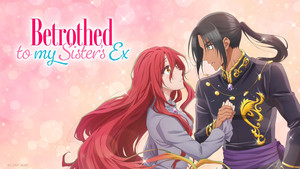
Marie’s journey is a modern Cinderella tale with emotional depth.
Synopsis: A Swap at the Altar and a Chance to Change
Marie Shaderan is the overlooked middle child of a minor noble family — treated like a servant by parents who reserve affection for her older sister Anastasia and her younger brother Cedric. At a party intended for Anastasia, Marie meets Kyros Granado, a higher-ranked noble whose fascination with Marie becomes the catalyst for everything that follows. When a tragic accident prevents Anastasia from attending Kyros’ home, Marie is offered as her sister’s replacement. What begins as a social convenience grows into a relationship that forces Marie to confront long-buried doubts about her worth.
Themes & Motifs
Cinderella Retold: More Than a Rescue Fantasy
This show leans on the ATU 510A “Cinderella” template — the rags-to-riches rescue trope — but it reframes the fairy tale into a story about agency. Instead of a passive heroine waiting to be saved, Marie’s arc emphasizes internal transformation: learning to accept kindness, recognize her talents, and step into a life she believes she can deserve. For readers who want context on the tale type, see the Cinderella folklore overview. Cinderella — Wikipedia.
Family Abuse, Prejudice, and Growth
What gives the series emotional weight is how it portrays abuse and systemic bias without relying solely on melodrama. Marie’s parents openly prefer Anastasia, using labels like “unlucky” to demean Marie for her red hair and anxiety. Meanwhile Kyros carries his own burden: discrimination linked to his biracial background and family circumstances. These threads work together to make each character’s motivations feel rooted in a believable social world, where inequality shapes choices and relationships.
Character Focus: Marie, Kyros, and the Supporting Cast
Marie is the clear center of the series, and her growth is convincingly paced — incremental and imperfect, which makes it feel real. Kyros functions as both romantic interest and emotional mirror; his devotion highlights Marie’s blind spots about self-worth. Among supporting characters, Mio stands out: sharp, decisive, and crucial to moving the plot forward. Her pragmatic energy brings levity and momentum, often compensating for uneven pacing elsewhere.
Art, Animation, and Voice Work
Visually the series is mixed. Character designs are expressive and the production takes care to show Marie’s transformation with and without makeup in a grounded way, but animation quality fluctuates. Some scenes suffer from stiffness; others — notably a few ballroom sequences — surprise with fluid, well-choreographed motion. The voice cast delivers notable performances that sell both humor and tenderness, anchoring the series when the visuals are inconsistent.
Why This Retelling Resonates
At its core, the show succeeds because it balances fairy-tale wish fulfillment with emotional realism. The “prince” in this story is not merely prize or status; he becomes a catalyst for Marie’s self-recognition. The series avoids turning villains into pure caricature — even antagonistic characters are given understandable motivations — which makes the emotional payoffs feel earned. For readers interested in folklore types and analysis, the ATU index provides useful background. ATU index — Wikipedia.
Strengths and Weaknesses
Strengths:
- Well-paced character development for Marie.
- Complex supporting cast, with standout characters like Mio.
- Meaningful use of fairy-tale motifs to explore self-worth.
Weaknesses:
- Uneven animation quality and odd stylistic choices at times.
- Certain subplots (like family dynamics and systemic prejudice) receive less screen time than they deserve.
Who Should Watch?
If you enjoy character-driven romances that rework classic fairy tales into modern emotional narratives, Betrothed to My Sister’s Ex is worth your time. It’s especially rewarding for viewers who appreciate slow-burn growth and nuanced secondary characters rather than high-action spectacle.
Final thoughts
Betrothed to My Sister’s Ex isn’t flawless, but it’s a heartfelt and thoughtful reimagining of a timeworn tale. The show’s greatest triumph is letting Marie’s self-worth be the real prize — not just a marriage or status. With memorable supporting characters, earnest performances, and a willingness to probe family abuse and prejudice, the series offers a satisfying blend of romance and emotional resonance. If you’re after a quiet, character-focused anime that treats a Cinderella story with nuance, this one will likely charm you.