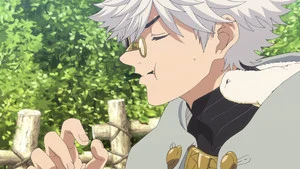
Episode 10 of Witch Hat Atelier digs into identity, exclusion, and the unexpected power of belief. This installment centers on Tartah — an apprentice whose so-called “silverwash” (a form of colorblindness) has kept him on the margins of witch society — and how a sudden crisis forces both him and the people around him to confront long-held assumptions. With strong character beats, thematic subtlety, and a reminder that craft and conviction sometimes matter more than perceived limitations, this episode stands out as one of the series’ more emotionally resonant chapters.
Table of Contents
Centered Image
Tartah’s Isolation: Disability, Difference, and Representation
Tartah’s struggle is one of the episode’s most affecting threads. He’s been told repeatedly — implicitly and explicitly — that because of his silverwash he can’t fully belong. That exclusion isn’t just personal humiliation; it’s structural: witch society has rules and rituals that gatekeep who can practice certain kinds of magic. The result is a slow erasure of confidence, leaving Tartah to internalize the idea that his difference equals inability.
What “silverwash” means for spellcraft
Because Tartah cannot perceive colors the way others do, he’s been barred from advanced color-dependent magics and the pigment-heavy training of a magic stationer. But the episode carefully reframes this limitation — showing how his strengths (notably precise draftsmanship and plant recognition) are actually well-suited to spellwork. It’s a strong subversion of the “deficit” narrative: the problem isn’t Tartah’s mind or body, it’s the cultural assumptions that decide what counts as valid skill.
Coco as Catalyst: Belief, Skill, and Creative Problem Solving
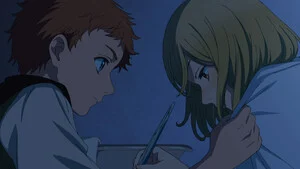
Coco plays a vital role here, not by solving Tartah’s problem for him but by believing he can succeed. When Coco becomes gravely ill and conventional medicine is insufficient, Tartah sees a moment where he must act. Working around his visual limitation, he leverages other senses and technical ability; Coco’s knack for innovation gives him the missing piece. Her reversal of a pulverizing spell and his symmetric redrawing of it become a turning point: the act of being trusted to perform the work opens up possibilities that formal gatekeeping had closed.
Craft over conformity
The exchange between Coco and Tartah is a reminder that craft — practice, ingenuity, and a willingness to improvise — often outperforms rigid adherence to “how things are supposed to be done.” Tartah’s drafting background arguably makes him better suited to certain spells than some of his peers. The episode uses this to argue that different minds and bodies contribute unique strengths, and those strengths deserve space and recognition.
Under the Surface: Lost Healing Magic and Societal Shifts
Although the episode focuses on Tartah’s personal breakthrough, it simultaneously reminds viewers of a larger cultural wound: the elimination of healing magic. The absence of that branch of magic complicates medical care and forces practitioners to improvise medicines one batch at a time. When a bar owner treats Qifrey like a servant during a fire, it hints at broader tensions between Outsiders and witches — tensions that may have contributed to the Pact and the erasure of certain magical practices.
Questions left lingering
Why was healing magic phased out? How did Outsiders’ attitudes toward witch healers shape those decisions? Episode 10 raises these questions without resolving them, using the loss of healing spells as a thematic backdrop to personal stories of exclusion and resilience.
Brimmed Caps and Growing Intrigue
Meanwhile, the Brimmed Caps continue to loom in the background. An apparent Brimmed Cap — possibly employing invisibility magic — has begun to meddle with Qifrey’s apprentices. The episode reinforces that the Brimmed Caps are not one-off antagonists but part of a wider network capable of shaping events and careers. With Agott preparing to take her test next, the stakes feel higher: will external forces sway apprentices away from formal institutions, and what price will belief-cost freedom exact?
Agott and the test of conviction
Though Agott’s test isn’t the focus here, the setup suggests a showdown between institutional expectations and individual worth. If Tartah’s arc is about claiming ability despite prejudice, Agott’s upcoming trial could further explore how patriarchal or familial doubt shapes self-worth — and how a single champion of faith can make a decisive difference.
Animation, Tone, and Character Work
Visually the episode continues to be a treat: small details in expression and body language carry emotional weight, while the sequence of spell correction and collaboration is staged with clarity and empathy. The pacing favors quiet revelation over spectacle, which suits a story about modest breakthroughs and damaged confidence. The voice work and soundtrack remain supportive rather than intrusive, letting the characters’ emotional beats land.
Where to Watch
Witch Hat Atelier is available to stream on Crunchyroll, which carries the series with subtitles and regional options.
Final thoughts
Episode 10 of Witch Hat Atelier succeeds by centering small acts of faith over sweeping reveals. It reframes disability not as a deficiency but as a different clustering of strengths, and it places trust and collaboration at the heart of magic. The show continues to ask smart questions about exclusion, cultural memory, and the costs of ideological purges (like the loss of healing magic), while giving its quieter characters room to grow. For viewers who appreciate character-driven worldbuilding and thoughtful takes on representation, this episode is well worth your attention.