Medalist Season 2’s sixth episode takes a quieter approach to rivalry and instead leans into character-driven humor and training beats. While it doesn’t deliver the face-to-face showdown between Inori and her idol Hikaru that many viewers were hoping for, the episode uses that absence to explore Inori’s limits, introduce intriguing new rivals and allies, and score several memorable comedic moments. Below is a deeper look at what works, what feels oddly restrained, and why this installment remains an enjoyable stop on the season’s arc.
Table of Contents
Episode Overview: A Focus on Growth Over Confrontation
Episode 6 deliberately sidesteps the anticipated Inori–Hikaru confrontation. Instead of a dramatic exchange or rivalry escalation, the story puts Inori on the ice to measure her actual standing among Japan’s top up-and-comers. The result is an episode that emphasizes internal discovery and interpersonal comedy rather than headline-grabbing clashes. That choice feels unusual, but the episode compensates by delivering strong character moments and a handful of laugh-out-loud gags.
Inori vs. Hikaru: The Missed Conversation
For most viewers, the highlight of the setup has been the potential meeting between Inori and Hikaru. Here, we finally get context: Inori is on the same competitive stage as Hikaru and can at last appreciate how talented her idol truly is. Yet, rather than an extended exchange or dramatic sparring match, Hikaru remains distant—observing, reserved, and ultimately leaving without much interaction. The look of disappointment she casts after watching Inori struggle with jumps is telling, but it’s more a quiet judgment than a verbal critique.
That silence creates an odd tonal shift. On one hand, it feels like a missed opportunity for emotional fireworks. On the other, it keeps Hikaru mysterious and preserves space for future payoff. The episode uses that restraint to steer attention back to Inori’s growth and the larger field of competitors.
New Faces: Main and Iruka Bring Fresh Dynamics
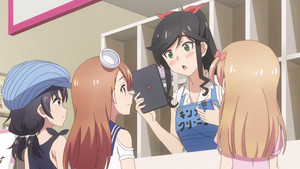
Two new skaters introduced this episode—Main and Iruka—do a lot of heavy lifting in terms of characterization and plot seeds. Main immediately bonds with Inori over shared admiration for Inori’s sister, Mika, providing an instant ally and a natural way to highlight Inori’s family legacy.
Iruka, on the other hand, enters as a sharp contrast: older, grumpy, and quickly antagonistic once she learns about Mika. Her initial dismissal—calling attention to how Inori resembles her sister in looks and jumping shortcomings—feels like the beginning of a more complex backstory. Is Iruka a former rival disappointed by Mika’s retirement? A once-devoted fan betrayed by an unresolved past? The episode drops breadcrumbs but keeps her motives ambiguous enough to be compelling.
Comedy Breaks the Tension
Iruka’s confrontation could have become dour, but the episode pivots into comedy when Inori’s response to proving her and her sister’s jumping ability is to dramatically show off her abs. The gag is absurd and unexpected, instantly defusing hostility and giving the characters—and the audience—a reason to laugh. It’s an oddball beat that works precisely because it undercuts typical sports anime dramatics with playful silliness.
Training Montage: Jumps, Coaches, and the Harness Gag
The bulk of the episode follows Inori as she practices jumps. A key revelation is that Inori lacks a reliable triple flip and triple lutz—moves now expected of All-Japan contenders. The episode handles those practice sequences without dragging, thanks to well-timed jokes and character reactions.
Tsukasa continues to be a great foil. His attempt to demonstrate jumps for Inori—followed by her outward indifference and inner fangirl excitement—creates a sympathetic and funny dynamic. The show balances Inori’s star-struck personality with moments of steely focus, making her feel human rather than a caricature.
Another standout is the introduction of a jumps-focused coach who looks far younger than he actually is. A familiar trope—the baby-faced adult—gets a fresh spin when the coach uses a harness for jump training. Watching Tsukasa become a literal flying demonstration puppet is silly in the best way, and the harness gag provides one of the episode’s most serviceable physical-comedy beats.
Supporting Characters and Characterization Depth
This episode does a lot to expand the roster thoughtfully. Small scenes—like Tsukasa’s over-eagerness to exploit Inori’s current fame to secure specialized coaching—do double duty, advancing plot while deepening relationships. Inori’s earnestness, combined with moments of emotional vulnerability, keeps viewers invested in her trajectory.
Iruka’s jabs about “cute but weak at jumps” open potential narrative doors about legacy, fandom, and the pressures of living up to a famous sibling. Main’s enthusiasm for Mika also hints at how Inori’s family history will continue to influence competitions and social dynamics.
Why This Episode Works Despite the Quiet Rivalry
Even without a high-stakes face-off, episode 6 succeeds because it invests in character nuance and reliable humor. The show trusts viewers to value what’s unsaid: the quiet disappointment in Hikaru’s expression, the hint of a complicated past for Iruka, and Inori’s increasing awareness of where she must improve. The comedic beats provide levity while the training scenes remind us that the path to championship-level skating is repetitive, frustrating, and often unglamorous.
Where This Leaves the Season
Episode 6 resets expectations. Rather than accelerating a rivalry, the season uses this lull to build texture—introducing characters, establishing competitive stakes, and layering in humor. It’s believable that the bigger confrontation hasn’t happened yet; the groundwork laid here makes any future showdown more meaningful.
Medalist Season 2 is available to stream on platforms like Hulu and Disney+.
Final thoughts
Episode 6 of Medalist Season 2 is an understated but satisfying installment. It favors character beats and comic relief over immediate rivalry payoff, which may frustrate viewers waiting for an Inori–Hikaru showdown—but it also enriches the series’ emotional and comedic texture. With new rivals, a promising coach subplot, and a handful of genuinely funny moments, the episode keeps the momentum alive while making the eventual confrontations feel earned. If you’re invested in Inori’s growth, this episode is a welcome, if mellow, step forward.
The views and opinions expressed in this article are solely those of the author and do not necessarily represent the views of the hosting site, its employees, owners, or sponsors.