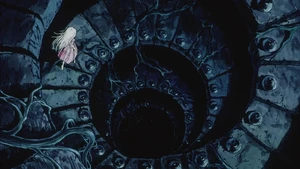
Few animated films ask as much of their viewers as Angel’s Egg. Directed by Mamoru Oshii with character designs by Yoshitaka Amano, this brief, dreamlike feature collapses narrative convention into a sequence of haunting tableaux—an abandoned city, a mysterious egg, and two unnamed wanderers locked in a fragile, ambiguous relationship. The result is less a conventional story than a meditative experience: cryptic, solemn, occasionally unsettling, and endlessly evocative.
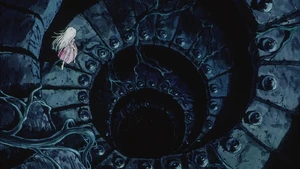
Angel’s Egg — a surreal, symbolic work restored for modern theatrical viewing.
Table of Contents
Angel’s Egg: A Visual and Spiritual Experience
At roughly an hour and change, Angel’s Egg compresses grand ideas into a small runtime. The film trades explicit explanations for a sustained focus on mood: long, lingering camera-held shots, lonely architecture, and recurring religious and natural imagery. Viewers are invited to move beyond plot mechanics and into the territory of symbol and sensation—birth and death, faith and doubt, shelter and desolation. For those who prefer tidy answers, this film will frustrate; for those who enjoy decoding rituals and motifs, it offers rich rewards.
Minimal Dialogue, Maximal Atmosphere
Dialogue in Angel’s Egg is intentionally sparse. Instead, Oshii uses visual repetition and carefully composed shots to communicate character and theme. The young girl’s relationship to the egg—how she protects it, carries it, and instinctively crouches over it—speaks louder than exposition. This economy of words pushes the audience to engage actively, interpreting the film’s mise-en-scène and symbolism rather than passively receiving a spelled-out narrative.
Stark Art Nouveau Ruins and Mythic Imagery
The film’s architecture and ruined cityscapes—bearing art nouveau flourishes—create a setting that is both ancient and otherworldly. Statues animate, shadowy fish glide over buildings, and water appears as a recurring, almost sacramental motif. These images work together to create an atmosphere that is at once melancholic and hypnotic, a cinematic aquarium where each visual element contributes to the film’s ritualistic logic.
Characters: The Girl and the Man
Oshii deliberately leaves his two protagonists unnamed and archetypal. The girl—young, fragile, and fiercely protective of her egg—embodies a kind of naive hope or faith. The man, traveling with a bio-mechanical device and a cross-shaped weapon, seems to represent skepticism, disillusionment, or the weight of experience. Their interactions are terse and often elliptical, culminating in moments of betrayal and revelation that push the film toward its emotionally devastating conclusion.
Ambiguity as Strength
Because characters are not fully explained, their actions become a canvas for projection. Is the egg a literal object, a soul, a symbol of potential, or a metaphor for childhood and innocence? Angel’s Egg refuses to pin down a single interpretation; instead, it creates spaces where multiple readings—religious, psychological, ecological—can coexist. That very openness is what gives the film its haunting longevity.
Soundtrack and the Power of Score
Yoshihiro Kanno’s score plays a crucial role in shaping the film’s emotional landscape. Choir-like vocal lines, tense strings, and discordant electronic touches thread through the visuals, amplifying unease and wonder in equal measure. When words are absent, the music becomes the film’s voice—guiding the viewer through reveries, confrontations, and quiet, contemplative moments.
How Angel’s Egg Fits in Animation History
Angel’s Egg occupies a rarefied place in animation: it sits beside avant-garde works like Belladonna of Sadness and Fantastic Planet as an example of animation that seeks philosophical and sensory effect over mainstream narrative appeal. Its pedigree—bringing together creators known for other landmark works—helps explain the film’s cult stature, but its lasting impact comes from the way it challenges what animation can communicate without relying on conventional plot structures.
Where to Watch and Restoration Notes
For viewers discovering Angel’s Egg for the first time, seek out high-quality restorations or theatrical presentations where possible—restored prints reveal the meticulous texture and color work that underpins the film’s atmosphere. For more information about theatrical restorations and releases, consult the distributor’s official pages. GKIDS has handled modern restorations of many classic animated films and is a good starting point for release information.
Who Should Watch This Film?
Angel’s Egg is best suited to viewers who appreciate slow cinema and symbolic storytelling—fans of experimental animation, film students, and anyone curious about works that blur the lines between visual art and cinema. It’s a film to be experienced more than solved—one that invites multiple viewings and slow reflection.
Interpretations and Lasting Questions
Because the film resists firm answers, it invites debate. Is it an allegory about faith lost and regained? A meditation on creation and the vulnerability of innocence? Or an abstract reflection on memory and the passage of time? Each viewer will come away with a slightly different reading, and that plurality is one of Angel’s Egg’s greatest strengths.
Final thoughts
Angel’s Egg is a stubbornly singular film—one that will polarize viewers but also linger in the imagination of those it touches. Its deliberate ambiguity, careful visual construction, and haunting score combine into an experience that feels less like watching a story unfold and more like entering a ritual. If you approach it with patience and openness, Angel’s Egg rewards you with a rare encounter: an animated film that asks you to slow down, look closely, and sit with questions that have no easy answers.
Further reading: Angel’s Egg and related analyses are well documented online; for background on creators and filmography, encyclopedic sources like the film’s Wikipedia entry can provide helpful context. Angel’s Egg — Wikipedia