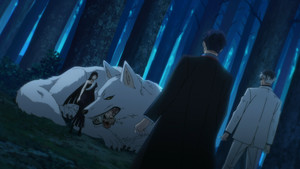
Episode 9 of Yoroi-Shinden Samurai Troopers finally delivers the kind of clarity and momentum the series has been teasing. After a few episodes of tonal whiplash and a crowded plotline, this instalment manages to streamline the chaos by committing to a tighter central mystery — Nasti’s contact with the Demon World — while threading that reveal into meaningful character consequences for Shion and the current generation of Troopers.
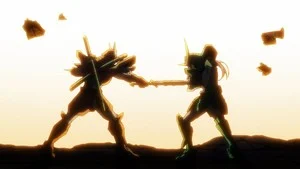
Table of Contents
Plot and Pacing: A Satisfying Explanation at Last
Where previous episodes left me wondering whether plot beats were being set up or discarded, episode 9 finally ties a few loose threads together in a convincing way. Nasti’s communication with the Demon World is not a cheeky subversion or a throwaway gag — it is an actual corruption that has been influencing her choices for years. The jewel’s hold on her, the manipulations by Ramaga, and the mirror-based corruption mechanic are all given concrete context through well-placed flashbacks. That careful foreshadowing helps the reveal land without feeling like a cheat.
The pacing is smartly handled: instead of overwhelming viewers with yet another unrelated subplot, the episode pivots to a new stack of stakes while acknowledging past developments. This allows the narrative to breathe, and the stakes — both emotional and supernatural — become clearer and more urgent as the episode progresses.
Shion’s Arc: Guilt, Manipulation, and a Chance at Redemption
Shion’s storyline is the emotional center of the episode. He begins demanding answers — and the show gives them. Discovering that Nasti was compromised reframes his bitterness and grief, revealing that the person he blamed for the destruction of his old team was herself being used as a pawn. The sequence in which we learn that Shion, too, fell under an older form of mind control (this time via the sacred sword) deepens the theme of inherited sins across generations.
This revelation turns Shion’s quest from rescuing lost comrades into a path of penance. The alive-or-not status of his original Trooper team does feel a bit zig-zagged, but narratively it serves to highlight that what matters now is the people right in front of him. His decision to prioritize and ultimately save his current squad is satisfying: it reframes heroism less as reversing the past and more as protecting the future.
Poetic Help from the Past
One of the episode’s more affecting moments is how Shion succeeds: aided by the lingering power of his fallen teammates’ armor. That touch of posthumous assistance adds a melancholic poetry to the fight scenes and reinforces the series’ recurring motif about bonds that persist beyond death. It’s a tidy way to demonstrate camaraderie across generations while giving Shion an emotionally resonant victory.
Villains and Demon Politics: Interesting, If Slightly Messy
The episode provides more insight into the Demon ranks, teasing a split between what feels like First-Name and Last-Name factions. While the show doesn’t fully categorize every demon into a clear camp, it does do something useful: it shows that demons can disagree, backstab, and support one another, making them feel like a textured political body rather than a monolithic evil.
Ramaga’s manipulations remain central to the conflict, and the tension between personal ambition and group loyalty plays out well. The only real drawback is that the factional distinctions stay somewhat fuzzy, which can undercut clarity for viewers trying to follow scheming permutations across multiple episodes.
Presentation: Direction, Tone, and Visual Flair
One of the episode’s strengths is how it chooses its moods and commits to them. Where some entries in this series flip between wacky and grim without settling, episode 9 confidently alternates between moody confinement (Nasti in the brig) and high-voltage action (Gai’s brutal takedown of Shion’s controlled allies). The lack of an earworm rock track actually helps the episode stick to its emotional register when needed.
Action Highlights
The action is particularly well-staged. Gai’s decisive assault — including the visceral moment of him taking out Shion’s former teammates — lands because of sharp direction and timing. Another standout is a sequence that leans into slow-motion, counter-attack choreography reminiscent of modern action games; it injects cinematic energy into the confrontation and gives the fight scenes a punchy, stylish identity.
Where the Episode Falters
Despite many improvements, the episode isn’t flawless. The demon faction dynamics could use clearer exposition, and the ping-pong of who’s alive, who’s dead, and who’s controlled can be mildly frustrating for viewers who want consistent stakes. Also, some throwaway reveals — like the reappearance of Kaito’s rock-and-roll grandma as a plot cog — are swept past quickly, which reduces their emotional payoff.
Where to Watch
Yoroi-Shinden Samurai Troopers is available to stream on Crunchyroll. For more streaming details, see the official series page on Crunchyroll. Watch on Crunchyroll
Final thoughts
Episode 9 is the best evidence yet that Yoroi-Shinden Samurai Troopers can balance its sprawling mythology with character-driven stakes. By finally explaining Nasti’s connection to the Demon World and using that reveal to deepen Shion’s arc, the episode converts previous frustrations into momentum. The demon politics could be tightened up, but strong direction, satisfying action beats, and genuine emotional payoffs make this a turning point for the series. If the show continues to anchor its spectacle to character consequences, the next episodes look very promising.