Golden Kamuy Final Season’s episode 55 (season five, episode six) peels back another layer of Lieutenant Tsurumi’s terrifyingly composed persona, taking viewers deeper into the wounds that drive his obsession with the Ainu gold. What has often read as near-superhuman manipulation and political cunning is, in this episode, given a human — if deeply damaged — foundation. Through careful character beats, unsettling imagery, and emotionally charged reactions from the core cast, the episode reframes Tsurumi from mythic villain to broken man using ideology as armor.
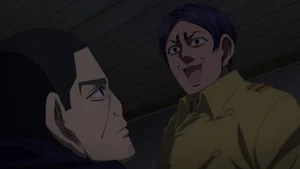
Table of Contents
Episode Summary: A Mask Slips
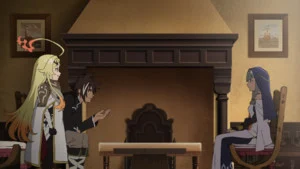
Much of this episode functions as Tsurumi’s narration of past events: who the seven Ainu were, how they died attempting to secure the gold, the origin of Wilk’s transformation into “Nopperabou,” and the competing ideological visions for Hokkaido. But rather than serving as a dry exposition dump, the episode uses Tsurumi’s storytelling as a mirror into his psyche. The charismatic façade he has cultivated so expertly begins to crack, revealing grief, obsession, and a fixation on control that is rooted in personal loss — namely the deaths of his wife and daughter.
Thematic Core: Obsession, Trauma, and Ideology
Golden Kamuy has always been more than a treasure-hunt tale: it is a study in how personal histories intersect with national and cultural narratives. This episode places that theme front and center. Tsurumi’s rhetoric about building a militarized Hokkaido reads as policy, but the subtext is tragic: his campaign is a desperate attempt to remake a landscape that took everything he loved. The show smartly contrasts this with Wilk’s vision — a different dream for the land — and by doing so it frames the conflict as both political and profoundly personal.
Tsurumi’s Vulnerability
The most affecting aspect of the episode is how the series reveals Tsurumi’s hidden wounds. He is not simply a villain who manipulates the disenfranchised; he is a man clinging to power because it masks unbearable pain. This humanization does not absolve his crimes, but it complicates them. The audience is asked to sit with both the horror of his methods and the sorrow that fuels them.
Key Scenes and Symbolism
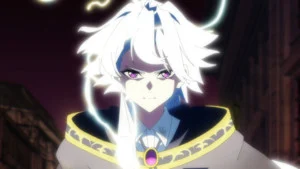
One of the episode’s most startling moments is the adaptation of the scene where Tsurumi dons the skinned head of Wilk — a visual that takes on new meaning here. In the manga this moment is shocking; in the anime it becomes a literal manifestation of haunting memory. The grotesque imagery underscores the ways trauma can become a physical presence, and the animation’s choice to linger on it enhances the sense of unease.
Asirpa’s Reaction: Compassion Amid Horror
Asirpa’s response to the spectacle — pity, near-concern — is crucial. Her empathy humanizes the victims and highlights Tsurumi’s brokenness in a different light: she sees beyond the monstrous act to the man in pain. This reaction emphasizes a recurring strength of Golden Kamuy: its principal characters respond to atrocity with layered, credible emotions, not caricatures.
Supporting Characters: Koito and Tsukishima
While Asirpa and Sofia react with moral clarity, Koito and Tsukishima’s responses reveal how charisma and political theater can convince those who want to be convinced. Tsukishima’s fury grows as Tsurumi’s speech makes clear that the lieutenant’s cause is more self-serving than ideological. Koito’s sycophancy lasts longer — but that, too, is telling: people often adopt narratives that help them rationalize their choices.
Factional Ideologies
The episode does a fine job illuminating the ideological schism at the center of the story. On one side, the militarized, top-down solution Tsurumi advocates; on the other, Wilk’s vision and the more communal, Ainu-rooted aspirations. Those differences aren’t just abstract political positions — they reflect characters’ traumas, desires, and histories. Golden Kamuy remains at its strongest when it depicts how convictions can be born from wounds.
Adaptation Notes: Dialogue-Heavy but Emotionally Precise
This installment leans heavily on dialogue, which necessarily limits large-scale animation set pieces. Rather than a weakness, the restraint actually benefits the storytelling: the episode concentrates on beats, expressions, and tonal shifts that underscore the script’s revelations. The pacing allows important lines to land and gives the cast room to register subtle emotional changes, which is essential for a character-driven episode like this.
Even with fewer action sequences, the episode’s art direction and voice acting elevate the drama. The animation chooses moments to underscore with intense close-ups or symbolic visuals — like the skinned head scene — ensuring that the emotional core remains vivid.
Why This Episode Matters in the Larger Arc
This episode functions as connective tissue for the season. It provides critical backstory that reframes motivations, advances character arcs, and clarifies ideological stakes. By turning the spotlight on Tsurumi’s interior life, it helps viewers understand the mechanics of his influence and the true cost of the struggle for the Ainu gold. The result is a deeper appreciation for how individual choices ripple outward to shape a conflicted society.
For viewers following the season, this episode is a reminder that Golden Kamuy is as invested in human complexity as it is in mystery and adventure. It makes clear that the series’ violence and political maneuvering are consequences of lived experience, not merely plot complications.
Where to Watch
Golden Kamuy Final Season is currently streaming on Crunchyroll. For series information and community discussion, see the show’s MyAnimeList page: MyAnimeList – Golden Kamuy.
Final thoughts
Episode 55 is a standout for how it humanizes a seemingly monstrous antagonist and ties personal trauma to political action. The episode’s dialogue-heavy structure may not satisfy viewers seeking action every minute, but it pays off emotionally and thematically. Golden Kamuy continues to excel at portraying the messy intersections of identity, loss, and ideology — and this installment proves that even the most composed masks can crack, revealing the vulnerable and dangerous person beneath.