*Note: This review contains major spoilers for The Water Magician.*
The Water Magician arrives as a curious experiment in the isekai formula: instead of celebrating the genre’s familiar beats, it often undermines them. That boldness is simultaneously the series’ most compelling element and its chief flaw. On one hand, the show gives us an unnerving, morally ambiguous protagonist whose worldview interrogates what it means to be a “hero.” On the other, the series frequently sacrifices momentum and payoff for surprises that feel arbitrary rather than earned. Below I break down the key strengths and weaknesses of The Water Magician—plot, characters, pacing, animation and sound—and why the final act ultimately makes the series worth talking about even if it’s not always enjoyable to watch.
Table of Contents
Synopsis at a glance
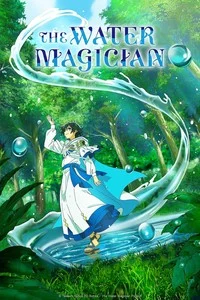
After being reincarnated in a fantasy world, Ryo wants nothing more to live a slow life studying magic. But when he gets his call to adventure in the form of Able, a shipwrecked adventurer, he sets off on a journey to get the man home—and learn about the world he now lives in.
Subverting isekai expectations—and when that works
The Water Magician’s premise is familiar: a genre-literate protagonist, Ryo, reincarnated into a fantasy world with powerful magical ability. But rather than follow the usual arc where the isekai hero grows into a savior role, this series treats many tropes as optional. That subversion is refreshing when it deepens character or theme—most notably in the final confrontation where the payoff feels like a natural culmination of Ryo’s outlook—but it often undermines dramatic tension elsewhere.
Examples of narrative anti-climax
Two sequences illustrate the problem. The Great Tidal Bore arc builds toward a massive dungeon disaster that would normally be the stage for heroic action. Instead, Ryo is absent from the decisive moments, and the expected heroic frontline drama never occurs. In contrast, when Ryo does step in later to dispatch a Demon Prince in two effortless strikes, the result feels hollow rather than triumphant. The show repeatedly trades expected emotional peaks for surprise, but without giving the audience the scaffolding necessary to care.
Conversely, the anime also delivers a sudden, high-stakes fight with an “akuma” that comes out of nowhere and generates real tension—only to leave its origins and implications unexplained. The mix of anticlimax and unexpectedly intense battles produces a rhythm that can be jarring instead of engaging.
Character study: Ryo and the danger of detached protagonists
Ryo is the series’ most fascinating element. He doesn’t see the world as “real” so much as a stage—NPCs are background, quests are chores, and emotional ties are thin. That detachment allows The Water Magician to examine what happens when someone with godlike power views suffering and geopolitics as fiction. Ryo’s arc exposes a terrifying possibility: a protagonist who is effectively a weapon of mass destruction when offended.
Able—Ryo’s closest ally—functions as a foil. Whereas Ryo treats relationships as collectible narrative beats, Able embodies empathy and responsibility. The tension between them is the moral engine of the show. When Ryo threatens Able and nearly kills him, and later treats the incident as nothing more than a misunderstanding, the anime forces viewers to reckon with a hero who lacks accountability. This inversion—making the nominal protagonist the world’s potential villain—is the concept that most justifies the series’ existence.
Pacing, structure, and the problem of inconsistent stakes
The Water Magician struggles to balance episodic beats with long-form stakes. Several major conflicts lack sufficient setup, and the series often switches tonal gears abruptly. Because the show so often refuses to center Ryo in key events, supporting characters who otherwise deserve focus become undercooked. The final fight between Ryo and Oscar succeeds precisely because it is the logical result of Ryo’s psychological trajectory: the world’s rules collide with his personal feelings, and the drama finally lands.
For readers interested in how isekai conventions can be deconstructed, that thematic work is compelling—see a primer on the isekai genre for context. What is isekai?
Animation, art direction, and music
Visuals are a mixed bag. The Water Magician avoids the most egregious budget shortcuts, and certain sequences show a clear attempt to stage combat dynamically, but animation quality in large-scale scenes and group fights is below the standard expected of modern fantasy anime. Character models sometimes drift, movement can feel stiff, and reused assets are noticeable. On the positive side, the opening theme pairs catchy music with striking visuals that far outshine the series’ average episode animation.
The soundtrack is serviceable but rarely elevating. It supports mood and action without becoming memorable aside from the strong opening. For viewers who prioritize dazzling animation in action-heavy shows, The Water Magician may disappoint; those focused on ideas and character will find more to appreciate.
Why the series matters despite its flaws
At its core, The Water Magician asks uncomfortable questions about power, empathy, and the responsibility that comes with being “special” in a world of ordinary people. Turning the typical isekai setup on its head—making the protagonist morally ambiguous to the point of danger—gives the story teeth. When the narrative sticks to that philosophical interrogation, the series is provocative and thought-provoking.
Unfortunately, inconsistency in pacing, some underdeveloped supporting characters, and middling animation keep the show from reaching the level of a classic. If you value appetite for subversion and psychological complexity, the series is worth a watch; if you came for reliable thrills and polished spectacle, it’s an uneven experience.
Final thoughts
The Water Magician is an uneven but intriguing entry in modern fantasy anime: bold in idea, inconsistent in execution. Its bravest move—making an isekai protagonist an emotionally detached, potentially catastrophic figure—yields one of the most original character studies to come from the genre. Yet the show’s frequent anti-climaxes, abrupt tonal shifts, and below-par action animation often undercut the promise of that concept. Ultimately, the series is more interesting to think about than it is to watch start-to-finish—but its final act proves the premise can pay off when the writing commits to its own darker logic.
Find more fantasy and isekai series on Crunchyroll