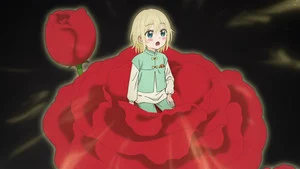
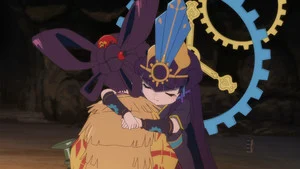
After twelve episodes, Trigun Stargaze reaches its conclusion — a visually striking finale that nevertheless feels hasty and underbaked. Studio Orange’s new take on Yasuhiro Nightow’s work packs a huge amount of source material into a very small runtime, and the result is a show that hits several key beats but often sacrifices nuance, characterization, and coherent plotting in the process.
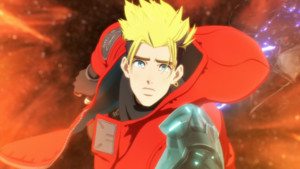
Table of Contents
Pacing and Adaptation: Too Much, Too Fast
Right away the most obvious problem with Stargaze’s finale is scope. The series attempts to fold nearly the entirety of Trigun and Trigun Maximum’s later arcs into a compressed runtime, which creates a constant feeling of chasing cliffnotes rather than exploring themes. Major scenes that deserved breathing room are reduced to shorthand; emotional beats often land flat because they aren’t earned on-screen. The adaptation’s ambition — to cover seventeen volumes across a tightly limited episode count — shows in almost every rushed transition and ellipsed subplot.
Changes in Creative Direction
The switch in the creative team from earlier Trigun interpretations is noticeable. New directing and writing choices result in a different tonal balance, and not always for the better. Where earlier works built tension and character through quieter scenes and slower reveals, Stargaze tends to prioritize spectacle and rapid forward motion. The downside is that characters’ motivations sometimes become muddled, and several critical emotional arcs lose their impact.
The Plants Subplot: Ambiguous and Underexplained
One of the most baffling elements in the finale is how the Plants subplot is handled. The manga leaves room for mystery, but the show’s version borders on incoherence: several pivotal outcomes — the fate of the Plants, Tesla’s reconstitution, and the final liberation — are explained in ways that feel more like magical shorthand than properly developed narrative beats. Important context about what the Plants are and why their freedom matters is trimmed, so the payoff lacks the resonance it should have.
Loss of Supporting Detail
Part of the problem lies in the sidelining of secondary characters and the colony fleet. The arriving ships and their crews, who in the source material provide texture and stakes to the finale, are largely anonymous here. The fleet becomes a blurred, almost toy-like presence used to frame Knives’ actions rather than people with agency or meaningful reactions. Budget constraints or production choices may explain some of the animation shortcuts — several background characters revert to traditional 2D animation — but the narrative consequences are evident.
Vash vs Knives: Emotion Without Enough Foundation
The climactic confrontation between Vash and Knives retains many of the manga’s core beats, including the spiritual duality and the final reconciliatory notes. Scenes where the brothers trade words and bullets are striking visually, though the sequence occasionally forgets the rules of the setting (space combat is staged with sound and cinematic flourish). More importantly, Knives’ sudden shifts in motivation — his late justification for his actions and his final choices — don’t always feel consistent with the established character. The show attempts a cathartic reconciliation, but because earlier cruelty and ideology are not completely explored here, the emotional turnaround lands as uneven.
Consequences That Don’t Resonate
Key moral and philosophical questions — about empathy, power, and responsibility — are hinted at but not fully interrogated. Vash’s refusal to embrace violent solutions and Knives’ nihilistic extremes are clearly presented, yet the series shortchanges the slow burn that would make their final interactions truly meaningful. For viewers familiar with the manga, some of the payoff will still hit; for newcomers, the stakes may read as surface-level drama rather than a profound clash of worldviews.
Supporting Cast: Missed Opportunities
Meryl and Milly receive some additional focus in Stargaze’s final arc — most notably a sequence involving Meryl playing piano — but the payoff is uneven. The piano scene aims for metaphysical symbolism, and while the intent is to give Meryl agency in the resolution, it often reads as vague and forced. Milly mostly provides comic relief up until the end, though her warm moments (like her farewell to Zazie) do land and offer some lightness.
Wolfwood’s survival is another choice that changes the emotional tone compared to prior adaptations and the manga. Keeping him alive removes a layer of tragic weight that previously defined parts of Vash’s journey. That tonal shift alters the series’ overall texture — perhaps deliberately, but it does raise questions about whether Stargaze still retains the bittersweet core that made earlier versions emotionally distinctive.
Visuals and Action: The Series’ Strongest Suit
Where Stargaze undeniably succeeds is in its visual craft. Studio Orange delivers powerful set pieces and memorable imagery: the ascended Independent Plant’s dragon-like form, wide-space battlegrounds, and several close-up emotional sequences are rendered with polish and cinematic flair. Even when storytelling falters, the show’s aesthetic choices and animation quality often salvage moments, producing scenes that are beautiful and memorable.
Action That Sometimes Outsmarts Logic
That said, spectacle occasionally overrides internal logic. Space fights staged with booming sound design and dialogue ignore scientific realities (e.g., sound in a vacuum), but the show opts for dramatic effect over plausibility. For viewers who accept anime’s frequent suspension of physics for drama, these scenes remain entertaining; for others, they may break immersion.
Where to Watch
Trigun Stargaze is streaming on Crunchyroll for those who want to see the finale and judge it for themselves: Crunchyroll — Trigun. For background on the manga and its different endings, see the Trigun page on Wikipedia (summary and publication history): Wikipedia — Trigun.
Final thoughts
Trigun Stargaze is a visually ambitious but narratively cramped adaptation. It hits many of the franchise’s iconic moments and sometimes elevates them with strong direction and animation, yet the rapid pacing and the elision of supporting detail frequently blunt the emotional impact. Fans will find elements to admire — and plenty to debate — but those seeking a faithful, fully fleshed interpretation of the later manga volumes may come away frustrated. At its best, Stargaze is gorgeous and occasionally profound; at its worst, it feels like an outline of something greater that never quite arrives.