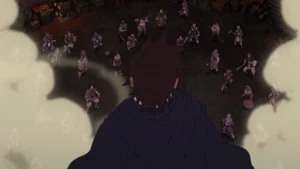
Episode 10 of The Darwin Incident shifts gears from world-building and ideology-heavy detours back into taut, suspense-driven storytelling. This installment tightens the screws on Lucy’s abduction plot while unfolding a series of devastating surprises that change the status quo. It’s an episode that benefits from focused direction and action-first animation, even if the series’ recurring sociological curiosities continue to peek through the cracks.

Table of Contents
Episode 10 — A Return to Thriller Momentum
The Darwin Incident finds its strongest stride when it leans into thriller mechanics, and episode 10 demonstrates that clearly. The narrative momentum centers on Lucy’s kidnapping and the overlapping layers of deception orchestrated by antagonists with hidden agendas. While prior episodes have sometimes been weighed down by heavy-handed sociological asides, this entry keeps the pressure up through suspense, well-timed reveals, and a tighter focus on immediate stakes.
Key Plot Beats and Shocking Twists
What begins as a seemingly straightforward rescue spins into a risky chess game. The episode reveals that Lucy’s abduction was only part of a larger smokescreen, and several developments—foreshadowed earlier but held back until now—come to fruition. The narrative relies on the unpleasantness of sudden loss to upend expectations: by episode’s end, multiple major characters suffer fates that dramatically alter Charlie’s world and the series’ trajectory.
Surprises that Change Everything
Two unexpected deaths in particular act as a true gut-punch—both narratively effective and emotionally jarring. This twist flips the show’s balance, transforming Charlie from a guarded, oddly detached protector into a fugitive and an orphan practically overnight. That tonal pivot creates fresh narrative possibilities and reorients sympathy and urgency in ways the series hadn’t fully explored until now.
Character Work: Charlie, Lesley, and Rivera
Episode 10 doubles down on character confrontation, especially between Charlie and Lesley. Lesley’s attempts to pin down Charlie’s worldview culminate in the clearest articulation yet of the humanzee’s philosophy: a form of elevated nihilism. Charlie protects what is within his immediate sphere—friends, fleeting moments of kindness—but displays little interest in systems, revolution, or broader social responsibility. This posture is chilling because it both humanizes and dehumanizes him; he’s relatable in his survival instinct yet disturbing in his indifference to anything beyond his proximity.
Rivera and the Moral Gray
Rivera’s detour into exposition reveals more about the ALA’s murky operations and the forces shaping their choices. The episode explains that past raids were conducted at the behest of Dr. David Grossman—Charlie’s biological father—a revelation that reframes previous events and tempts Charlie with the possibility of redefined parentage. Rivera’s narrative adds complexity: the ALA appears less as a purely idealistic collective and more as a group whose activities have been influenced, even corrupted, by financial incentives. The show uses this cynicism to suggest a world where activism and capitalism can be entangled, but it also risks leaning into a one-note critique that all protest movements are somehow bought.
Thematic Tensions: Altruism, Nihilism, and Ethics of Action
Episode 10 highlights the series’ central thematic tug-of-war between personal survival and collective responsibility. Charlie’s “elevated nihilism” raises difficult questions: can someone with his capacity for violence and protection ever scale altruism beyond the immediate circle? Is the series advocating for a pragmatic, localized ethics, or is it simply presenting moral ambiguity without deeper editorialization? These questions are provocative but also underscore a recurring issue: The Darwin Incident often flirts with big social metaphors without fully committing to the consequences of those metaphors.
Animal Rights, Activism, and Narrative Risk
The episode’s portrayal of animal-rights activism—especially the ALA’s willingness to operate like mercenaries—touches on real-world debates about tactic and purity in protest movements. While there are moments of incisive critique, the show sometimes veers toward oversimplified portrayals that risk suggesting organized activism is inherently compromised. That said, when the writing focuses on immediate human (and human-adjacent) stakes rather than sweeping allegory, it lands more consistently.
Animation, Direction, and Pacing
One of the episode’s most noticeable strengths is how it elevates animation to prioritize tension and clarity during action beats. The direction favors focused framing, staccato editing, and well-staged confrontations—choices that help sell the thriller beats and make the sudden shocks land harder. Compared to quieter, more expository episodes, this one feels tighter and more cinematic.
Visual Framing of Charlie
Charlie is repeatedly framed as an uncanny, almost inhuman force—glowing eyes, sudden bursts of violence, and animalistic resolve. These visual cues reinforce both fear and sympathy, leaving viewers unsettled and engaged. The animation choices here work hand-in-hand with the narrative to keep Charlie compelling even when his moral stance remains ambiguous.
Where This Leaves the Series
By upending the status quo and stripping Charlie of his immediate support network, episode 10 opens the door for more dynamic storytelling. The show is now better positioned to chase plot-forward momentum rather than linger on philosophical debates it hasn’t quite earned. If future episodes continue to favor tight, suspense-driven arcs with careful character fallout, The Darwin Incident could sustain this renewed intensity. The question now is whether the series will maintain this focus or return to ponderous sociological asides.
The Darwin Incident is currently streaming on Prime Video.
For quick social commentary and reactions from one viewer, see this BlueSky profile.
Final thoughts
Episode 10 is one of the series’ more successful entries because it embraces momentum, shock, and focused direction. It delivers satisfying, painful twists that change the emotional stakes for Charlie and the supporting cast, and it showcases the show’s ability to do edge-of-your-seat thriller material well. That said, lingering questions about the series’ broader sociopolitical commentary remain. When the narrative stays close to the characters and the consequences of their actions, it thrives. When it drifts into broad critiques without the narrative weight to back them up, it weakens its own impact. For now, this episode proves that when The Darwin Incident commits to immediate tension and consequence, it can be genuinely compelling.