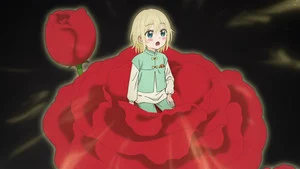
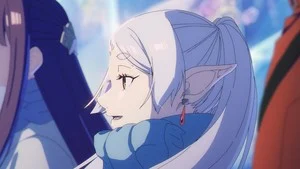
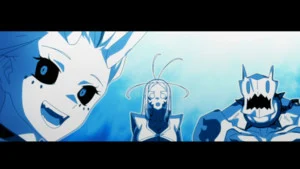
Snowball Earth’s episode 11 leans into emotional beats more than spectacle, attempting to patch character gaps before the cour finale. This installment trades big set pieces for a character-heavy duel of ideology between Tetsuo and Sagami, revealing backstory and leaning on redemption as a dramatic device. The result is a mixed bag: genuine growth for the protagonist, an attempted softening of the antagonist, and the same CG choices that continue to divide viewers.
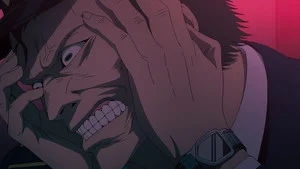
Table of Contents
Episode 11 — Quick recap
Episode 11 slows the action to give Sagami a lengthy flashback that explains his obsession with being a savior. We see the emotional scaffolding underpinning his motives — parental abandonment and a hunger for validation — and how that contrasts and mirrors Tetsuo’s own isolation. The two men finally confront one another, not just physically but verbally, and the episode uses dialog to shift the narrative currency from violence to understanding. In the end, Tetsuo offers a verbal counterpoint to Sagami’s ego, attempting to reframe what it means to be a “savior.”
Character analysis: Sagami and the problem of late-stage redemption
Sagami — explained but not entirely redeemed
Episode 11 tries to humanize Sagami by linking his villainy to childhood wounds and attention-seeking behavior. The flashback gives us a readable origin: abandonment that curdled into an insatiable need to be adored. On paper, this aligns Sagami with a familiar anime archetype — the antagonist who wants validation at any cost.
Unfortunately, revealing why a villain acts a certain way is not the same as rehabilitating their actions. For most of the series, Sagami has been unmistakably cruel and often petulant, and this late infodump only tells us what we already suspected: he fractures easily under the weight of fame and obsession. Worse, the stakes rise when it’s revealed he was involved in the very catastrophe that set the series in motion, making his attempted redemption feel both awkward and narratively convenient.
Tetsuo — a quieter, more satisfying arc
Tetsuo’s growth is the episode’s clearest win. Where earlier episodes framed him as socially stilted and beleaguered by responsibility, episode 11 finally gives him a real conversational victory. He articulates, directly and sharply, why Sagami’s idea of saviorhood is hollow: adoration is fleeting, and the role is isolating.
This scene is effective because it completes a long-running arc — communication. Tetsuo no longer mimes feelings or stumbles through explanations; he states the truth plainly, forcing Sagami into an emotional reckoning. That moment of clarity is meaningful on its own and earns real emotional weight, even if it’s deployed to manufacture a tidy resolution.
Visuals and CG: self-aware, but still divisive
The show continues to court controversy with its CG choices. Episode 11 even includes a brief, self-aware verbal nod to the CG, which lands more as a wry admission than an effective justification. Fans who’ve been critical will likely remain unconvinced; those more forgiving might accept the visuals as a stylistic decision that doesn’t completely derail the story.
Beyond the CG, the episode’s quieter pacing allows the animators to focus on facial beats and lighting in intimate scenes. These smaller touches help sell the emotional stakes and make some conversations feel surprisingly grounded despite the overarching digital aesthetic.
Thematic core: loneliness, performance, and the burden of saviorhood
At its heart, episode 11 wrestles with what it means to be “chosen.” Both protagonists are shown in the aftermath of roles thrust upon them — Tetsuo by circumstance and Sagami by ambition. The episode argues that being loved by the masses is not synonymous with being supported; adoration can be isolating and even dangerous when it replaces real human connection.
That thematic thread is rich and worth exploring. The show’s problem is pacing: introducing large emotional revelations late in a cour runs the risk of feeling like padding rather than payoff. Had some of these insights been seeded earlier, Sagami’s arc would have felt more earned instead of tacked on.
Pacing and structure: end-of-cour problems
The way episode 11 reserves major motive reveals for the penultimate leg of the cour demonstrates a larger structural issue. Late-stage exposition can work when it reframes what the audience knows without negating earlier impressions. Here, the flashback clarifies Sagami’s psychology but doesn’t meaningfully alter his moral standing, so the reveal feels like a belated attempt to inject nuance.
In contrast, the resolution of the Tetsuo-Sagami confrontation — where Tetsuo effectively transfers savior status — reads as an emotionally driven convenience. The scene earns points for performance and dialog, but it also exposes a reliance on trope: “villain sees the light because protagonist explains it.” That can be moving when handled with care, but it can also feel like narrative shorthand.
What this means for the finale
With character groundwork laid (albeit unevenly), the final episode now needs to balance emotional consequences with plot closure. If episode 11’s intent was to soften antagonism and center Tetsuo as a moral compass, the finale must show whether this recalibration holds up under large-scale stakes. The question becomes: will the emotional beats translate into meaningful action, or will they be overwritten by spectacle?
Where to watch
Snowball Earth is streaming on Crunchyroll.
Final thoughts
Episode 11 of Snowball Earth is an earnest attempt to humanize its antagonist while giving its protagonist a clear, earned moment of growth. The payoff is partial: Tetsuo’s arc benefits from the focused, direct confrontation, whereas Sagami’s redemption feels late and somewhat unearned. Visually, the CG remains a contentious element, though quieter character scenes make good use of facial work and lighting. If the finale can translate these emotional beats into consequential choices rather than tidy resolutions, the cour may still land with real poignancy. Either way, this episode highlights the series’ strengths — character-driven conflict and thematic ambition — while underscoring its structural weaknesses around pacing and late reveals.