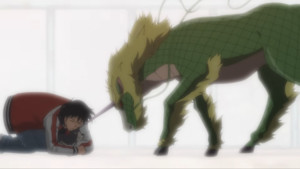
Episode 10 of SHIBOYUGI: Playing Death Games to Put Food on the Table doubles down on the show’s corrosive satirical bite while pushing its principal players into darker, more morally compromised territory. This installment keeps the pressure high—both in the literal life-or-death contests that define the series and in the emotional squeezes that reveal who these characters really are when the cameras are rolling and the watchers are paying. Below I break down the episode’s key beats, what the visuals add to the story, and why this chapter matters for Yuki, Moegi, and the series as a whole.

Table of Contents
Episode recap: brutality framed as spectacle
Episode 10 stages another brutal round of the show’s televised death games, where the juxtaposition of bright production values and gruesome outcomes remains the series’ most unsettling tactic. The contest mechanics remain ruthless, but the episode’s narrative focus shifts toward emotional fallout—how losing, winning, and surviving affect those trapped in the system. We see characters forced to confront not only their opponents but the moral rot of the audience and industry that finances these spectacles.
Key plot beats
- Moegi’s unraveling continues: the episode underlines the tragic trajectory of a character caught between survival and shame.
- Yuki’s professional competence contrasted with her internal questions about what survival costs her emotionally.
- Kyara’s sociopathic flourish and the way she exploits the game’s fanfare to consolidate infamy and influence.
- Loss of mentorship: Yuki loses an important guide, setting up future transformation and perhaps escalation in her moral calculus.
Moegi: the show’s most human casualty
Moegi is presented as the most sympathetic of the contenders, not because she’s innocent but because her crimes feel like the product of a life that never offered better options. Where Kyara thrives in the attention economy—manipulating, performing, and weaponizing spectacle—Moegi is exhausted by it. Episode 10 emphasizes her fatigue and humiliation: she’s here because the system forced her and then continued to exploit her, never promising more than a slightly warmer rung on the ladder of notoriety.
The scene where Moegi’s attempt to rise in the ruthless hierarchy stalls is heartbreaking precisely because the show never pretends her choices are purely noble. She has done terrible things, but the storytelling asks us to consider cause and context: how often do predatory systems make monsters out of those who had little choice? The episode resists redemption as a tidy payoff; instead it gives us a portrait of someone who’s been worn down until there’s nothing left to give.
Yuki: survival skills and simmering conscience
Yuki occupies the story’s moral middle ground. She is not a celebratory killer like Kyara, nor is she a passive victim like Moegi. Trained by mentors such as Hakushi, Yuki has internalized a soldier’s discipline: she can do what must be done and then compartmentalize the rest. Episode 10 makes clear that this method of survival has emotional costs. Losing a mentor here isn’t just another casualty—it’s a fracture in Yuki’s moral architecture that will force her to question whether continuing is worth the incremental gains.
One powerful image in the episode—Yuki reaching into a ribcage to touch the substitute for blood—works on multiple levels. It’s grotesque and tactile, yet it’s also metaphorical: Yuki is literally touching the hollowed-out remains of what the show’s system leaves behind. She recognizes the waste and horror even as she participates. That tension is the engine of her arc: can she remain effective without becoming unmoored? The episode plants seeds that suggest Yuki may face a future reckoning where survival and conscience collide.
Mentorship and loss
The mentor-student dynamic between Yuki and Hakushi has been one of the few stabilizing forces for her. Episode 10’s decision to remove that stabilizer is narratively efficient and emotionally freighted; it forces Yuki to confront the system on her own terms. Whether that pushes her toward rebellion, deeper complicity, or a breakdown is the central question moving forward.
Kyara and the corrosive nature of spectacle
Kyara embodies the show’s critique of modern attention economies: she’s charismatic, shameless, and adept at monetizing pain. While the series dramatizes her as an extreme figure, the satire lands because the underlying behavior mirrors real online incentives—infamy and outrage can be more lucrative than decency. Episode 10’s treatment of Kyara reinforces that she’s less an individual villain and more an archetype: the performer who converts chaos into currency.
Visual style and production: horror dressed in high-gloss
On a technical level, this episode is another showcase for the series’ stylish storytelling. Storyboarding, framing, and production design push viewers into a space where gore and glamour coexist. The use of tactile close-ups—flesh, fabric, the remnants of destroyed costumes—gives the violence an almost surreal artistry. That aesthetic choice deepens the satire: the show’s creators are asking viewers to examine why we find polished depictions of brutality so compelling.
Color palettes and staging continue to juxtapose bright, consumer-friendly hues with the macabre contents of the arena. The result is an uncanny visual dissonance that amplifies the thematic point: brutality is easier to sell when it’s beautifully packaged.
What this episode means for the series
Episode 10 pushes several characters to consequential crossroads. Moegi’s trajectory suggests that the show won’t cheapen trauma by offering easy redemption. Yuki’s path becomes the focal moral question: is survival under a corrupt system a victory if it requires trading away parts of your humanity? The show’s refusal to provide neat answers is deliberate; it wants the viewer to sit with unease and recognize how similar impulses exist outside the fictional arena.
As the season approaches its climax, this installment effectively raises the stakes. Losing mentors, seeing the mechanics of spectacle laid bare, and the increasing desperation of competitors all point toward a finale where choices will matter more than victories.
Where to watch
SHIBOYUGI: Playing Death Games to Put Food on the Table is available for streaming on Crunchyroll. For more background on the show’s production and characters, official streaming pages and publisher announcements are useful reference points. (External sources: Crunchyroll — SHIBOYUGI.)
Final thoughts
Episode 10 is one of the series’ more affecting chapters—not because it surprises with plot twists, but because it deepens the emotional texture of its players while sharpening its social critique. The show continues to be at its best when it makes viewers uncomfortable about why they watch and whom they applause. With strong visuals, escalating personal stakes, and no easy moral answers, this installment sets the stage for a tense, morally ambiguous finish. SHIBOYUGI remains a potent, unsettling exploration of survival in a media-driven world, and this episode reinforces why it’s worth paying attention to—if you can stomach the view.