Tune In to the Midnight Heart arrives dressed like a familiar high-school harem: radio show nostalgia, a cast of cute girls, and an earnest male lead on a small quest. Unfortunately, where the premise promises warmth and charm, the execution repeatedly stumbles—primarily because the animation, visual filters, and inconsistent direction undermine what little momentum the story manages to build. This review dives into the series’ strongest intentions and its most glaring failures, explaining why this could have been a sweet, character-driven drama but instead often feels frustratingly unfinished.
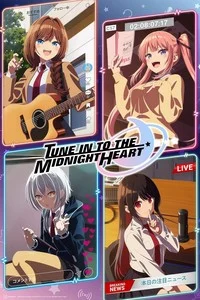
Cover art: Tune In to the Midnight Heart
Table of Contents
Quick Synopsis
Arisu, who once found solace in the midnight radio program hosted by the enigmatic “Apollo,” faces a sudden life change when his all-boys school merges with an all-girls school. During morning announcements he hears a voice that echoes Apollo’s tone, prompting him to search the broadcasting room. Instead of one host, he discovers four female classmates operating the show. The central hook is simple: which of these girls is Apollo, and how will Arisu help them grow into a more professional group?
Animation and Visual Design: Where It Breaks Down
The most immediate problem with Midnight Heart is its visual presentation. Many scenes resemble static panels rather than fluid animation. Character movement is often rigid—especially troubling in performance-based moments, like guitar playing, where posture and fingering look incorrect and unnatural. For viewers sensitive to musical authenticity, those sequences are jarringly off-putting.
Overused Filters and Inconsistent Lighting
The series relies heavily on colored filters that frequently clash with scene context. A pervasive orange sunset tint appears so often it flattens natural daylight scenes that should clearly read as daytime. Likewise, a deep blue wash is used in karaoke sequences to the point of distraction. These filters sometimes feel like a stylistic crutch intended to mask animation issues rather than enhance mood.
Backgrounds and Model Art
Background characters and crowd art are rough and sketchy in parts, with uneven facial features and odd proportions that pull attention away from the leads. A handful of frames are particularly egregious—characters look compressed or appear slightly detached from the ground—creating a “floating” illusion that undermines visual immersion.
Characters and Voice Acting
The cast fits classic harem archetypes: the shy VTuber aspirant, the tsundere with pig-tails, the awkward guitarist, and the occasional maid-costume enthusiast. On paper they are fine fodder for a slice-of-life ensemble, but the show rarely develops them beyond surface beats.
One bright spot—if wasted—comes from the English dub casting. Sarah Wiedenheft brings expressiveness and energy to her performances in other roles, and here there are moments that hint at what her delivery could achieve if the material gave her more to work with. Still, her character’s subdued direction limits the emotional payoff; you can sense the talent being restrained rather than elevated. (For those curious about the actress’ previous roles, see her profile on Wikipedia. rel=”nofollow”)
Story, Pacing, and The Mystery of “Apollo”
The narrative centers on Arisu’s small mystery: which girl among the four is Apollo? Early beats offer glimpses of promise—a sentimental attachment to radio nostalgia, small opportunities for character growth—but the plot often relies on contrivances. Key moments that could resolve the mystery or deepen relationships are sidestepped with thin excuses, leaving the show to stretch simple situations into prolonged sequences.
When the series needs tension or a reveal, it frequently opts for avoidance. A scene where Arisu could have discovered Apollo’s identity becomes a narrative shrug, with the protagonist choosing to delay discovery in the name of “finding out himself.” That choice rings hollow and slows pacing rather than building mystery.
Soundtrack and Musical Scenes
Music should be a central pillar for a show about amateur performers and a radio program, but here it’s uneven. Songs aren’t especially memorable, and the staging of musical performances is hurt by the animation problems already noted. At times, the show’s musical moments lack the energy and authenticity needed to sell the characters’ artistic ambitions. If you find yourself mentally replacing these cues with other pop tracks, you’re not alone—some scenes invite that kind of ironic detachment.
Fun aside: if you’re amused by the show’s heavy-handed blue karaoke filter, you might also chuckle at an earworm comparison to Eiffel 65’s “I’m Blue” (a cheeky mental soundtrack for some viewers). (Reference link to the song’s page. rel=”nofollow”)
Why It Ultimately Misses the Mark
Tune In to the Midnight Heart has the fundamental components for a charming, music-focused slice-of-life drama, but the execution falters on three fronts: inconsistent animation quality, overused visual filters that mask rather than enhance, and a pacing choice that avoids resolving its central mystery. The result is a series that frustrates more than it satisfies—one in which potential is visible but rarely realized.
Final thoughts
Tune In to the Midnight Heart is a frustrating watch: sympathetic characters and a heartfelt premise are repeatedly undermined by technical and narrative missteps. If you love character-driven school dramas and can forgive visual shortcuts for occasional emotional payoffs, there are moments worth salvaging. But for viewers sensitive to animation quality or expecting coherent musical performances and purposeful storytelling, this series is likely to disappoint. It’s a reminder that strong ideas need equally strong execution—especially when a show centers on performance and visual flair.