After years of speculation and fan anticipation, the anime adaptation of Steel Ball Run — the seventh part of Hirohiko Araki’s JoJo’s Bizarre Adventure — arrives with a lengthy, confident premiere that immediately proves why this arc is so highly regarded. david production tackles a massive storytelling and technical challenge: a cross-continental horse race with dozens of competitors, complex Stand battles, and Araki’s densely detailed character designs. The result is an episode that largely meets and often exceeds expectations, blending ambitious visuals, potent sound design, and faithful thematic beats.
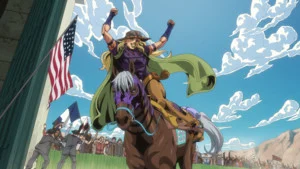
Steel Ball Run premiere — a visually bold reimagining of Araki’s classic race arc.
Table of Contents
Animation and Visual Direction
From the first frames, Steel Ball Run announces itself as one of the more visually daring entries in the JoJo anime catalogue. Horse animation — notoriously difficult — occasionally looks a bit stiff in wide or CGI-heavy shots, but close-ups and key action beats are stunning. The series leans into stylistic choices that echo the manga: sudden palette swaps at climactic moments, dynamic panel-inspired edits, and precise character details retained during motion. These choices make even prolonged sequences of movement feel kinetic and purposeful rather than rote.
Action Choreography
The race structure demands constant motion, and the anime responds with inventive choreography. Fast cuts, bold color shifts, and well-timed camera moves heighten tension during reversals and stand confrontations. In many moments the action is the best the franchise has produced — vivid, readable, and emotionally charged.
Sound Design and Music
Sound is treated as an active narrative element. The premiere builds diegetic audio into its storytelling — for example, an announcer’s commentary functions as a replacement for exposition-heavy fight banter while keeping the momentum of a sporting event. Musical cues are already memorable in the premiere: ominous motifs underline Diego Brando’s menace, while sax- and piano-driven themes give Gyro a swaggering, charismatic presence.
Voice Acting — Japanese and English Dub
The voice cast brings the characters to life in both Japanese and English. The Japanese performances are characterful and grounded, but the English dub deserves special praise for bringing unique energy and accessibility to new fans. Key roles stand out: Gyro’s voice exudes confidence and charisma, Johnny Joestar’s English portrayal conveys palpable desperation and yearning, and Diego’s performance channels sinister intensity reminiscent of classic JoJo antagonists while remaining distinct. Supporting turns — from comic relief to minor racers — are generally strong and help establish the world quickly.
Thematic Core and Character Setup
One of Steel Ball Run’s strengths is how rapidly its themes surface: the myth of the American Dream, the cost of ambition, and complex father-son dynamics are woven into the race’s spectacle. Johnny’s monologues and interactions hint at deeper emotional stakes beyond mere prize money, while Gyro’s presence introduces hope and expertise that catalyze Johnny’s journey. Small character beats — like Pocoloco’s “777” race number or Gyro’s ostentatious grill — add flavor and honor Araki’s penchant for playful, offbeat detail.
Adaptation Choices
As with any manga-to-anime adaptation, not every moment translates identically. Some comedic or character-establishing beats are tightened or repurposed for pacing, and a few transitional scenes feel streamlined. These changes rarely undercut the episode’s power, but viewers familiar with the manga may notice small shifts in tone or timing.
Minor Issues and Concerns
There are a few nitpicks worth mentioning. Wide-shot horse animation can sometimes appear less polished than close-ups, and occasional dub lip-sync issues can be distracting for perfectionist viewers. The pacing — while ambitious — leaves some questions about how the production will maintain this level of quality across a serialized release schedule. The unknown cadence of future episode drops could challenge momentum, but the premiere’s quality inspires confidence.
Why This Premiere Works
Beyond technical craft, the premiere succeeds because it understands what makes Steel Ball Run special: a balance of intense competition, strange supernatural stakes, and Araki’s unapologetic oddness. The episode captures the ‘stupendous audacity’ of the source material, delivering both spectacle and intimate character moments. The production’s willingness to lean into stylized choices — even when they risk alienating purists — results in an adaptation that feels alive and reverent in equal measure.
For readers wanting background on the creators and publishing history, official studio pages and licensed English publishers provide reliable context. See the studio’s official site for production notes and licensed distributor pages for release details. david production — official site · Viz Media — English publisher
Final thoughts
Steel Ball Run’s premiere is a triumphant return to the ambitious storytelling at the heart of JoJo’s Bizarre Adventure. While small technical and adaptation compromises exist, the episode’s superior action, evocative sound design, and confident voice performances make it a standout start. If the series sustains this care and inventiveness, it could easily become one of the franchise’s most memorable anime arcs. Fans and newcomers alike should be excited — the race has begun, and it’s already worth the ride.