Mobile Suit Gundam: Iron-Blooded Orphans – Urðr Hunt Special Edition arrives as an odd celebratory piece for the franchise’s tenth anniversary: an attempt to expand the world established by Tekkadan while mining material from a now-defunct mobile game. What sounds like a promising side story — young pilots inspired by Tekkadan, a relic hunt with massive stakes, and glimpses into the Calamity War — unfortunately collapses under the weight of its source material. Urðr Hunt plays better as a concept than a finished film.
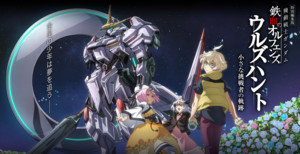
Mobile Suit Gundam: Iron‑Blooded Orphans – Urðr Hunt Special Edition (cover image)
Table of Contents
Synopsis: a quick primer on the Urðr Hunt
Set in Year P.D. 323, Urðr Hunt centers on Wistario Afam, a young pilot from Venus’s Radonitsa Colony — a penal-like frontier world ignored by the major blocs. Inspired by the bygone exploits of Tekkadan, Wistario joins a treasure hunt organized by mysterious parties promising enormous rewards: relics from the Calamity War and a chance to win 100 billion credits. Competitors are guided by “secretaries,” given rings to mark their progress, and sent across dangerous sites guarded by rogue machines. Wistario’s goal is pragmatic and noble: buy sovereignty for his homeland and change Venus’s status as a dumping ground for the undesirables of the solar system.
From mobile game to movie: the structure that breaks the film
The root problem with Urðr Hunt is its origin. This Special Edition stitches together cutscenes and narrative segments from the cancelled mobile app Iron‑Blooded Orphans G. That architecture—intended to accompany interactive gacha gameplay—translates poorly to a linear film experience. The movie reads like a recap of an absent season: exposition-heavy narration, truncated encounters, and relationships that lack the beats they needed to land emotionally.
Narrative issues: told, not shown
Coronal Xhosa’s voiceover provides a through-line, but it mostly summarizes events rather than dramatizing them. Major stakes and emotional pivots are announced instead of earned; characters are introduced, given one or two defining traits, then discarded. Because the original game’s flow relied on player engagement between scenes, the film frequently feels like stepping over missing steps in a recipe. Battles open and immediately conclude with a flourish, leaving little of the connective tissue that makes combat meaningful.
Character dynamics: promising hooks, shallow payoffs
The film teases several resonant relationships—most notably Wistario’s bond with a stowaway named Cature—and hinges its emotional core on choices he makes for friendship and home. But those moments require the slow accumulation of intimacy and trust that a game’s interactive route would have provided. Cutscene-only pacing means the end route arrives before the flags that establish it have been raised. As a result, crucial decisions land light, and potential heartbreak or sacrifice lacks conviction.
Action and sound: flashes of the franchise’s strength
Iron‑Blooded Orphans always differentiated itself within Gundam by emphasizing brutal, close-quarters mecha combat: blunt instruments, torn limbs, and visceral choreography over prolonged laser duels. Urðr Hunt briefly recaptures that aesthetic—the new Gundam Hajiroboshi opening with a memorable claw-slice is a highlight—and a later clash with a Sentient Mobile Armor offers a tantalizing vision of the Calamity War’s monstrous scale.
Still, most fights suffer from tight editing that assumes intervening gameplay would carry the audience. Punchlines and finishing moves flash by without context. The score, largely recycled from the TV series, has its moments but rarely rises to fully support the film’s attempts at gravitas.
Cameos, worldbuilding, and the film’s unrealized promise
One bright spot is how the movie lightly threads the broader Iron‑Blooded Orphans tapestry into the plot: cameos and supporting figures hint at larger political machinations without derailing the central hunt. The involvement of a masked McGillis “Montag” Fareed is handled without heavy-handed fan service and actually helps anchor Wistario when secrets threaten the crew.
Thematically, the film’s premise — that Tekkadan’s defiance inspired disparate pilots to pursue autonomy — is a clever way to extend the franchise’s spirit without forcing original protagonists into every scene. Focusing on smugglers, archaeologists, and scavengers offers opportunities to enrich the world’s history and highlight the Calamity War’s lingering artifacts. Unfortunately, because the Urðr Hunt never reaches resolution within the film, narrative threads feel suspended rather than curated.
Why the bonus OVA highlights what the movie lacks
When watched back-to-back with the included Tekkadan OVA material, the discrepancy is obvious. The Tekkadan shorts still showcase warmth, crew chemistry, and carefully staged combat—elements the Urðr Hunt film largely skips. Scenes that revel in small human moments and fully choreographed skirmishes remind viewers why the original series resonated: Tekkadan felt like family. Those same human beats are missing from Wistario’s cast, whose rapport never develops beyond plot function.
How it compares to other game-to-anime conversions
Urðr Hunt’s structure will be immediately familiar to players of large-scale mobile campaigns: a hub-and-spoke system of battles and events reminiscent of titles such as Fate/Grand Order or other gacha-driven narratives. In those games, emotional payoffs are distributed across player interaction and repeated character scenes. Strip those mechanics out and you’re left with compressed events that struggle to feel earned. For context on how long-form mobile campaigns are adapted into non-interactive media, see the Fate/Grand Order summary on Wikipedia (link opens in new tab) https://en.wikipedia.org/wiki/Fate/Grand_Order. For a broader background on the Iron‑Blooded Orphans franchise, see its encyclopedia entry https://en.wikipedia.org/wiki/Mobile_Suit_Gundam:_Iron-Blooded_Orphans.
Strengths and weaknesses — quick rundown
- Strengths: Expands franchise lore; effective Sentient Mobile Armor design and one standout melee moment; restrained, non-intrusive cameos.
- Weaknesses: Feels like a stitched-together game recap; thin character development; edited action that presumes missing gameplay sequences; recycled score.
Final thoughts
Urðr Hunt Special Edition is an earnest attempt to extend Iron‑Blooded Orphans’ world and reward fans with fresh locales and creatures from the Calamity War, but it ultimately illustrates the hazards of adapting interactive content into a straight movie. Its best ideas—an inspired premise of grassroots rebellion and a handful of visually arresting fights—aren’t given time to breathe, and the emotional stakes never fully land. If you love the franchise and crave more worldbuilding or cameos, it’s worth a watch for the setting and a few highlight moments. But as a standalone film, Urðr Hunt feels incomplete: a beginning without its promised end, and a side story that needed the very gameplay it was born from to feel whole.