Return to the beginning: Science SARU and director Mokochan deliver a startlingly faithful adaptation of Masamune Shirow’s 1989 Ghost in the Shell manga, bringing Major Motoko Kusanagi and Public Security Section 9 back into the spotlight for a 2029 set cyber-thriller. This new take emphasizes the original manga’s chaotic energy, goofy banter, and vivid visuals while expanding key scenes and adding cinematic motion that makes the panels come alive.
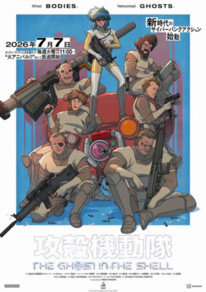
Science SARU’s adaptation returns Ghost in the Shell to Masamune Shirow’s original tone and style.
Table of Contents
Faithful Return to the Manga
Science SARU’s version is unapologetically manga-first. From the prologue’s opening panels to scene-for-scene recreations, this adaptation prioritizes narrative fidelity. Long-time fans will appreciate how many of Shirow’s dense political discussions, idiosyncratic gags, and even awkwardly delightful asides survive the transition to the screen. Rather than smoothing out or sanitizing the source, the creative team leans into the manga’s chaotic storytelling and tonal shifts — a move that makes this iteration uniquely satisfying for readers who’ve longed to see those pages animated without heavy reinterpretation.
Visual Style and Character Design
One of the most striking features is how closely the character designs match Shirow’s original art. Motoko, Batou, Aramaki, and the rest are rendered with the same loose, scratchy lines and exaggerated expressions that defined the manga. This departure from the stoic, doll-like look of some earlier screen adaptations gives the characters a broader emotional range: playful smiles, embarrassed blushes, and terrifying scowls all register in ways previous versions rarely attempted.
Color, Motion, and Action
Animation-wise, Science SARU pours energy into motion. The studio — known for its kinetic and expressive work — never lets the action stagnate. Battles in both the physical and cyberspace realms move at a relentless pace, often feeling dizzying and vibrant. Color palettes echo Shirow’s bold hues: red Fuchikoma bodies, lush greens, and luminous skies create a visual tapestry that feels simultaneously familiar and fresh. The prologue sequence that bookends the opening panels is a particularly vivid reinterpretation — hyper-kinetic, more colorful, and tonally upbeat compared to darker past adaptations.
Structure and Narrative Pacing
The first two episodes effectively cover the manga’s prologue and the opening chapters, including the “Super Spartan” and the opening of “Junk Jungle.” Scenes that were previously abbreviated or recontextualized in other adaptations are given room to breathe here, and the result is a fuller understanding of plot beats and character motivations. That said, episode endings can be abrupt — episode two leaves viewers on a demanding narrative cliff that makes the wait for subsequent episodes feel particularly acute.
Soundtrack and Production Notes
Three composers were involved in shaping the show’s sonic identity, and their collective approach complements the visuals. Expect an eclectic mix of jazz, orchestral swells, and atmospheric pieces that heighten both the comedic and suspenseful moments. The closing song “Blue” by Millennium Parade provides an especially atmospheric finish to episodes, reinforcing the show’s modern yet nostalgic mood. A behind-the-scenes documentary that accompanied early screenings offers insight into the production process and the staff’s obvious reverence for Shirow’s work.
English Dub and Voice Cast
The theatrical preview included an English dub with a fresh cast. Suzie Yeung’s Motoko combines flexibility with gravitas, evoking strong comparisons to earlier iconic performances without copying them outright. Bill Butts and SungWon Cho bring solid presence to Batou and Aramaki respectively, while the Fuchikoma mechs retain a playful, squeaky charm that lightens heavier sequences. For viewers who prefer subs, the original Japanese audio remains essential for experiencing the show as intended; however, the dub provides a competent alternative for international early screenings.
Release Details and Where to Watch
The TV Event Preview premiered at the Annecy Animation Festival on June 22, 2026, and saw a limited cinematic run in the UK on June 26, 2026. According to distributor schedules, the series began streaming worldwide on Amazon Prime starting July 7, 2026, with additional episodes rolling out thereafter (episode three was scheduled to go live on July 21, 2026). These dates make the theatrical preview an exciting early look, though many fans will experience the series for the first time via the streaming window.
Content Notes and Audience
True to form, the adaptation contains mature material that mirrors the manga’s frankness. Certain scenes that were controversial or censored in previous versions are adapted here with fidelity, though sometimes slightly toned for general audiences. The series is best enjoyed by viewers comfortable with adult themes, dense political dialogue, and a storytelling rhythm that blends philosophy with slapstick and high-octane combat.
Useful References
For more on the studio and the creative team behind this adaptation, visit the official Science SARU site (link below). For background on the series’ musical contributors and closing song, Millennium Parade’s official page is a helpful reference. Note: these external links are included as nofollow for reference purposes.
Science SARU — Official Site | Millennium Parade — Official
Final thoughts
Science SARU’s Ghost in the Shell is a bold reclamation of Masamune Shirow’s original vision: irreverent when it needs to be, intellectually dense when called for, and visually electric throughout. By favoring manga accuracy over reinterpretation, the show gives fans long-denied moments their due while inviting new audiences into a richly textured cyberpunk world. If you loved the manga’s messy brilliance, this adaptation should feel like coming home — just be prepared for a wild, colorful, and occasionally provocative ride.